Tension in Kinshasa as opposition coalition C64 tightens grip on Tshisekedi
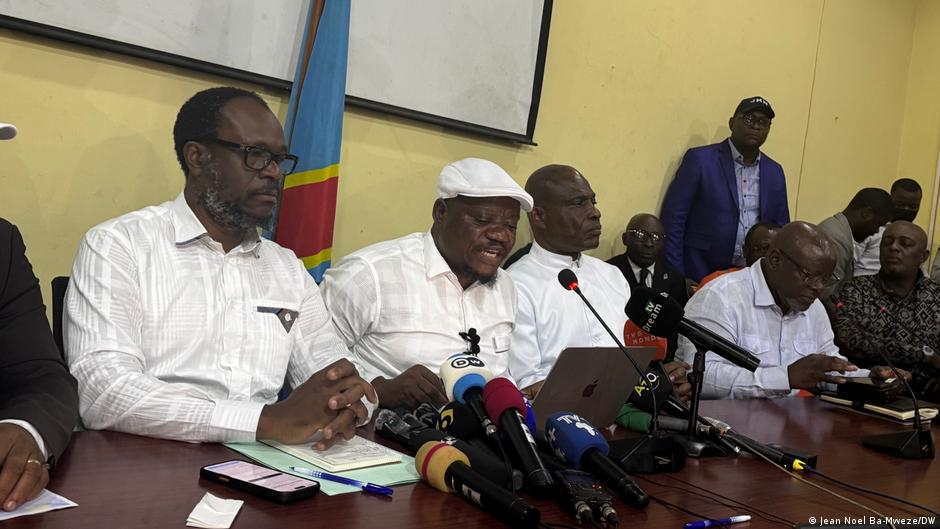
In the Democratic Republic of the Congo, President Félix Tshisekedi has sent the referendum law—previously validated by the Constitutional Court under certain conditions—back to Parliament for a second reading, just as the ultimatum from opposition coalition C64 approaches its deadline. The standoff between the presidency and the opposition remains unresolved, with the C64 and dozens of civil society groups demanding the president abandon his constitutional reform plans by August 15 and launch an inclusive national dialogue.
As the deadline looms, no date has been set for the proposed dialogue, leaving the political landscape in Kinshasa increasingly tense. The coalition’s ultimatum, issued weeks ago, now hangs over the capital like a political sword of Damocles.
Tshisekedi’s tactical retreat amid mounting pressure
Many had assumed the referendum law was already in force due to the president’s failure to sign it within the 15-day constitutional window. Instead, Tshisekedi has chosen to resubmit the text to Parliament for further debate, incorporating the Constitutional Court’s observations. This move is widely seen as a tactical retreat, though it does not signal an end to his ambitions beyond 2028—the year his second term officially concludes.
Professor Bob Kabamba of the University of Liège, Belgium, notes that while the president’s decision reflects pressure from both domestic opposition and regional actors, it is unlikely to deter Tshisekedi from exploring alternative avenues to extend his political influence beyond the constitutional term limit.
C64 prepares decisive post-deadline actions
The opposition coalition has cautiously welcomed the president’s decision to delay the referendum law but remains steadfast in its demands. As midnight on August 15 approaches, C64 leaders have warned of sweeping new measures to counter what they describe as an erosion of national sovereignty under Tshisekedi’s leadership.
Franklin Tshiamala, secretary-general of Leadership for Governance and Development (LGD) and a close ally of former Prime Minister Augustin Matata Ponyo, declared, “As of midnight on August 15, we will confirm that no progress has been made. We will unveil a series of targeted initiatives through our C64 laboratory to restore reason to a regime that has denied us freedom and now seeks to strip us of our national sovereignty.”
Power digs in heels as confrontation escalates
From the government’s perspective, the referendum process is framed as a legitimate political and institutional endeavor. The ultimatum from C64, officials argue, is an illegitimate attempt to dictate the president’s agenda. Adolphe Amisi Makutano, a senior member of the Union for Democracy and Social Progress (UDPS), Tshisekedi’s own party, dismissed the coalition’s demands as irrelevant to the functioning of the state.
“The ultimatum is theirs to make, perhaps to satisfy their backers,” Makutano stated. “But the Republic continues to operate normally.”
The coming hours will determine whether this moment marks the beginning of a new political chapter in the Democratic Republic of the Congo—or the intensification of an already volatile standoff.