A defining feature of Senegalese politics today is its variable geometry. While shifting loyalties and cross-ideological coalitions are not new, what changed after 2000 was their scale, visibility, and direct connection to power. Under Abdou Diouf, the Socialist Party remained dominant, but cracks emerged as his rule ended. Djibo Ka, a key PS figure, broke away to form the Movement for Renewal in March 1998, which became a pillar of the Union for Democratic Renewal (URD). In the May 24, 1998 legislative elections, the URD secured about 13% of the vote and 11 of 140 seats. By June 16, 1999, Moustapha Niasse, another Socialist heavyweight, publicly distanced himself from the PS, launching the AFP in July 1999 and gaining legal recognition on August 23. These departures signaled the erosion of the once-unified Socialist bloc ahead of the 2000 presidential election.
1999-2000: The first major realignments
The 2000 presidential election served as a testing ground for this evolving political landscape. In the first round on February 27, Abdou Diouf won 41.3%, Abdoulaye Wade 31%, Moustapha Niasse 16.8%, and Djibo Ka 7.1%. In the second round on March 19, Niasse backed Wade, while Ka initially supported Wade before ultimately shifting to Diouf. Wade won with 58.5%, ending 40 years of Socialist rule. This marked a turning point: the lines between opponents, allies, and former comrades became far more fluid. The arrival of Wade’s administration accelerated this trend. His first government, formed in April 2000, included figures from multiple political families: the AFP of Moustapha Niasse, the PIT, AJ/PADS, and other components of the alternance coalition, some ideologically distant from the PDS’s liberalism. Niasse became Prime Minister on April 5, 2000, only to be dismissed on March 3, 2001. In the April 29, 2001 legislative elections, the Sopi coalition, dominated by the PDS, won 89 of 120 seats, while the PS collapsed to just 10, the AFP secured 11, the URD 3, and And-Jëf 2. Power not only changed hands but also its political composition.
It was after the 2000 alternation that political transhumance became a central theme in Senegalese discourse. Local officials, political leaders, and even civil servants rapidly switched allegiances to align with the new administration. Academic research documented these overnight shifts, with the press coining the term « political transhumance ». Djibo Ka epitomized this trend: after supporting Diouf in the 2000 runoff, he returned to Wade’s government in 2004.
From Wade to Macky Sall: Transhumance scales up
Under Abdoulaye Wade, the phenomenon became entrenched. Power consolidated around the PDS and the Sopi Coalition, which absorbed figures and parties from diverse backgrounds. The logic shifted from ideology to electoral strategy, territorial alliances, institutional positioning, and even personal motives. By 2004, Wade’s government was dominated by the PDS, though several figures from other political traditions were included; Djibo Ka returned as a minister. However, it was under Macky Sall that political transhumance reached unprecedented levels. After his 2012 victory, Sall’s Benno Bokk Yaakaar coalition brought together former rivals. The administration sought to expand its base and shrink the opposition’s space, with Sall famously stating that the goal was to « reduce the opposition to its simplest expression ». His public defense of open political realignment sparked controversy even within his own camp. The pursuit of political massification blurred the lines between majority and opposition.
PASTEF: The reverse movement
The recent rise of PASTEF introduced a new dynamic. After 2019, the movement’s growth highlighted a shift: no longer was it just about opposition figures joining the ruling party, but also about officials and politicians distancing themselves from Macky Sall’s administration to align with Ousmane Sonko’s movement and later Bassirou Diomaye Faye’s rise. Not all shifts toward PASTEF fit the traditional definition of transhumance—some were strategic electoral support, circumstantial alliances, or genuine commitments. Yet the phenomenon was real: as 2024’s alternation loomed, political lines began to realign. Bassirou Diomaye Faye’s first-round victory, backed by the PASTEF coalition, cemented a new political recomposition.
2026: KIIRAAY tests Senegal’s political culture
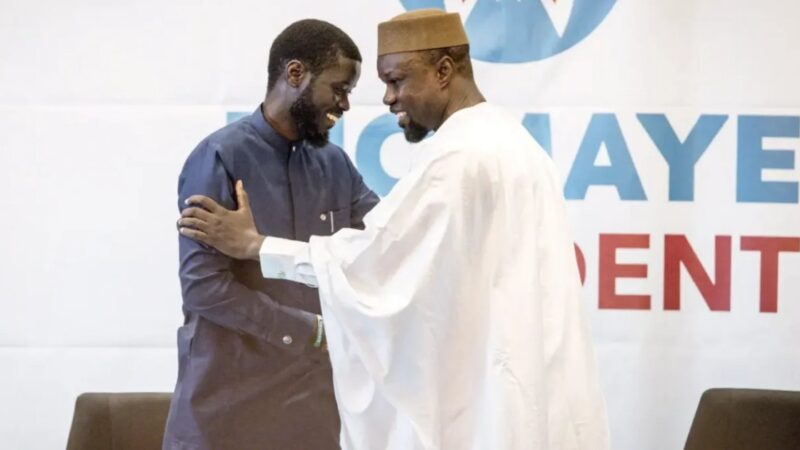
On July 25, 2026, Bassirou Diomaye Faye took a decisive step by launching KIIRAAY – Les Patriotes Républicains, transforming the « Diomaye Président » coalition. According to official reports, 437 parties and movements merged to form this new entity, which positions itself as an « open house » built on ethics, transparency, and the principle of « serving rather than being served ».
The critical question now is: how will KIIRAAY manage the influx of officials, elected representatives, activists, and figures from diverse political backgrounds? Each realignment carries different motivations—some driven by genuine belief in a new political vision, others by strategic opportunities, and some by a desire to settle old scores or reposition themselves. Yet attributing such motives without evidence would be unwise. What matters most is not the volume of realignments but their political quality. A party that absorbs figures indiscriminately risks replicating the very practices it claims to overcome. Conversely, a movement that welcomes new members without diluting its identity, integrates them without losing its core values, and transforms realignments into genuine programmatic commitments could herald a new political culture.
The essential challenge for KIIRAAY is clear: in what spirit, with what philosophy, and under what rules will it absorb this wave of realignments without becoming just another mass mobilization machine? Senegal’s political history offers a lesson: winning over individuals is easy; building a shared political culture is far harder.