Gabon’s UN strategy: the real story behind Libreville’s new vice-presidency
The real significance of Gabon’s role at the 81st United Nations General Assembly, which opened on 22 September in New York, goes beyond ceremonial presence. Libreville is not merely attending; it is stepping into a leadership position as vice-president of the Assembly, a role it secured in June. This marks Gabon’s formal entry into the General Committee, the UN’s principal deliberative body. The behind-the-scenes dynamics reveal a deliberate push to solidify multilateral engagement and advance national priorities on the global stage.
A calculated diplomatic move
Gabon’s ascendancy to the vice-presidency did not happen by chance. It reflects a strategic decision by Libreville to deepen its footprint in international governance. With this new responsibility, the country gains a platform to shape discussions and assert its positions on critical global issues. Marie-Édith Tassyla-Ye-Doumbeneny, Minister of Foreign Affairs, Cooperation, Integration and Diaspora, leads the delegation, carrying the mandate directly from President Brice Clotaire Oligui Nguema. Her role extends far beyond routine participation: she is the voice of the head of state at one of the world’s most significant diplomatic gatherings.
Coordinating for impact
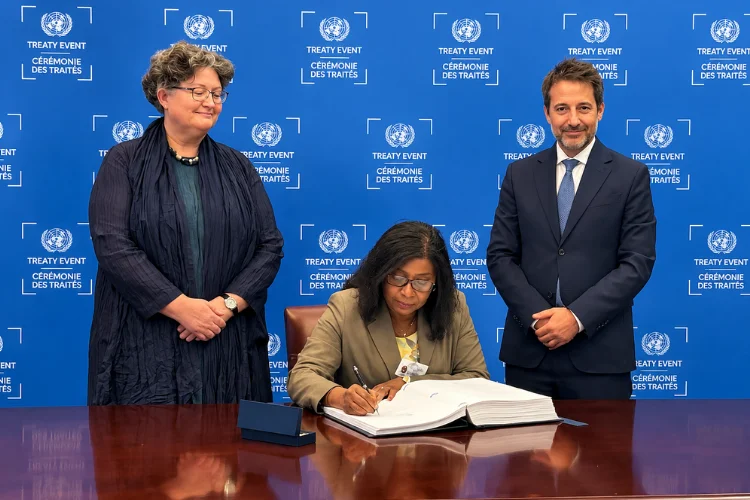
Before the general debate commenced, the Gabonese delegation convened a coordination meeting at its permanent mission to the UN to align positions. This preparatory step underscores the seriousness with which Libreville approaches its new duties. During the Assembly’s high-level segment, Tassyla-Ye-Doumbeneny signed two key treaties on behalf of Gabon: the Treaty on the Prohibition of Nuclear Weapons and the convention against cybercrime. These signings highlight the country’s commitment to international security frameworks and its willingness to engage on emerging threats.
Wide-ranging priorities
Multiple government ministries are actively involved in advancing Gabon’s agenda, focusing on climate action, forest and ocean protection, health, housing, and digital transformation. These sectoral priorities are not isolated; they feed into the broader strategy of positioning Gabon as a responsible and forward-looking actor in global affairs.
Testing ground for new responsibility
This 81st session serves as the first real test of Gabon’s expanded role within the General Assembly’s Bureau. It offers Libreville an additional forum to defend its interests and strengthen partnerships. A pivotal moment is expected on 26 September, when Tassyla-Ye-Doumbeneny will deliver Gabon’s official address from the UN podium, representing the president and articulating the nation’s vision to the world.
What lies beneath
Beyond the public speeches and protocol, the vice-presidency provides Gabon with a seat at the table where agendas are set and decisions are shaped. This behind-the-scenes influence is where the true value of the position lies. For a country seeking to amplify its voice and secure its place in the multilateral order, the opportunity is substantial. Yet it also brings expectations: the world will be watching to see how Gabon leverages this platform, not just in words but in concrete actions and sustained engagement.