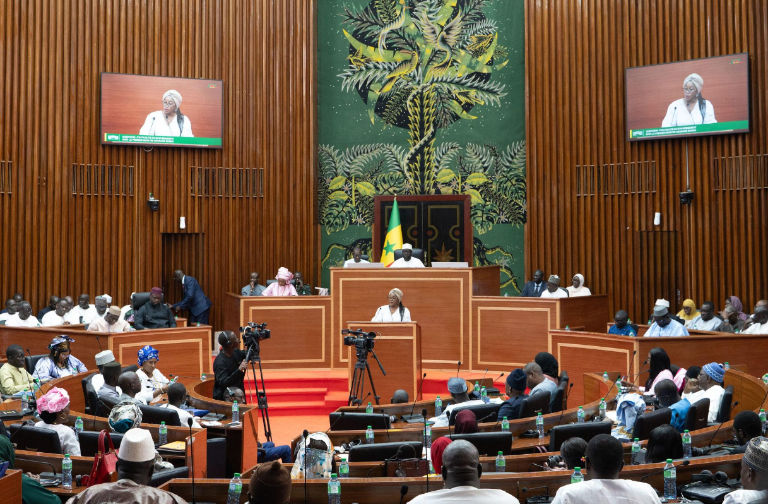
The political alliance between President Bassirou Diomaye Faye and former allies in the Pastef party has reached a decisive crossroads. On November 3, 2026, Senegal’s National Assembly dealt a significant blow to the executive branch by rejecting the 2026 supplementary budget bill, escalating tensions between the presidency and the parliamentary majority led by Ousmane Sonko’s party.
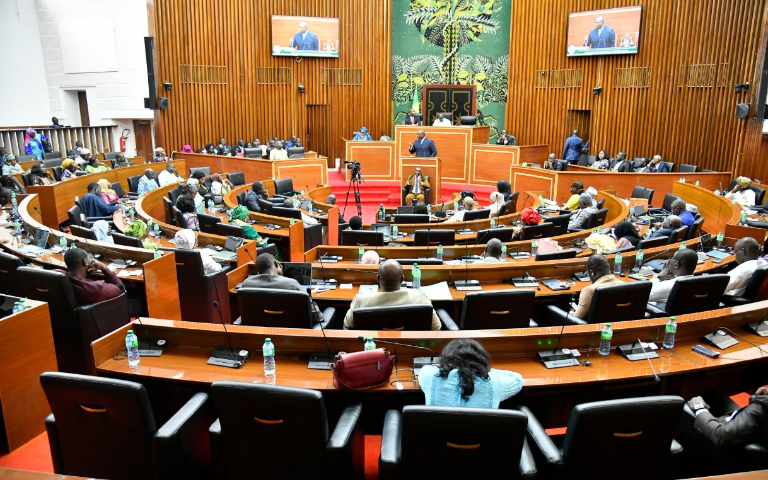
Lawmakers voted 109 in favor of dismissing the bill through a preliminary question—effectively ending debate—while only 20 opposed and three abstained, out of 132 deputies present. The move marks a unprecedented shift in parliamentary dynamics and underscores growing friction within the once-unified political movement.
Parliamentary rebellion: a vote that reshapes the power balance
The rejection wasn’t just about numbers. It was a declaration of autonomy by the Pastef-controlled legislature, signaling that the party’s parliamentarians are no longer bound by automatic loyalty to the executive, despite their shared political origin. This vote sends a clear message: financial policy can no longer be dictated top-down without scrutiny.
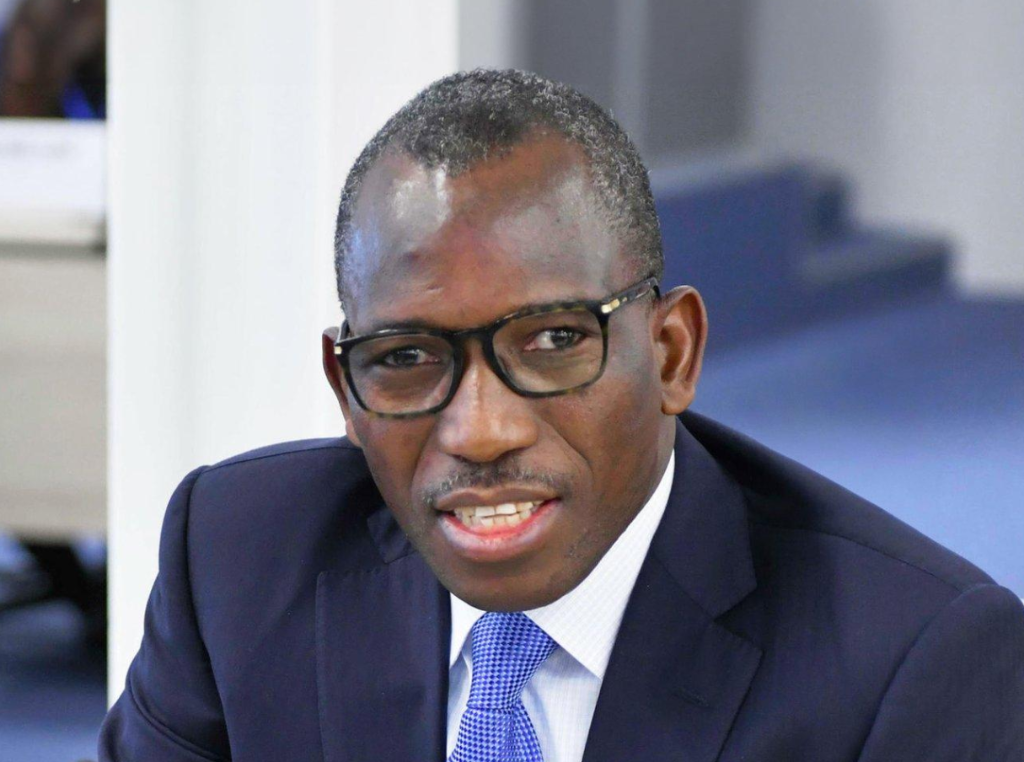
The preliminary question was introduced by Amadou Ba, a Pastef deputy—a procedural move that bypassed full deliberation on the budget’s content and immediately halted its progress. The government had sought to pass the supplementary finance bill to adjust fiscal forecasts amid rising economic pressures, including public debt and inflation.
A widening rift between Sonko’s legislature and Faye’s executive
Since Ousmane Sonko stepped down as Prime Minister in May 2026, the relationship between the presidency and the National Assembly has deteriorated. While both President Faye and Assembly President Sonko rose from the same political movement, their once-aligned visions have diverged sharply. The legislature now operates as an independent power center within a system that was not designed for such division.
The consequences are immediate. The executive can no longer assume automatic support on key economic files, even when framed as urgent or strategic. This new reality forces the government to negotiate rather than command—a historic departure for a party that once dominated Parliament without challenge.
Economic fault lines: where politics meets fiscal reality
Broken budget promises
The supplementary budget aimed to tighten fiscal projections, lowering revenue estimates from 6,188.8 billion CFA francs to 5,848.7 billion, and increasing the deficit from 5.4% to 7.6% of GDP. Total spending was revised upward to 7,583.9 billion CFA francs, with a drastic cut of 555 billion CFA francs in investment credits—raising concerns over stalled development projects in key sectors.
Clash over financial transparency
Parliamentarians, particularly from the Pastef bloc, accuse the Ministry of Economy and Finance of opacity in budget allocations, especially regarding energy subsidies, family security grants, and priority spending. The government, led by Finance Minister Cheikh Diba, insists it has met all information requests. Yet deputies remain unconvinced, demanding fuller disclosures and a more inclusive decision-making process.
The debate reflects a deeper struggle: should fiscal policy be driven by urgency and technical adjustment, or subject to robust parliamentary oversight and public accountability?
Global implications: the FMI factor and investor confidence
The budget rejection doesn’t just rattle domestic politics—it threatens Senegal’s ongoing negotiations with the International Monetary Fund (IMF) for a new financing program. Approval of the supplementary budget was expected to strengthen credibility in fiscal management and signal stability to international partners. Its rejection now casts doubt on debt sustainability and macroeconomic credibility, risking delays or reduced funding at a critical moment.
Domestically, delays in adopting the budget could disrupt public payments to contractors, suppliers, and social programs, creating liquidity strains in key sectors. The crisis isn’t only political—it risks undermining economic stability and investor trust.
A de facto cohabitation without a constitutional framework
While Senegal is not in a formal cohabitation—where the president and prime minister are from opposing parties—the current standoff mirrors its challenges. The president commands the executive, but the legislative majority, though historically allied, now refuses to grant automatic approval. This creates an institutional gray zone: governance through consensus is now required, but no clear rules exist for such a scenario.
The November 3 vote raises a critical question: how far can dissent go within a movement that once governed unopposed? With no clear resolution in sight, the executive must now seek alternative paths to pass the budget, while the legislature appears resolved to assert its constitutional role as a check on executive power.
What’s next: the road to resolution or deeper conflict?
The stage is set for a prolonged power struggle—one that could either strengthen democratic checks and balances or paralyze state functions. The government may attempt to renegotiate compromised versions of the budget or pursue legal or procedural avenues to bypass resistance. Meanwhile, the Pastef-led Assembly shows no sign of backing down, insisting on greater transparency and realignment of priorities.
One thing is clear: the rejection of the 2026 supplementary budget is not just a financial setback—it’s a turning point in Senegal’s political evolution. It exposes a power vacuum, redefines institutional roles, and tests whether a movement can govern itself when its leaders are divided. The outcome will shape not only the country’s fiscal future, but its democratic stability for years to come.