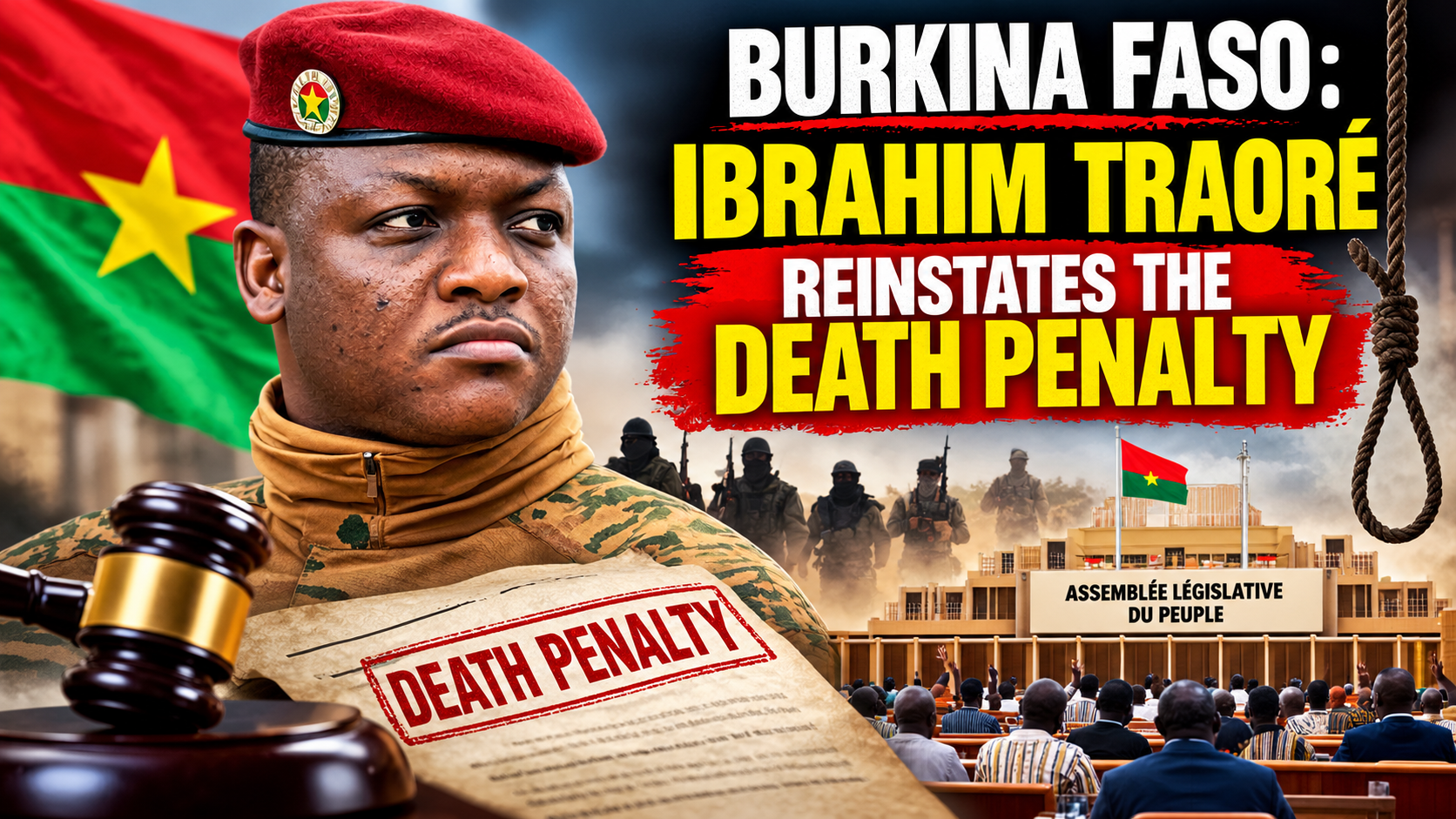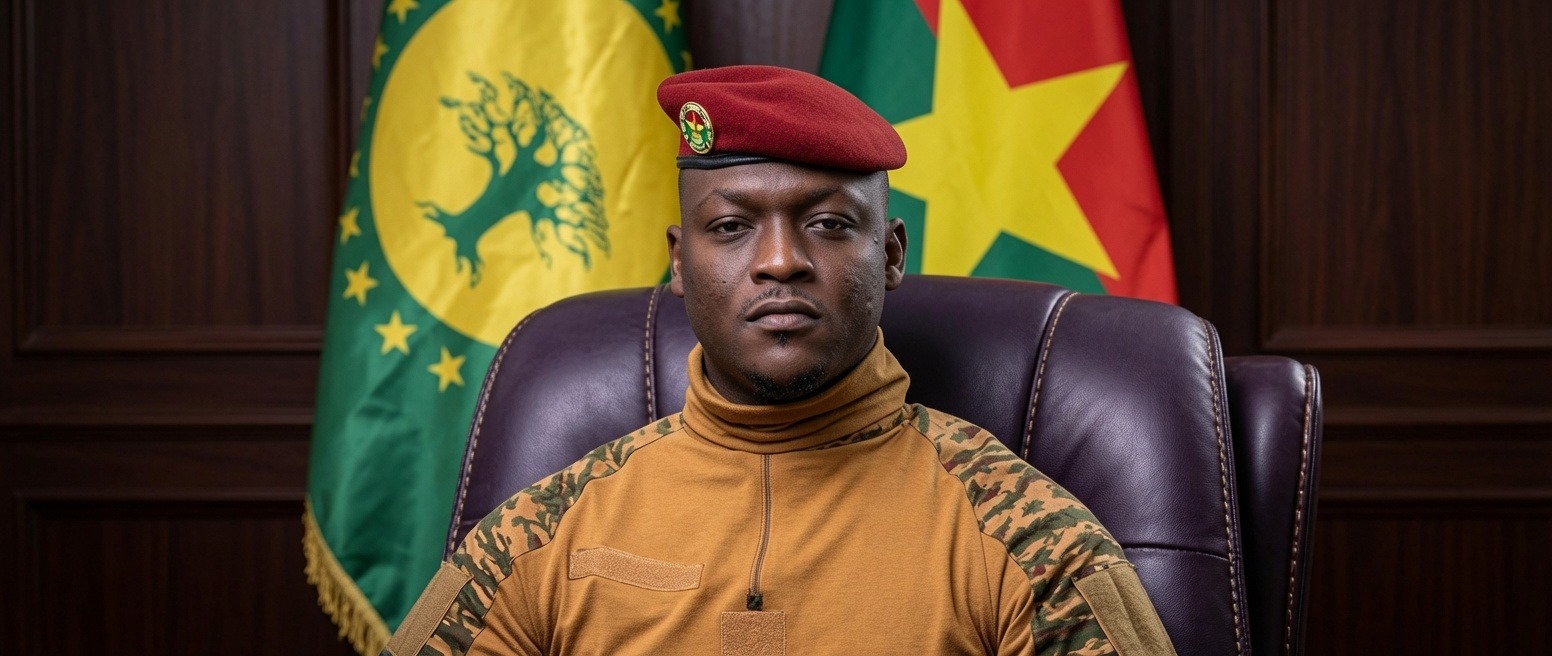
In a bold and calculated move, Burkina Faso’s military government led by Captain Ibrahim Traoré has pushed through a controversial amendment to reinstate the death penalty in the national penal code. This legislative overhaul, swiftly approved by the interim legislative assembly, marks a decisive turning point in the junta’s consolidation of power in Ouagadougou. Framed under the stern motto ‘Sentimentality is over,’ the restoration of capital punishment—abolished in 2018—is portrayed as a necessary step toward national strength and moral discipline. Yet beneath the veneer of defiance against external threats and treason, critics argue the reform is a politically engineered instrument designed to permanently sideline rivals—with Paul-Henri Sandaogo Damiba, the deposed leader, at the top of the list.
Why the timing of the death penalty revival is not coincidental
The introduction of the death penalty comes at a strategically sensitive moment for Ibrahim Traoré’s administration. Paul-Henri Sandaogo Damiba stands accused of high treason and conspiracy against state security, and now faces the real possibility of being the first high-profile figure in Burkina Faso to be sentenced to death under the restored law. By removing the possibility of presidential pardon or judicial leniency—citing the end of ‘sentimentality’—the regime is not only signaling its ruthless posture but also creating a chilling legal framework to ensure Damiba’s potential execution serves as a stark warning to opposition forces and disgruntled factions within the armed forces.
The bitter irony: the same coup methods turned against Damiba
This judicial onslaught against Damiba reveals a bitter paradox at the heart of Burkina Faso’s recurring cycle of coups. The irony is sharp: those who once celebrated Damiba’s seizure of power are now wielding the same mechanisms he pioneered to dismantle democracy. The parallels are impossible to ignore:
- Identical paths to power: In January 2022, Damiba forcibly removed President Roch Marc Christian Kaboré, framing the act as a ‘patriotic awakening.’ By September 2022, Ibrahim Traoré applied the same blueprint to oust Damiba himself.
- From ‘patriotism’ to ‘treason’: Actions once hailed as heroic liberation are now recast as capital offenses when directed at the current leadership.
- A mirror of political hypocrisy: Damiba now faces charges that mirror those once used to justify his rise—only now, they serve the opposite political agenda.
Legal terror as a tool of political conquest
By rejecting clemency in the name of eliminating ‘sentimentality,’ the Traoré regime is weaponizing the justice system to crush dissent and eliminate perceived enemies. Yet history in West African military regimes suggests a dangerous gamble. Those who restore the ‘supreme penalty’ to settle political scores often become its future targets. The act of reviving capital punishment does not secure power indefinitely—it entrenches the cycle of vengeance, destabilization, and retribution that has long plagued Burkina Faso’s fragile transition.
What comes next: a descent into legalized coercion?
The reinstatement of the death penalty is more than a judicial amendment—it is a declaration of intent. It signals that Burkina Faso’s military leadership is prepared to cross a moral and legal threshold, with Paul-Henri Damiba squarely in the crosshairs. Whether this move stabilizes the nation or accelerates its slide into deeper authoritarianism remains uncertain. What is clear is that the junta has chosen a path of uncompromising force, with the death penalty serving as its most feared instrument of control.