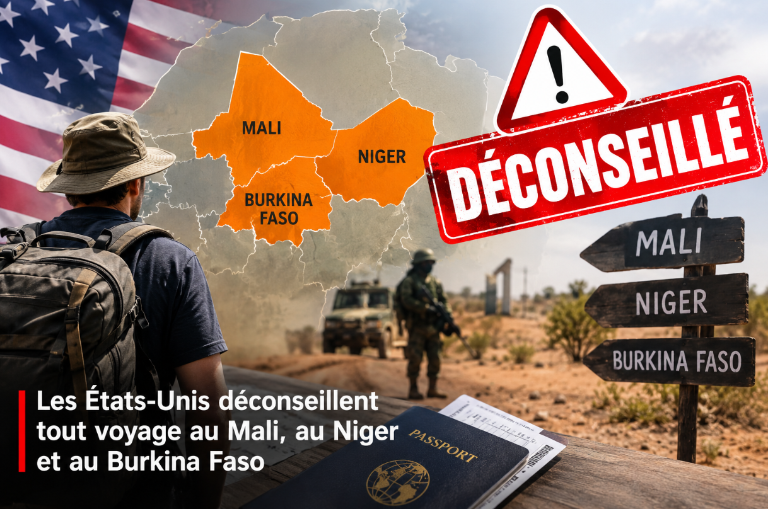
The United States has just taken an unprecedented step that should serve as a sharp wake-up call for anyone considering travel to the Sahel region in 2026. In a decisive move that reflects escalating security threats, Washington has placed Mali, Niger, and Burkina Faso at the highest possible travel advisory level—Level 4, commonly known as “Do Not Travel.” This bold announcement marks a critical turning point in how governments, businesses, and travelers must approach these three neighboring nations.
How the US escalated its Sahel warning to a historic high
What began as routine security assessments has now culminated in an unusually strong advisory that underscores a major shift in risk perception. While several African nations face travel warnings, the simultaneous placement of Mali, Niger, and Burkina Faso at Level 4 signals a regional crisis that demands immediate attention. The U.S. Department of State has not issued such a sweeping directive for an entire subregion in over a decade.
Analysts point to a dangerous convergence of threats—terrorism, organized crime, and armed group operations—that has overwhelmed local and regional security forces. The decision reflects not just current instability, but a trajectory of worsening conditions that shows no sign of abating.
Why Mali is now a no-go zone for international travelers
The U.S. government has taken the rare step of advising Americans not to travel to Mali under any circumstances. Official guidance released in mid-2026 cites terrorism, kidnapping, violent crime, civil unrest, and public health risks as overwhelming concerns. The warning applies to all regions of the country, including urban centers.
The capital, Bamako, though relatively more stable than rural areas, is not considered safe for casual movement. Even U.S. government employees stationed in Mali face strict restrictions: travel outside the capital is prohibited for diplomatic personnel, highlighting the fragile security landscape.
This is not just a cautionary note—it’s a clear signal that the security situation has crossed a dangerous threshold. Armed groups linked to Al-Qaeda and the so-called Islamic State continue to carry out deadly attacks on roads, military convoys, and civilian targets, making travel perilous at best.
What this means for foreign nationals in Mali
Travelers in Mali now face extreme vulnerability. In the event of an incident such as a kidnapping or violent attack, access to rapid consular assistance is severely limited. The U.S. Embassy in Bamako has warned that emergency services may be delayed or unavailable in high-risk areas. For businesses operating in the region, this translates into operational paralysis and heightened liability risks.
Niger on the brink: what the latest travel ban reveals about West African instability
The decision to place Niger at Level 4 reflects a dramatic deterioration in security over the past year. While Niamey remains the country’s most secure hub, the U.S. has warned that travel anywhere in Niger poses unacceptable risks. The advisory highlights active terrorism, kidnapping, armed robbery, civil conflict, and health hazards as pervasive threats.
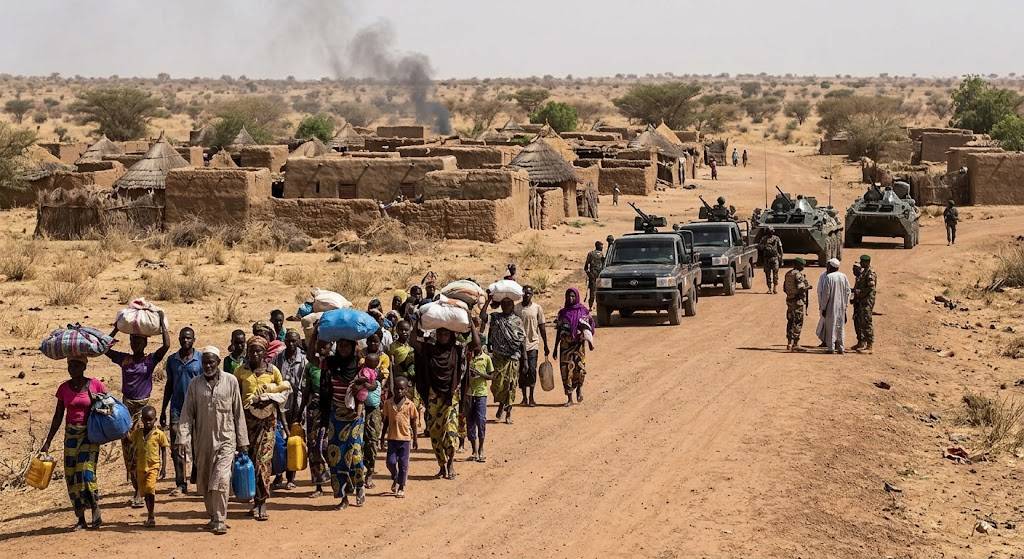
Frontier regions are particularly volatile, with porous borders allowing armed groups to move freely. The country’s already fragile infrastructure has been further strained by repeated attacks on transport corridors and military outposts. For aid workers, journalists, and business travelers, this means routes once considered viable are now potential death traps.
It’s not just personal safety at stake. The closure of critical roads and the collapse of regional trade networks are devastating local economies and disrupting cross-border humanitarian efforts. The U.S. government has restricted its own personnel from leaving Niamey, underscoring the severity of the threat.
Burkina Faso’s descent into a security black hole
Burkina Faso now stands at the epicenter of the Sahel’s security crisis. The U.S. has joined several European governments in warning against all travel to the country, citing the same cocktail of terror, kidnapping, and violent crime. Unlike Mali, where some urban control persists, Burkina Faso has seen radical expansion of insurgent activity into new provinces.
Attacks have surged in frequency and scale—no location is immune. Hotels, restaurants, mines, and even government checkpoints have become targets. The U.S. Embassy in Ouagadougou has restricted its staff from traveling outside the capital, a rare and sobering admission of vulnerability.
For international companies operating in gold mining or logistics, the risks are existential. The kidnapping of foreign nationals has become a lucrative enterprise for extremist networks, and ransom demands are reaching new highs. Amid collapsing state authority, civilians and expatriates alike are trapped in a deteriorating security landscape.
How the Sahel travel crisis impacts global business and humanitarian aid
The fallout from these Level 4 advisories extends far beyond tourism. International businesses—especially those in energy, mining, and agriculture—are being forced to suspend operations or relocate personnel. Supply chains are collapsing as regional transport networks grind to a halt.
Humanitarian organizations face impossible choices. With aid convoys regularly ambushed and local staff targeted, delivering food, medicine, and education to vulnerable populations has become a high-risk mission. Several NGOs have already withdrawn international staff, leaving communities without critical support.
For investors, the message is clear: the Sahel is no longer an emerging market opportunity—it’s a volatile liability. Insurance premiums have skyrocketed, and risk assessments now classify the entire region as a red zone.
What travelers and businesses need to do today
With public warnings at their most severe level in over a decade, the message from Washington is unambiguous: avoid these countries entirely. But for those with no choice—such as diplomats, journalists, or aid workers—the U.S. offers a sobering checklist:
- Register with your embassy before arrival and monitor updates daily. Consular assistance may be delayed or unavailable in conflict zones.
- Avoid all non-essential travel, including to regions previously considered safe. The situation can deteriorate overnight.
- Prepare for extreme isolation. In many areas, phone networks are unreliable, and medical evacuation is impossible.
- Evaluate evacuation plans and have a clear exit strategy before setting foot in the country.
- Secure private security if absolutely necessary—government protection is not guaranteed.
For those who choose to ignore the warnings, the consequences could be catastrophic. Kidnapping ransoms now exceed millions of dollars in some cases, and the chance of survival in a terror attack is alarmingly low. This is not fearmongering—it’s a realistic assessment of a region in freefall.
Looking ahead: will conditions improve or worsen in the Sahel?
The U.S. travel advisory isn’t just a snapshot of current risks—it’s a warning about the future. Military operations have so far failed to contain the insurgency, and political instability continues to undermine governance in all three countries. With climate change exacerbating resource scarcity and population displacement, the conditions fueling extremism show no signs of diminishing.
While some analysts argue that targeted international intervention could stabilize key areas, the window for effective action is closing fast. The longer the crisis persists, the more entrenched extremist networks become, and the harder it will be to restore security.
For now, the message is simple: the Sahel has reached a turning point. The era of relative stability has ended. The question now is not if conditions will worsen, but how much worse they will get—and how long it will take for the region to recover.
The U.S. has sounded the alarm. The world must listen.