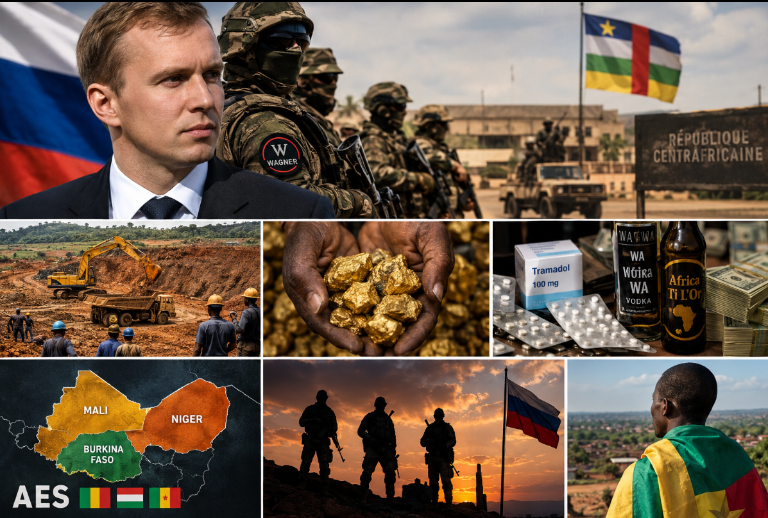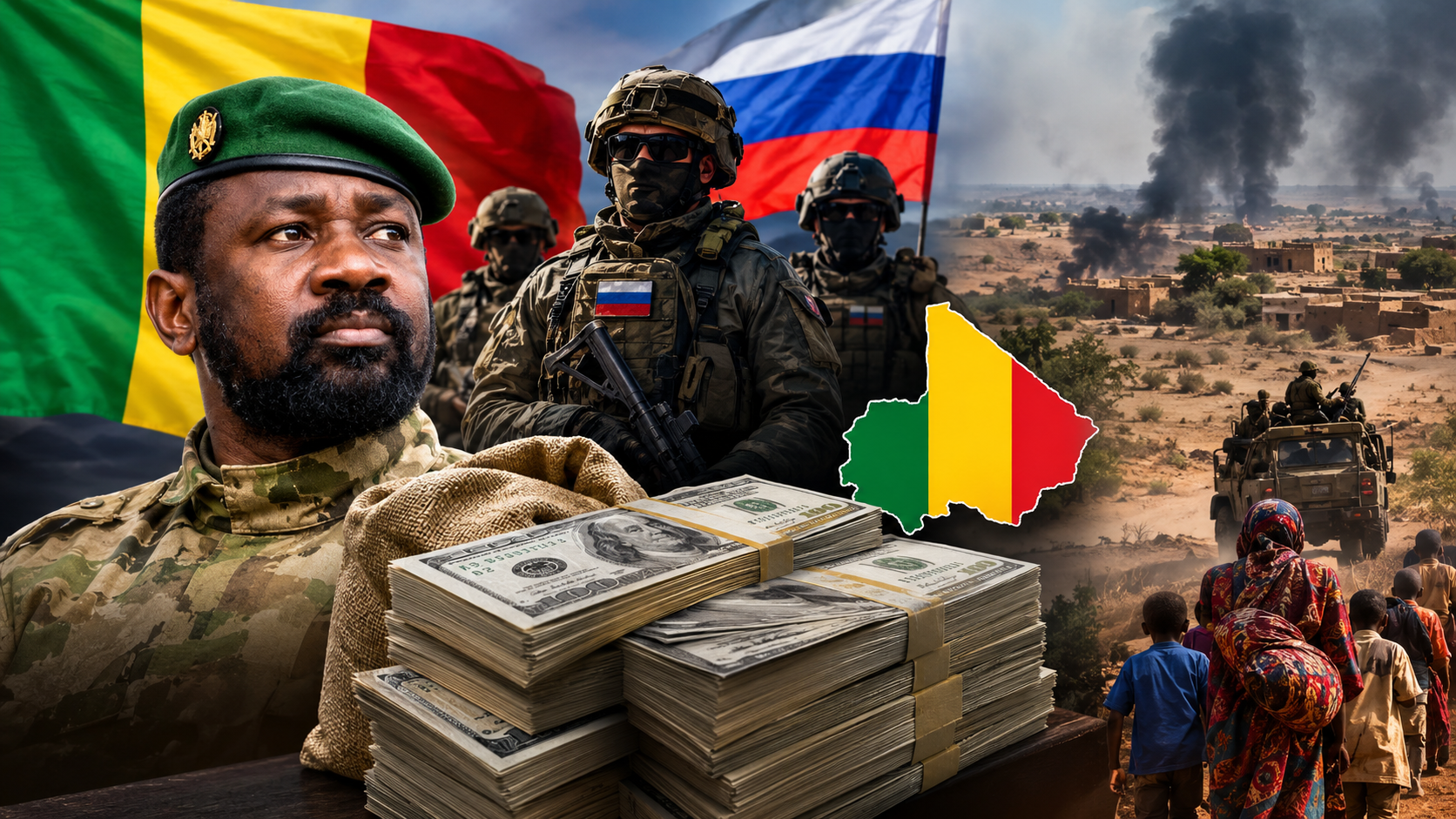
Nearly $1 billion: that is the staggering sum Bamako has committed to its partnership with Russian paramilitary forces, first affiliated with Wagner and now integrated into the Africa Corps initiative. With estimated costs of approximately $10,000 per month per fighter, the financial burden of this military cooperation has become impossible to ignore. The central question now facing Malian authorities is equally unavoidable: after investing so heavily in this Russian alliance, what tangible security benefits have been achieved to justify such an expenditure?
From Strategic Shift to Financial Quandary: Has the Gamble Paid Off?
The decision to pivot from Western partners, particularly France, toward Russia was framed as a means to reclaim national sovereignty over Mali’s security landscape. The transition was presented not merely as a change in alliances but as a fundamental reorientation designed to strengthen the Malian Armed Forces and restore state authority across the entire country.
Yet a security strategy cannot be measured by the nationality of its partners or the vigor of official declarations. Its true value is determined by tangible outcomes: the protection of civilians, the security of key transportation routes, a reduction in armed attacks, freedom of movement, and the restoration of public services in threatened regions. It is precisely on this front that the current partnership must be scrutinized with rigorous objectivity.
A Monumental Investment Amidst Persistent Insecurity
The $1 billion figure transcends a mere military expenditure. It represents a monumental allocation of public resources resources that might otherwise have been directed toward rebuilding infrastructure, healthcare, education, or economic development in the country’s most vulnerable regions.
While it is unrealistic to expect such a sum to instantly resolve a complex insurgency, the sheer magnitude of the investment demands measurable accountability. The Malian government must demonstrate that these funds have translated into verifiable improvements in national security. The absence of such evidence despite continued attacks, vulnerable military outposts, and populations living under the threat of armed groups leaves the effectiveness of this partnership fundamentally unproven.
The central issue is not simply the cost incurred but the value received in return. This question carries particular weight given that the transitional authorities have positioned this Russian cooperation as the cornerstone of their security recovery strategy. By presenting Moscow as a decisive alternative to previous military arrangements, they have staked their political credibility on the success of this new alliance.
Wagner to Africa Corps: A Rebrand Without Progress?
The rebranding of Russian forces from Wagner to Africa Corps reflects a broader reorganization of Moscow’s military presence across Africa. However, a change in nomenclature, command structure, or official designation does not, in itself, equate to improved on-the-ground performance.
For Mali, the critical assessment lies in determining whether this evolution has led to enhanced coordination with national armed forces, improved intelligence capabilities, more effective local protection, and a sustainable reduction in threats against civilians.
Foreign fighters may offer specialized operational advantages, but they cannot replace the essential need for a self-sufficient, well-equipped, and adequately trained national army capable of holding reconquered territories. If Mali’s long-term security continues to depend on an expensive external force, the very principle of strategic autonomy championed by its leaders must be reexamined.
Sovereignty is not merely about choosing allies freely; it also requires maintaining control over decision-making, understanding the true cost of engagements, and rigorously evaluating outcomes without bias.
The Political Cost of Unmet Promises
The primary justification offered by Malian authorities for severing ties with France and embracing Russia has been the reclaiming of military initiative. This strategic pivot was accompanied by a narrative emphasizing national independence, diversified partnerships, and the end of dependence on former colonial powers.
Yet when a policy is defended in the name of sovereignty, it must also be subjected to the highest standards of transparency and accountability. Citizens deserve clear answers: How much does the Russian deployment cost? What specific missions have been assigned? What concrete results have been achieved? And what assurances exist regarding civilian protection?
This is not a matter of opposition to Russia or nostalgia for past partnerships. It is a question of public governance. No military partner should be exempt from objective evaluation simply because they align with the political discourse of the ruling regime.
The persistent silence surrounding outcomes contrasting sharply with the scale of financial commitments risks transforming a strategic choice into a crisis of credibility. When billions are at stake, leaders must be prepared to justify the tangible security benefits delivered.
The Everyday Lives of Malians: The Ultimate Benchmark
Beyond the headlines and financial figures, the daily reality of Malian citizens remains the ultimate measure of success. Families in conflict zones, traders relying on safe transit routes, farmers seeking access to their land, and displaced populations longing to return home do not demand rhetorical victories they expect tangible and lasting improvements in their security and quality of life.
It is against this standard that the Russian partnership must be judged. If the deployed resources have not translated into more effective civilian protection, a sustained decline in attacks, and a gradual restoration of state presence, authorities will be compelled to explain why the results remain disproportionate to the investment.
To form a definitive assessment, verifiable data is essential details on actual payments, troop numbers, contract durations, operations conducted, and the evolution of the security environment before and after the arrival of Russian forces. The headline figure of $1 billion, while striking, must be contextualized within a transparent and well-documented financial and operational framework.
Accountability in the Balance: A Strategy Demanding Proof
This issue extends far beyond the presence of Russian forces in Mali. It challenges the ability of transitional authorities to convert a diplomatic reorientation into concrete benefits for the population. A change in partners is not, in itself, a security achievement. It represents a political choice whose effectiveness must be demonstrated.
By committing such substantial resources to cooperation with Moscow, Malian leaders have made this partnership a linchpin of their national strategy. They are now compelled to meet a fundamental obligation: proving that this investment has genuinely contributed to securing the territory and protecting its people.
The true failure would be to allow the cost of this strategy to remain obscured while continuing to present the shift in alliances as sufficient evidence of success. In a nation enduring a prolonged security crisis, sovereignty cannot be reduced to rhetoric, nor can military cooperation be accepted as an end in itself.
The question that matters most is this: How much durable security, how many stabilized regions, and how many protected lives has Mali secured in exchange for a billion dollars? It is this question not political rhetoric that authorities must answer.
By François Mvondo — Journalist