A landmark €500 million bond puts Benin under the spotlight
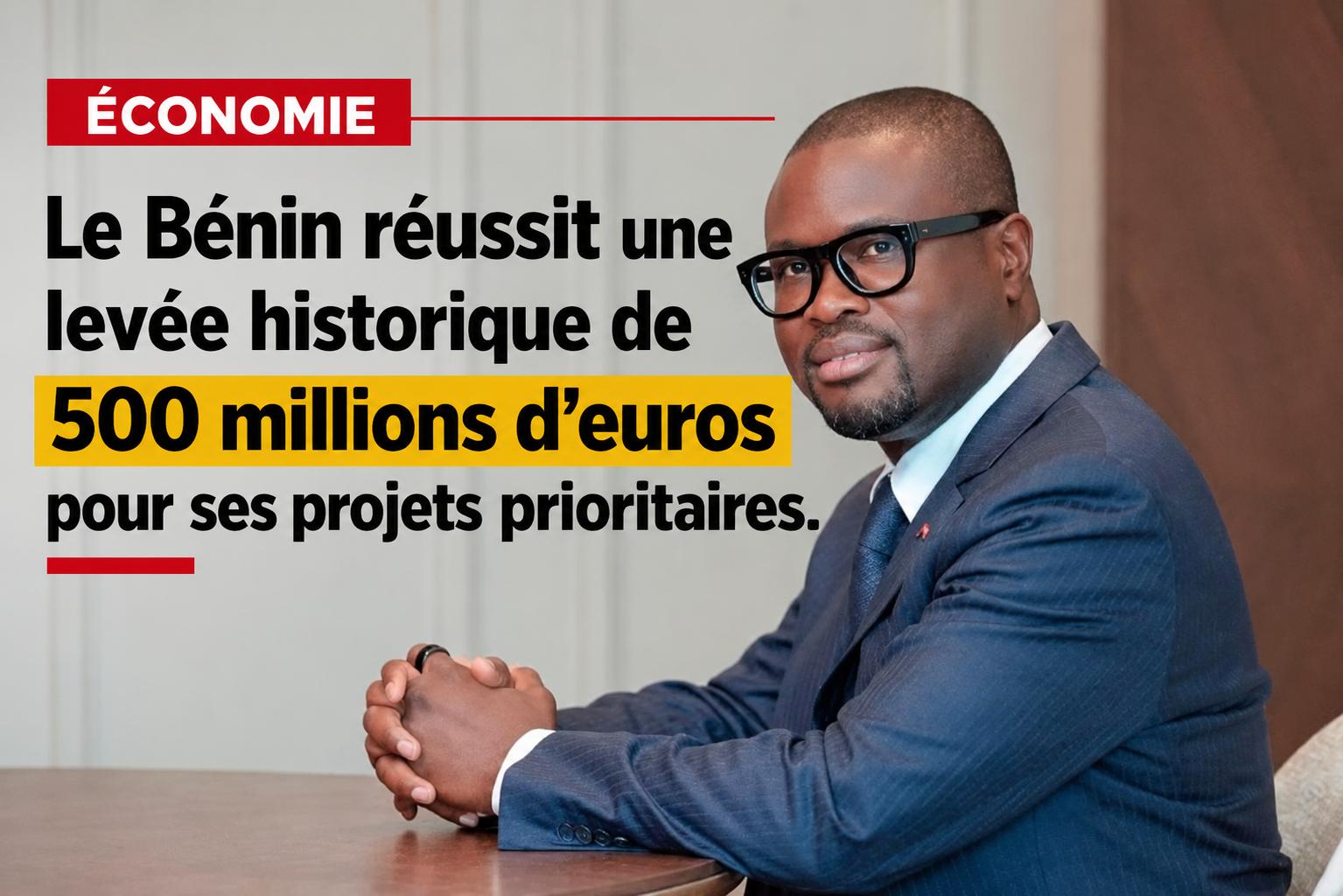
Cotonou — Benin has secured €500 million on international capital markets in partnership with the African Development Bank Group, and the announcement has triggered a wave of reaction across financial, political and civil society circles. The operation, designed to bankroll a series of high-impact strategic investments, builds on the government’s action plan and is being read by observers as a defining moment for public debt management in sub-Saharan Africa. The immediate question now is not whether the money exists, but what it will genuinely change.
Where the money is headed
The proceeds are earmarked for core social services — education, health and universal access to drinking water — as well as for the engines of long-term growth: road infrastructure, renewable energy and the modernisation of agriculture. Economic inclusion is another pillar, with a clear focus on creating lasting jobs for young people and women.
For ordinary households, the promise is tangible: a stronger rural health network and upgraded schools. Turning macroeconomic indicators into everyday benefits is the yardstick against which the public is likely to judge the operation.
The financial mechanics that made it possible
Analysts have zeroed in less on the amount than on how the deal was structured. The bond carries a 12-year final maturity, an unusually attractive profile for an international issuance in today’s economic climate. That outcome rests on an innovative credit enhancement mechanism, backed by a partial guarantee from the African Development Fund, the concessional window of the AfDB Group.
This risk-sharing arrangement softened the issuance’s risk profile and delivered highly competitive financial terms for Benin. In effect, a portion of the risk was absorbed externally, allowing Cotonou to borrow on better terms than the market would otherwise have offered.
Reactions from the African Development Bank
The transaction fits squarely within the AfDB Group’s strategic push to maximise the leverage of private capital for African states. Robert Masumbuko, head of the AfDB Group’s country office in Benin, said the deal aligns with the Bank’s new strategic vision for supporting its clients, particularly its first High 5 priority — mobilising capital market resources at scale — and with the emerging African financial architecture for the continent’s development.
Ahmed Attout, director of the AfDB Group’s Financial Sector Development Department, described the operation as the second of its kind and proof that guarantees can mobilise private capital more effectively. By pairing the African Development Fund’s guarantee with complementary risk-sharing mechanisms, he said, Benin was able to raise substantial long-term resources on competitive terms.
Why Benin keeps earning investor trust
The success reinforces Benin’s reputation for disciplined budget management. Year after year, the country has pursued a rigorous and proactive approach to its public debt, which has earned renewed confidence from multilateral lenders and investors alike.
At a time when many emerging economies are grappling with rising credit costs, Cotonou is demonstrating that bold financial engineering can still secure the resources needed for sustainable and inclusive development.
The debate that follows
Reactions have not been uniformly celebratory. The deal has reignited a broader conversation about debt sustainability, transparency and whether guaranteed borrowing genuinely reduces risk or simply shifts it into the future. Supporters argue that a 12-year maturity at competitive rates is precisely the kind of long-term financing African economies need. Skeptics counter that each new issuance raises the bar for future repayment and that the benefits must be visible to citizens quickly to justify the added exposure.
What comes next
Attention now shifts to execution. Investors and citizens alike will be watching how quickly the funds translate into classrooms, clinics, water points and roads. For the African Development Bank, the operation is a template it hopes to replicate elsewhere on the continent. For Benin, it is both an opportunity and a test: the chance to prove that a landmark bond can become a landmark in development, not just a headline in the financial press.