From institutional tension to decisive action
As Benin’s Senate convened its first ordinary session in Cotonou, the stakes could not have been higher. President Patrice Talon opened the session with a clear message: the upper house would serve as a bulwark against political gridlock, drawing lessons from Senegal’s recent budgetary standoff. The question now is whether this new institutional framework can transform potential crises into opportunities for constructive dialogue.
Designing a new pillar of political stability
Created in 2025 through constitutional reform, Benin’s Senate represents more than just institutional innovation—it embodies a strategic shift in how political disputes are managed. With 25 members, the chamber is tasked with safeguarding fundamental freedoms, democratic values, and social cohesion while serving as a crucial checkpoint for legislation touching constitutional amendments, elections, and party regulations.
Its most critical function? Acting as an arbitration mechanism during institutional clashes between the presidency and the National Assembly. Unlike Senegal’s approach, where budgetary disagreements recently paralyzed legislative proceedings, Benin’s Senate has been granted the power to demand second readings of contentious bills—except financial laws—before they reach final adoption. This deliberate design aims to prevent disputes from escalating into prolonged crises that could derail public policy.
A proactive role in shaping policy coherence
The Senate’s involvement does not replace debate; rather, it structures it. By providing a neutral forum for negotiation, the institution allows lawmakers to refine proposals without resorting to procedural deadlocks. President Talon emphasized this vision during the session’s opening: “Our Senate is not a battlefield for partisan rivalry—but a space where tensions can be resolved before they threaten the nation’s progress.”
Senegal’s budget battle: a cautionary tale
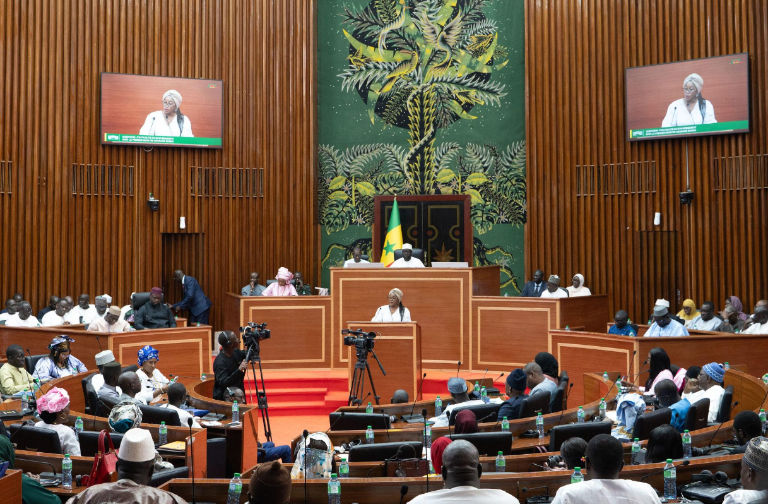
Across Benin’s northern border, Senegal’s political landscape offers a stark contrast. In late October, the National Assembly’s finance committee rejected the government’s 2026 budget adjustment bill, a move that exposed deep divides over economic priorities. While the rejection was not final—as lawmakers later opted to prolong negotiations—the episode underscored a critical reality: when institutional channels fail to mediate disputes, the cost is paid in delayed governance and eroded public trust.
The emerging question is whether Benin’s Senate can avoid a similar fate. Its limited jurisdiction over financial legislation means it cannot directly intervene in budgetary disputes. Yet, its broader mandate positions it to influence the political climate, ensuring that disagreements remain within the bounds of constructive engagement rather than escalating into constitutional crises.
Beyond legislation: the Senate’s role in reinforcing trust
What makes this Senate experiment significant is its potential to redefine political accountability. By serving as a second layer of scrutiny, the chamber adds depth to Benin’s democratic checks and balances. However, its success hinges on three key factors:
- Credibility of mediation: Will political actors respect the Senate’s rulings, or will disputes be bypassed through other channels?
- Constitutional discipline: Can the Senate operate within its legal boundaries without overstepping into the executive’s domain?
- Public engagement: Will citizens perceive the institution as a legitimate force for stability rather than a rubber-stamp body?
These challenges extend beyond procedural mechanics. At their core, they reflect a broader demand for governance that prioritizes national interest over short-term political gains.
Crafting a new narrative for Benin’s political future
Benin stands at a crossroads. The Senate’s formation marks a deliberate departure from past governance struggles, signaling a commitment to institutional resilience. Yet, the true test lies in its ability to turn this vision into tangible outcomes.
As the chamber begins its work, the nation watches closely. Will the Senate’s interventions prevent deadlocks, or will political leaders continue to test its limits? More importantly, can Benin forge a political culture where conflict resolution takes precedence over confrontation? The answers will shape not only the Senate’s legacy but the country’s trajectory toward sustainable stability and development.