Religious leader kara calls for unity between Senegal’s president and prime minister
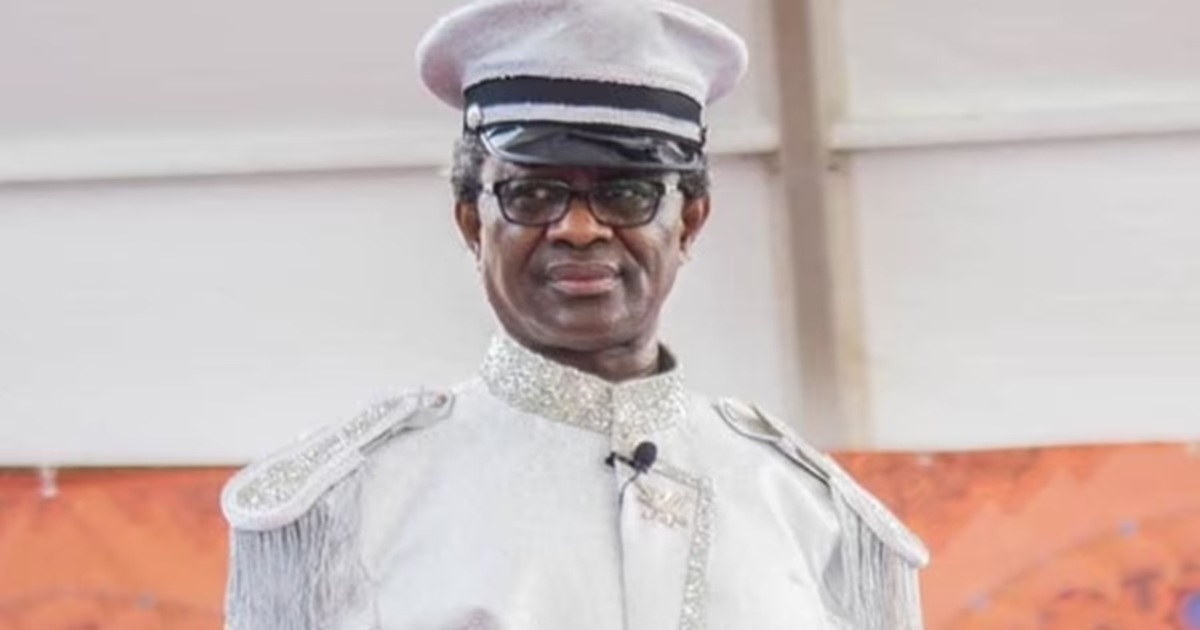
The nation of Senegal stands at a pivotal moment, with top leaders facing mounting pressure to set aside personal differences in favor of collective progress. At the heart of this call for unity is Serigne Modou Kara Mbacké, a prominent religious figure whose voice carries significant weight in national affairs. Addressing his followers during the Grand Magal of Touba—a celebration marking the exile of Cheikh Ahmadou Bamba—he delivered a powerful message urging reconciliation between President Bassirou Diomaye Faye and Prime Minister Ousmane Sonko.
A plea for national cohesion amid rising challenges
In a country grappling with economic hardship and deepening social divides, Serigne Modou Kara Mbacké emphasized that the time for petty disputes has passed. Speaking from his residence in Mermoz, he framed the rift between Diomaye and Sonko as a distraction from the country’s real priorities. “The hour is not for squabbles but for national cohesion,” he declared, urging both leaders to prioritize the country’s stability over personal grievances.
The influential cleric framed their relationship as one rooted in shared history, not just politics. “They are not united by politics alone, but by a long history of struggle that predates their rise to power,” he noted. By invoking the concept of cousins à plaisanterie—a cultural tradition of playful kinship—he reinforced the idea that their bond, though tested, remains essential to the nation’s fabric.
Calling for reconciliation with cultural and moral authority
Serigne Modou Kara did not mince words. With a tone that blended spiritual authority and political urgency, he insisted that the two leaders must “come together and start anew for the sake of the country.” His appeal transcended mere political strategy, positioning unity as a moral obligation.
He went further, suggesting that their reconciliation would resonate deeply with the Senegalese people. “They are a minority compared to the entire population. Let them reunite for the good of the nation,” he urged. The message was clear: leadership, at this juncture, must be measured not by personal ambition but by the ability to inspire collective resilience in the face of adversity.
A mediator’s role in shaping political dynamics
By stepping into the fray, Serigne Modou Kara Mbacké is not merely offering spiritual guidance—he is inserting himself into the political discourse. His intervention signals a broader expectation that religious leaders will play an active role in mediating national crises. In a nation where faith and governance are often intertwined, his words carry the potential to shift the trajectory of current tensions.
The cleric’s stance underscores a fundamental truth: in times of uncertainty, leadership must reflect the values of unity and service. Whether his appeal will translate into tangible action remains to be seen, but one thing is certain—his message has resonated far beyond the walls of his home in Mermoz.