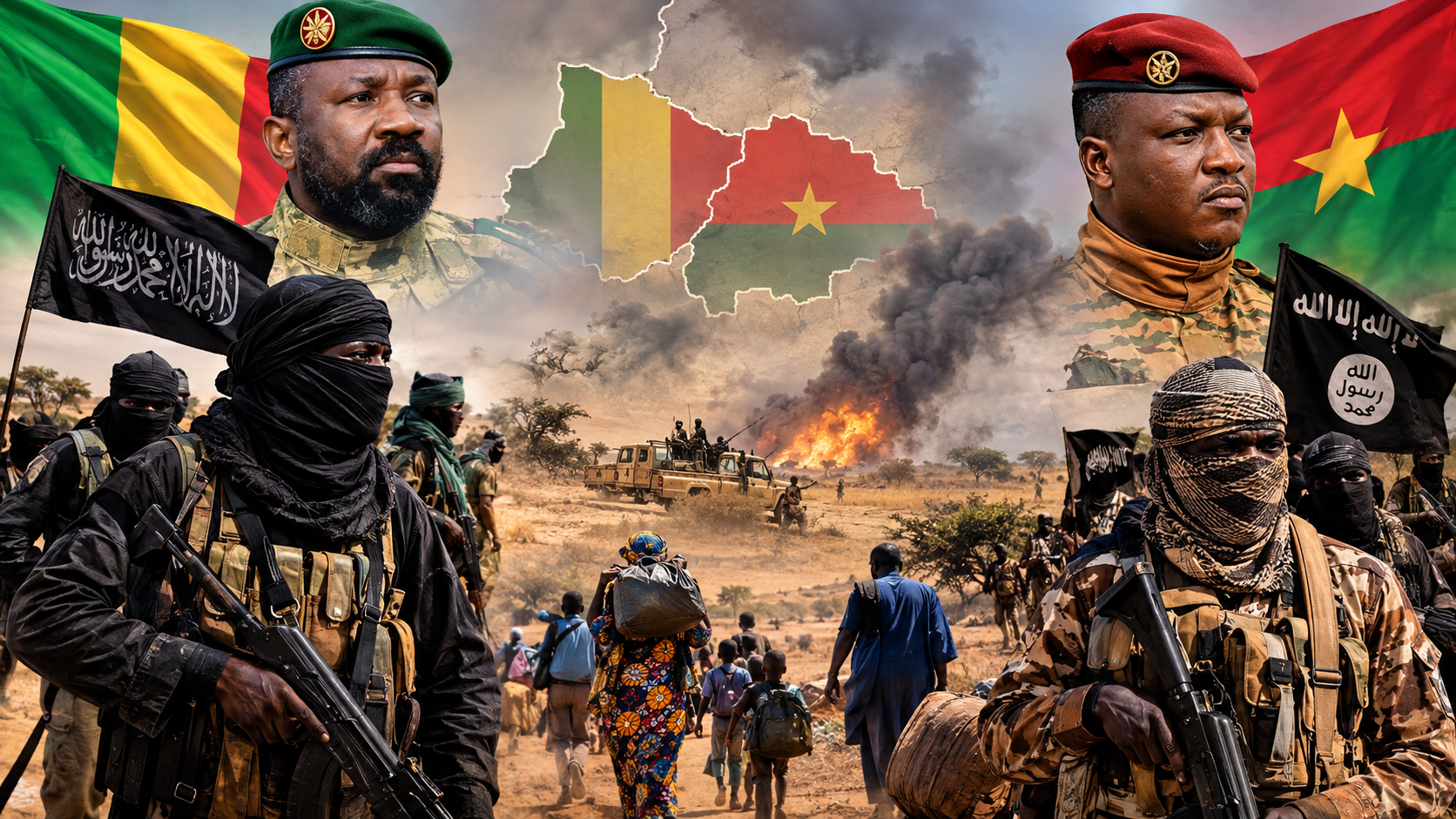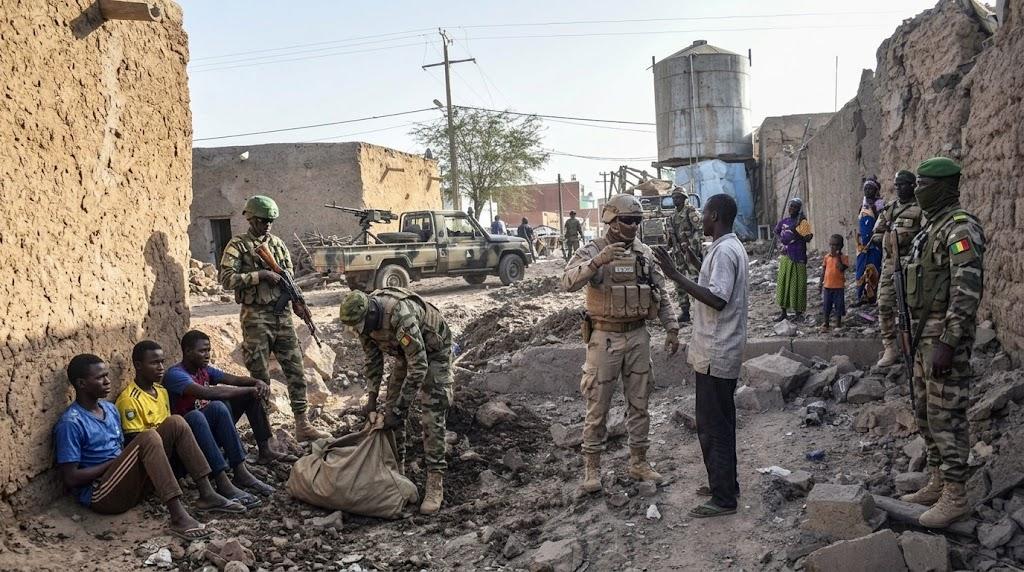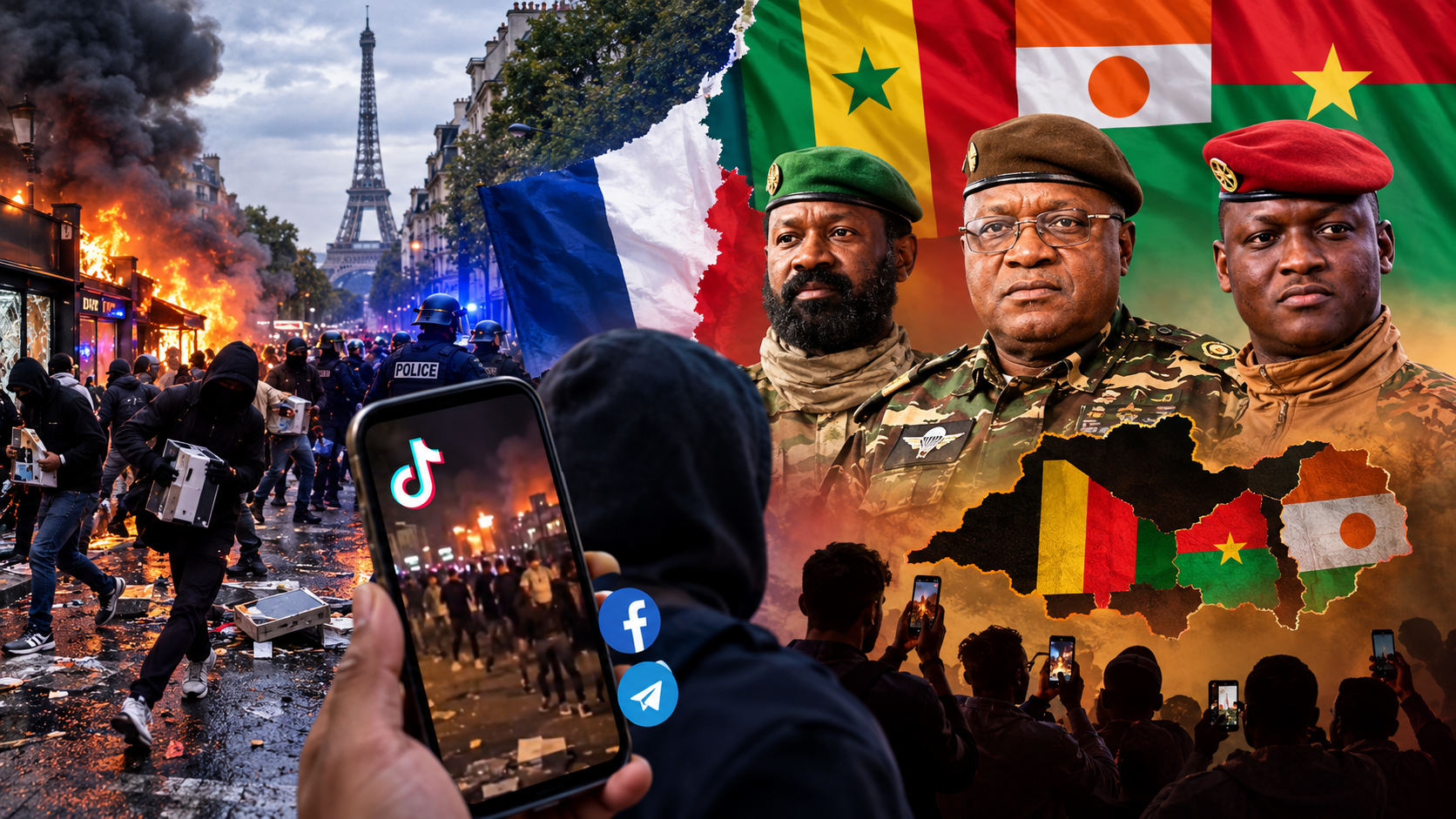
The recent waves of urban violence in France are not merely a domestic issue they have ignited intense political debates across the Sahel region, particularly in Mali, Burkina Faso, and Niger. Within hours, clips of looting, clashes with police, and urban destruction spread across TikTok, Facebook, and Telegram, where activists aligned with Sahel juntas swiftly repurposed them to advance anti-France rhetoric.
From images to political weapons: how unrest fuels Sahel juntas’ narratives
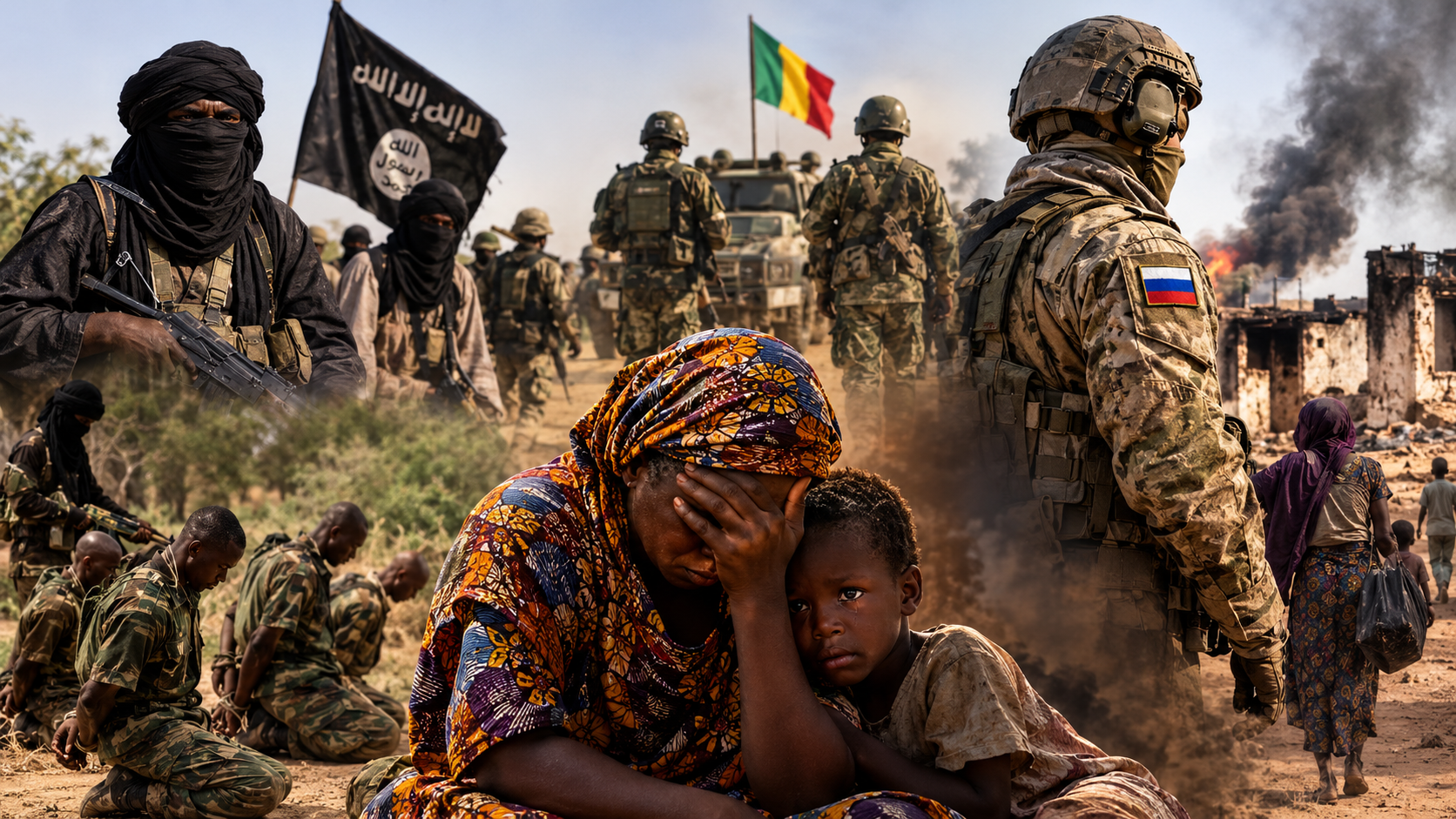
For supporters of the Alliance of Sahel States (AES), these visuals provide powerful ammunition. They highlight a perceived contradiction: How can France, which often positions itself as a defender of democracy and human rights, justify its own governance when faced with such widespread disorder? The argument is not new it is a calculated effort to undermine French credibility and reinforce a narrative of decline in what AES governments portray as a former colonial power clinging to influence.
The strategy is twofold: first, to delegitimize France’s moral authority in the region; and second, to present the military-led governments of the Sahel as more stable and capable alternatives. Yet, this rhetoric rests on shaky ground selective in its interpretation of events and blind to context. A single act of violence, no matter how shocking, cannot define an entire nation’s trajectory or justify sweeping political claims.
Beyond propaganda: the legal consequences of alleged involvement
Amid the noise of digital propaganda, another critical dimension has emerged: the potential legal repercussions for individuals implicated in the unrest. Investigators are actively pursuing leads on reports that some foreign nationals including residents from Mali, Burkina Faso, and Niger may have participated in acts of vandalism, looting, or violence on French soil. If these suspicions are substantiated, they will face the full weight of French justice, irrespective of nationality or residency status.
The judicial process in France operates independently and impartially. Any individual, regardless of origin, who violates national law within the country’s borders is subject to investigation, prosecution, and, if convicted, legal penalties. This principle applies without exception whether the person in question holds regular or irregular status. The principle is clear: territorial law overrides all other considerations.
For those found to have broken the law, the consequences could extend beyond criminal charges. Administrative measures, including visa revocations or deportation orders, may follow for individuals in violation of residency regulations. These decisions will be made in strict accordance with French administrative and judicial procedures, ensuring due process and transparency.
No collective guilt, only individual responsibility
It is essential to distinguish between the actions of individuals and the identity of their communities. The vast majority of Malian, Burkinabè, and Nigerien residents in France live law-abiding lives and contribute positively to society. They are not responsible for the conduct of others who may exploit their national origins for political ends. Responsibility is personal, and justice must be served accordingly.
The thin line between observation and manipulation
Digital platforms have become battlegrounds where narratives are shaped, amplified, and distorted. Some content shared in support of AES-aligned movements presents isolated incidents as widespread systemic failures. A looted storefront is framed as proof of France’s collapse; a single altercation is generalized into national chaos. These oversimplifications serve a narrative but reveal little about reality. They are tools of persuasion, not evidence of governance breakdown.
To assess whether a coordinated campaign is underway, one must look beyond sensational headlines. Fact-checkers have previously exposed misleading content circulating in pro-AES circles, demonstrating how images are recirculated out of context, recaptioned, or presented as current when they are not. Such practices erode trust and require rigorous scrutiny to separate truth from propaganda.
Political score-settling cannot replace justice
While Sahel juntas and their supporters leverage France’s unrest to advance anti-Western rhetoric, they conveniently sidestep the legal process when it comes to accountability for those allegedly involved. There is an evident double standard: regimes that condemn foreign interference in their own affairs frequently justify their own actions through selective outrage. Yet, when French institutions investigate possible wrongdoing by non-citizens, the same actors often dismiss the process as politically motivated.
The integrity of the French judicial system must be defended. Cases will be decided based on evidence, not political convenience. And if investigations confirm participation in criminal acts, consequences must follow transparent and firm, applied without regard to nationality or geopolitical alliances.
A moment of reckoning for France and the Sahel
The current wave of urban violence is not just a security crisis it has become a geopolitical inflection point. For France, it demands a steady response: one that upholds the rule of law while addressing legitimate grievances that may underlie social unrest. For the Sahel, it is an opportunity to reflect on the real drivers of instability and to reject the exploitation of foreign crises for domestic political gain.
The narrative of decline serves no one not the accused, not the accusers, and certainly not the people of the Sahel. What is needed now is clarity: in the courtroom, in the public square, and in the halls of power. Only then can justice prevail over propaganda, and responsibility transcend rhetoric.
By François Mvondo — Journalist