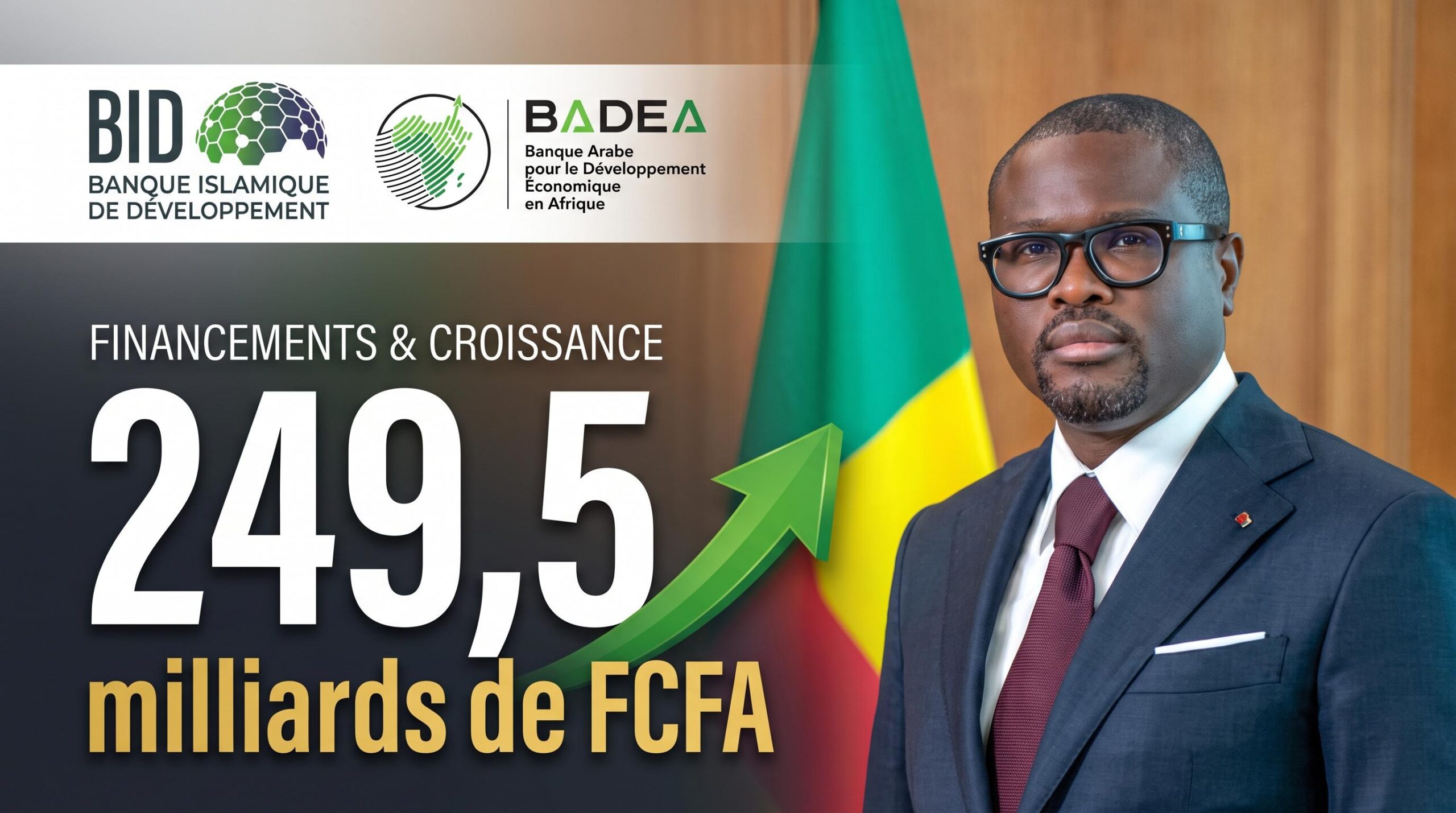
Benin has reached a pivotal moment in its economic strategy, securing three landmark financing agreements totaling $450 million (249.5 billion XOF) with the Islamic Development Bank (IsDB) and the Arab Bank for Economic Development in Africa (BADEA). These deals, finalized during the 2026 IMF-World Bank Annual Meetings in Bangkok, mark a decisive shift in the country’s ability to mobilize international capital while maintaining fiscal discipline—a balancing act that positions Benin as a model for responsible resource management in West Africa.
From financial diplomacy to concrete action
The $450 million funding package represents more than just a capital inflow; it signals Benin’s growing credibility on the global financial stage. By successfully negotiating with international partners like IsDB and BADEA, the West African nation has demonstrated its capacity to diversify funding sources away from traditional Western lenders, reducing exposure to volatile financing conditions. This strategic pivot allows Benin to tailor borrowing terms—including maturities and interest rates—to match the specific needs of its priority projects, from road networks to energy infrastructure.
The agreements reflect a year-long effort to strengthen Benin’s financial profile, built on consistent reforms, transparent budgeting, and proactive debt management. The International Monetary Fund (IMF) noted in its 2026 Article IV report that Benin had made measurable progress in consolidating public finances, improving revenue mobilization, and reducing fiscal slippages. These structural improvements have not gone unnoticed: they form the foundation upon which the new financing agreements rest.
A new chapter for responsible borrowing
In an era when rising global interest rates and tighter lending conditions have left many African nations cautious about debt, Benin is turning the narrative on its head. The $450 million infusion is not a signal of financial distress—it’s a strategic tool for growth. When used wisely, debt can become a catalyst for economic transformation. The key lies in how the funds are deployed: not as short-term consumption, but as long-term investments in productive infrastructure that enhance productivity, reduce trade costs, and improve public service delivery.
Benin’s approach emphasizes three core principles:
- Selectivity: Each project financed must meet clear economic and social criteria, with measurable returns on investment.
- Transparency: Procurement processes are open, auditable, and subject to independent reviews to prevent mismanagement.
- Sustainability: The country is prioritizing financing terms with long maturities and low interest rates to keep debt service manageable.
This disciplined approach is already yielding results. According to IMF estimates, Benin’s overall fiscal deficit declined from 7.2% of GDP in 2021 to 3.1% in 2024, while public debt levels—after statistical adjustments—showed a downward trend between 2023 and 2024. Such improvements reflect not just better revenue collection, but a strategic reallocation of resources toward high-impact sectors.
Building trust through performance
Benin’s improved financial standing is rooted in performance. The IMF’s 2026 assessment highlighted several key achievements:
- Budget consolidation: Reduced recurrent spending and optimized tax administration have freed up resources for critical investments.
- Debt transparency: Updated accounting frameworks now include off-budget commitments, ensuring a complete picture of public liabilities.
- Investor confidence: Strong macroeconomic fundamentals have attracted private-sector interest, complementing public financing.
These gains have bolstered Benin’s reputation among multilateral lenders, particularly in the Arab world, where institutions like IsDB and BADEA prioritize projects with clear developmental impact. The new financing agreements are expected to finance a mix of transport, energy, and digital infrastructure—sectors identified as critical to unlocking regional economic integration and job creation.
From agreements to impact: what success looks like
The true test of these funds will be their conversion into tangible benefits for citizens. A successful outcome would be measured not in dollars raised, but in roads built, electricity grids expanded, and rural communities connected to reliable services. For example:
- Transport: Upgraded highways linking major cities and ports to reduce travel time and logistics costs.
- Energy: Expanded power generation capacity in underserved regions to lower business operating costs and improve household access.
- Digital: Enhanced internet and mobile connectivity to support e-commerce and remote work.
But execution will require more than funding. Benin must maintain strict oversight of project timelines, costs, and outcomes. Rigorous monitoring, public reporting, and independent audits will be essential to ensure that every dollar delivers maximum value. Failure to deliver visible results could erode public trust and undermine future borrowing efforts.
Already, the government has signaled its commitment to accountability by publishing project pipelines and inviting civil society to participate in oversight committees. Such initiatives are crucial for building social legitimacy and ensuring that the benefits of growth are broadly shared.
The road ahead: maintaining momentum
The $450 million financing breakthrough is a milestone, but it is not an endpoint. To preserve its hard-won credibility, Benin must continue to:
- Diversify financing: Continue engaging with new partners—both traditional and non-traditional—to spread risk and secure better terms.
- Strengthen institutions: Invest in capacity within ministries to plan, execute, and monitor projects efficiently.
- Balance development needs with debt sustainability: Ensure that new borrowing is strictly tied to projects with high economic or social returns.
In many ways, Benin’s challenge mirrors that of other emerging economies: how to use debt as a bridge to prosperity without crossing into over-indebtedness. With its recent agreements, Benin has positioned itself at the forefront of this balancing act. The next phase will determine whether these funds translate into enduring progress—for the economy, for businesses, and most importantly, for the people who are the ultimate beneficiaries of development.