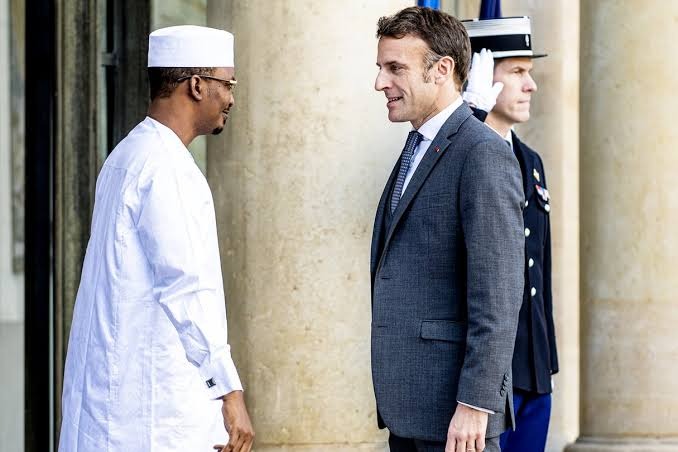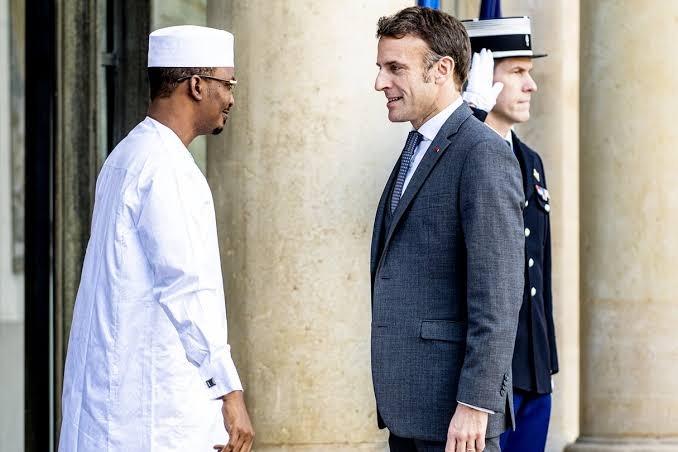
When Emmanuel Macron and Mahamat Idriss Déby sat down at the Élysée on 13 October 2026, the handshake was the easy part. The harder question — the one now echoing from N’Djamena to Niamey and across the wider Sahel — is what the Franco-Chadian defence reboot actually sets in motion. The declaration of intent signed that day by the two defence ministers formally restores a relationship that had been dismantled less than two years earlier, and it lands in a region where every gesture by Paris is read as a signal, a threat, or both.
A partnership rebuilt from the ground up
The document signed in Paris does not simply revive the old framework. It replaces it. After N’Djamena ended its military cooperation agreement with France in November 2024 and the last French troops handed back their bases in early 2025, the permanent French military presence in Chad — long the anchor of Paris’s operations across Africa — disappeared entirely.
What the 13 October declaration puts in its place is a lighter, more targeted arrangement. Training, technical expertise, industrial ties and technology transfers form the core of the new cooperation, all aimed at strengthening the Chadian armed forces directly rather than stationing French soldiers on Chadian soil.
For Paris, this is the latest move in a broader recalibration of its African relationships, following military withdrawals from Mali, Burkina Faso and Niger. Those departures shrank France’s footprint in the Sahel and signalled the end of a model built on permanent military deployments.
Chad’s importance to that recalibration is hard to overstate. Wedged between war-torn Sudan, Libya and the Lake Chad basin, it sits at the centre of the region’s security fault lines. Border surveillance, counter-insurgency operations and the operational readiness of its army give this bilateral cooperation a reach that extends well beyond the two capitals.
Equally significant is the format itself: a strict bilateral framework shaped by the needs defined in N’Djamena, not in Paris.
Niamey’s accusation hangs over the deal
The timing of the relaunch could hardly be more sensitive. In the night of 28–29 August 2026, what authorities described as an orchestrated destabilisation attempt unfolded in Niamey, centred on Air Base 101.
Niger’s government pointed the finger at France and several foreign actors — Chad among them — accusing them of involvement in the attempted mutiny. Paris rejected the allegations outright.
Because Chad and Niger share a long border and a common set of regional security concerns, the accusation gives the Franco-Chadian rapprochement an added charge. The two neighbours may face similar threats, but their diplomatic trajectories and their ties to outside partners have drifted far apart.
That divergence explains why N’Djamena’s renewed engagement with Paris is being watched closely in Niamey. The declaration itself is explicitly bilateral, confined to the relationship between France and Chad. Its architects insist the aim is to structure cooperation in a region where foreign military presence is a deeply political question and where governments guard their strategic autonomy fiercely.
Beyond defence: the development dimension
The 13 October meeting was not limited to security matters. Both presidents committed to expanding economic and cultural ties for the benefit of businesses and ordinary citizens — a shift that crystallises the warming trend that took shape over the course of 2026 after months of bilateral friction.
Infrastructure, energy, health, transport and education are the sectors earmarked for closer engagement. For both governments, the priority is to move past a relationship that has historically been defined by military questions and to put investment and trade at the centre of the agenda.
The ambition responds to pressing realities. In Chad, development, jobs and public services top the list of public demands. At the same time, conflicts in neighbouring countries drain resources and destabilise the wider neighbourhood. Security cooperation is therefore paired with direct action on the needs of local populations.
What comes next — and why it matters
The declaration of intent is a political milestone, but it is also a starting point. Concrete commitments on training, expertise transfers, technological cooperation and operational support are expected to follow, and each will be scrutinised both inside Chad and across the region.
For Macron, the exercise is about rebuilding the relationship with Chad in a form that is acceptable to Chadian public opinion and sustainable in a region that has turned against permanent French deployments. For Mahamat Idriss Déby, it is about strengthening his country’s military capacity while retaining full control over its strategic choices — a balancing act that leaves little room for error.
The Franco-Chadian rapprochement is, in effect, a test case for how France redefines its role in a region where diplomatic and security balances are shifting fast. After the withdrawals and the tensions, Paris and N’Djamena are starting over on new terms. Whether that renewed partnership can reconcile the interests of both states, meet regional security demands and withstand the diplomatic storms running through the Sahel is the question that will define the months ahead.