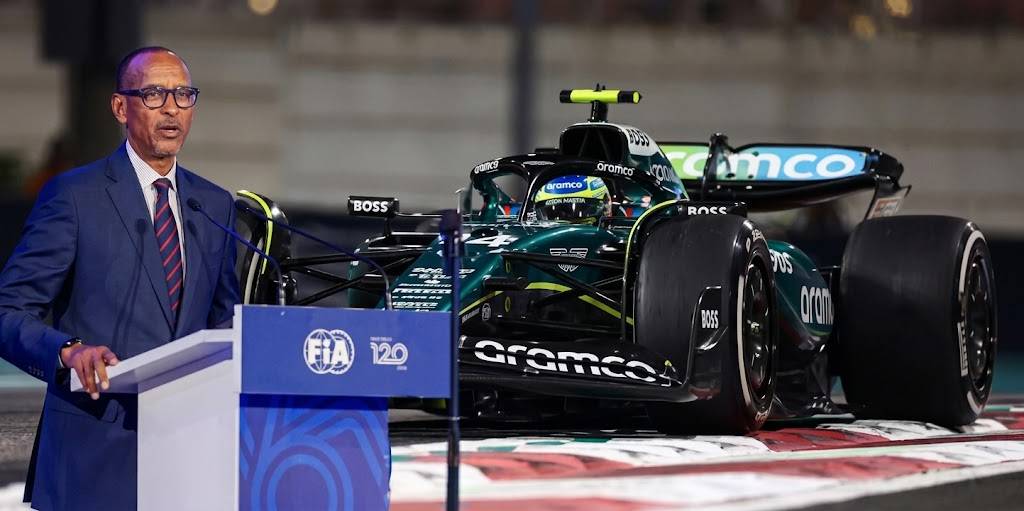
The announcement landed in Kigali with the weight of history: after thirty-three years without a race on the continent, Formula 1 is set to return to Africa through a ten-year agreement with Rwanda. The circuit will rise at Bugesera, roughly 40 kilometres south of the capital, near a new international airport still under construction. The deal was confirmed on Tuesday, 13 October 2026, in the presence of President Paul Kagame, Formula 1 CEO Stefano Domenicali, and FIA President Mohammed Ben Sulayem. But beyond the handshakes, the agreement has triggered a wide debate about costs, credibility, and whether Rwanda can truly deliver a world-class Grand Prix by the early 2030s.
What the ten-year deal actually commits Rwanda to
The contract is not a one-off race but a decade-long partnership. It positions Rwanda as the host of Africa’s Grand Prix, filling a void left since the 1993 South African Grand Prix. For Kigali, the signature represents a strategic win in its long campaign to project global influence through sport, tourism, and major events. Yet the practical roadmap remains fluid: no exact date has been fixed for the first edition, and the launch depends on construction milestones and the completion of supporting infrastructure. In other words, the agreement is signed, but its realisation hinges on execution.
Bugesera: a circuit designed to harness Rwanda’s terrain
The chosen site at Bugesera will host a track purpose-built to FIA specifications, capable of handling the fastest cars in the world. The design team includes Wurz Design, led by former driver Alex Wurz, alongside Tilke Engineers and Architects, a firm with extensive experience in international circuit construction. The layout is expected to exploit Rwanda’s hilly landscape and elevation changes, creating a demanding and visually striking course. Organisers also envision the venue as a multi-purpose hub for other motorsport events, concerts, conferences, and international gatherings, aiming to generate economic activity year-round rather than only on race weekend.
Economic hopes and local expectations
For the Rwandan government, the Grand Prix is far more than a sporting spectacle. The anticipated influx of visitors, teams, sponsors, and media is expected to boost hotels, restaurants, transport, security, communications, and event services. The circuit’s proximity to the future airport is meant to ease logistics for international travellers. These ambitions build on Rwanda’s existing track record of hosting global events, including the 2025 UCI Road World Championships and various football and basketball tournaments, all reinforced by the “Visit Rwanda” tourism brand. Formula 1 itself notes that Africa already counts over 100 million fans, a young audience that the championship hopes to engage more deeply.
The debate: opportunity or costly gamble?
Not everyone is convinced. The announcement has sparked public discussion about whether the promised benefits—investment, jobs, technical training, and entrepreneurial opportunities for young people—will materialise for ordinary citizens. Critics question the financial burden of building a Formula 1-grade circuit and the risk of white-elephant infrastructure. Supporters counter that the visibility and skills transfer could transform Rwanda’s engineering and hospitality sectors. President Kagame has framed the project as a chance to convert global attention into concrete prospects, particularly in automotive engineering and event management. The coming years will test whether that vision translates into lasting gains for local businesses and residents.
What comes next for Rwanda and Formula 1
The immediate focus will be on construction timelines, regulatory approvals, and infrastructure delivery. Formula 1’s return to Africa hinges on Bugesera being ready to host a race in the early 2030s, a target that leaves little room for delay. For Rwanda, the project is also a reputational bet: success would cement its status as a premier destination for mega-events, while failure could dampen enthusiasm for future bids. For the sport, the stakes are equally high, as it seeks to expand into new markets and reconnect with a continent it has largely overlooked for three decades. The fallout from this deal will be measured not only in laps and lap times, but in how well it serves the people it is meant to benefit.