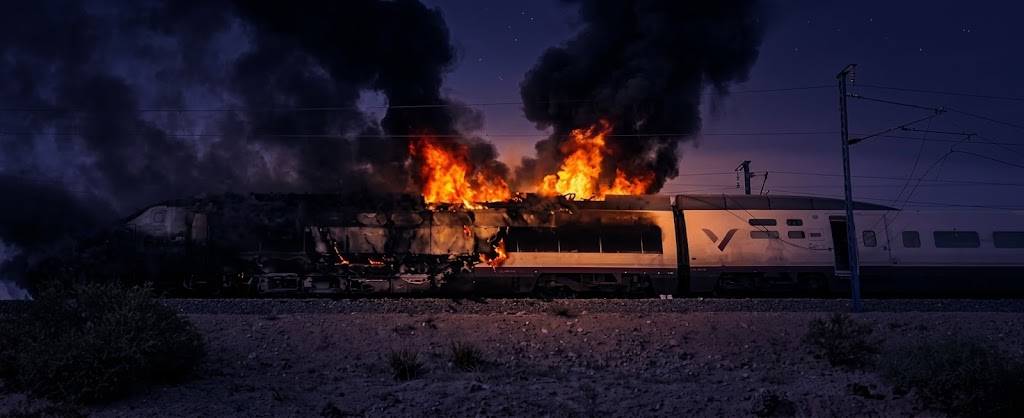
What the Ricla evacuation exposed about Spain’s high-speed network
When a Renfe AVE train bound for Figueres via Barcelona caught fire near Ricla in the province of Zaragoza on Monday, October 12, the immediate story was one of relief: all 283 passengers on board were evacuated safely, and no injuries were reported in the initial toll. But as the smoke cleared and the Madrid-Barcelona high-speed corridor ground to a halt for hours, the conversation in Spain began to shift — from a successful emergency response to harder questions about what happens next for a network that millions depend on.
The timeline: from Puerta de Atocha to a burning rear cab
The train had departed Madrid’s Puerta de Atocha station at 2:27 p.m., heading northeast toward Catalonia. Shortly after 4:05 p.m., as it passed near Ricla in Aragon, fire was detected in the rear cab of the convoy. Renfe’s first communications confirmed the location of the blaze, though the cause remained undetermined. Emergency protocols were triggered immediately, and the 283 travelers were led off the train while firefighting crews moved in to suppress the flames.
The absence of casualties was the headline Renfe wanted. Yet the circumstances that forced a high-speed train to stop and empty in open country — smoke, potential fire spread, passengers on foot — inevitably raised eyebrows among rail safety observers.
Why the Madrid-Barcelona line shutdown mattered far beyond one train
The fire itself was contained to a single train. Its consequences were not. As a precaution and to allow emergency teams to work, Renfe suspended all high-speed traffic between Madrid and Barcelona for several hours. Trains were held at stations along the route, and multiple afternoon departures were cancelled outright.
Thousands of travelers found themselves stranded, rerouted, or left uncertain about whether they would reach their destinations at all. The timing could hardly have been worse: October 12 is Spain’s national day, falling at the end of a long weekend when transport demand traditionally spikes. The line’s closure turned a festive return journey into a logistical ordeal for countless families and workers.
Renfe’s response: refunds, rerouting, and a gradual restart
Faced with the scale of the disruption, Renfe moved quickly to announce passenger-friendly measures. Tickets on affected services could be changed or refunded at no cost, a gesture aimed at softening the blow for those whose plans had evaporated.
Behind the scenes, technical teams and emergency services carried out post-fire inspections of the rail infrastructure. Resuming service depended on confirming that the affected section could be operated safely. In its initial statement, Renfe admitted it could not yet estimate how long the disruption would last. A progressive restoration of traffic followed only after firefighters had finished their work and preliminary line checks were complete.
The investigation: no definitive cause, but plenty of scrutiny
As of the initial reports, the precise origin of the fire had not been established. An investigation was launched to determine what sparked the blaze in the rear cab and whether any technical failures played a role. Until those findings emerge, the incident remains a puzzle — and a reminder that even a localized fire on a modern high-speed train can cascade into a national transport headache.
The event has also reignited a broader public conversation about emergency preparedness on Spain’s high-speed rail network. The speed of the evacuation and the coordination between onboard staff, the operator, and rescue services were praised. But the hours-long paralysis of a flagship corridor has prompted questions about redundancy, contingency planning, and how quickly alternatives can be offered when a key artery is severed.
What comes next for Spain’s high-speed rail debate
The human outcome of the Ricla fire was reassuring: 283 passengers evacuated, no reported injuries. Yet the operational fallout told a more complicated story. A single incident, contained in minutes, disrupted a major rail link and affected the travel plans of thousands.
For Renfe and Spanish rail authorities, the coming weeks will bring pressure to publish investigation findings, explain what corrective measures will be taken, and demonstrate that the network can absorb similar shocks without grinding to a halt. For passengers, the episode is likely to sharpen expectations around communication, compensation, and the reliability of a service they have long taken for granted.
The debate after Ricla is no longer just about a fire. It is about how Europe’s largest high-speed network learns from it.