France reels as school protests turn into a day of urban fire
What began two weeks ago as a focused protest against recent education reforms exploded on Thursday, October 1, into an unprecedented day of urban unrest across France. In several major cities, confrontations between young demonstrators and authorities descended into orchestrated chaos, forcing the state to activate emergency security measures.
By afternoon, the fallout was already reshaping public debate: dozens of schools damaged, transport networks paralyzed, and a government scrambling to contain the spiral. As night fell, the question on everyone’s lips was not just what happened — but what comes next.
Schools scarred: a trail of destruction across French cities
From the early hours, the blockade tactic escalated dramatically outside dozens of high schools in Paris, Lyon, Marseille, Nantes, and Lille. While some gatherings began peacefully, the situation quickly slipped beyond control as unruly elements and violent groups merged with the protests.
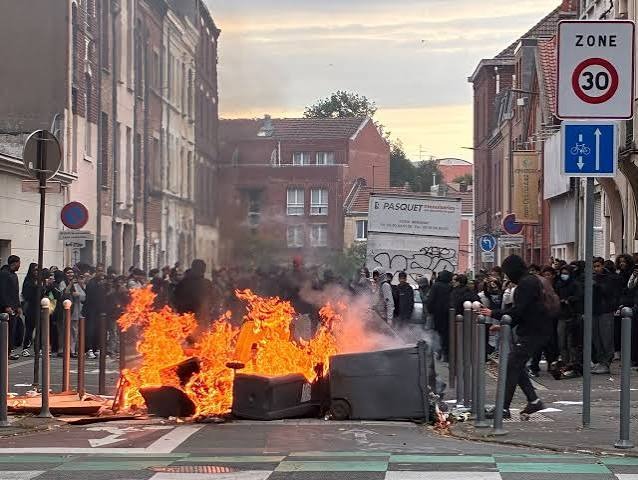
In Paris, the area around Lycée Voltaire in the 11th arrondissement became the scene of striking images. Makeshift barricades built from burning trash containers and torn-up street furniture blocked main roads. In Lyon, the entrance hall of a large school in the 7th arrondissement was gutted by flames after several pyrotechnic devices were thrown, requiring urgent intervention by marine firefighters under elite unit protection.
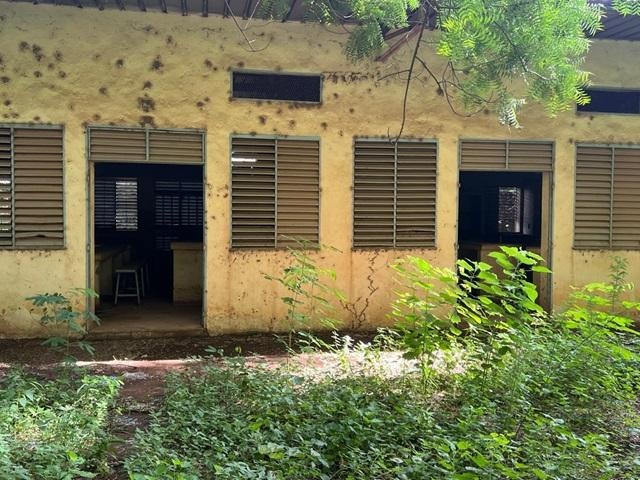
By mid-afternoon, the Ministry of National Education counted more than fifty schools seriously damaged, with shattered windows, facades tagged with hostile slogans, and teaching materials destroyed.
Clashes and paralyzed transport: the toll on daily life
As hours passed, city centers in several metropolises turned into battlegrounds. Security forces, heavily deployed near sensitive areas, were targeted with heavy projectiles, paving stones, and mortar fire. The response was swift: repeated charges by CRS riot police and mobile gendarmerie, sustained use of tear gas, and water cannons to disperse groups of rioters.
Provisional figures from prefectures reported dozens of minor injuries among protesters and security forces, along with over 160 arrests nationwide.
Facing risks of further accidents and unable to guarantee user safety, several public transport authorities took drastic measures. In Marseille, bus and tram traffic in the city center was completely halted by midday. A similar scenario unfolded in Nantes and Bordeaux, where surface networks were gradually shut down, leaving hundreds of thousands of citizens struggling with daily commutes.
Lecornu takes charge at the Interior Ministry
Confronted with the uncontrolled drift, the state’s top leadership decided to act immediately. Prime Minister Sébastien Lecornu announced he would personally chair an interministerial crisis cell (CIC) on Thursday afternoon at the Interior Ministry, alongside Bruno Retailleau and the ministers of National Education and Transport.
This exceptional body, usually reserved for major natural disasters or nationwide security threats, aims to coordinate in real time the actions of police, gendarmerie, emergency services, and prefectures.
“Nothing can justify violence, the ransacking of our schools, and endangering law enforcement,” the head of government said in a brief address from the steps of Matignon before heading to Place Beauvau. “The right to protest is a fundamental democratic principle, but destruction and disorder have no place in the Republic. The state’s response will be one of absolute firmness.”
Political fallout and union concerns
In the political landscape, this black day triggered a storm of reactions. From the opposition, criticism poured in from all sides. Right-wing and far-right representatives denounced a “security capitulation” and demanded a targeted curfew and a strict ban on any gatherings near schools. On the left, while violence was deplored, several figures blamed the government’s “deafness” to youth malaise and denounced disproportionate use of police force.
Among high school unions and parent-teacher associations (notably the FCPE), concern is now palpable. While reaffirming their demands on baccalaureate reform and improved study conditions, student representatives are trying to distance themselves from the excesses. “What we see in the streets today no longer reflects the high school movement. Our fight is political and social, not about destroying our own places of learning,” an inter-union spokesperson said that evening.
What next? A nation braces for Friday
As night falls, tension remains extremely high in several neighborhoods of the capital and major provincial cities. The outcome of the crisis cell chaired by Sébastien Lecornu is expected to lead to strong security announcements, with massive redeployment of law enforcement forces starting Friday morning, amid fears of another black day.
The debate now extends beyond the immediate violence: how far will the government go to restore order, and what will be the lasting impact on French society, its schools, and its economy? The coming hours will be decisive.