Major developments are unfolding in the Western Pacific as geopolitical tensions intensify. In a unprecedented show of military force, China recently deployed over 100 naval and coast guard vessels around Taiwan, signaling a critical turning point in regional security dynamics. Simultaneously, the presence of a sophisticated U.S. surveillance aircraft near the island has added another layer of intrigue to this unfolding geopolitical drama.
China’s naval demonstration reaches historic proportions
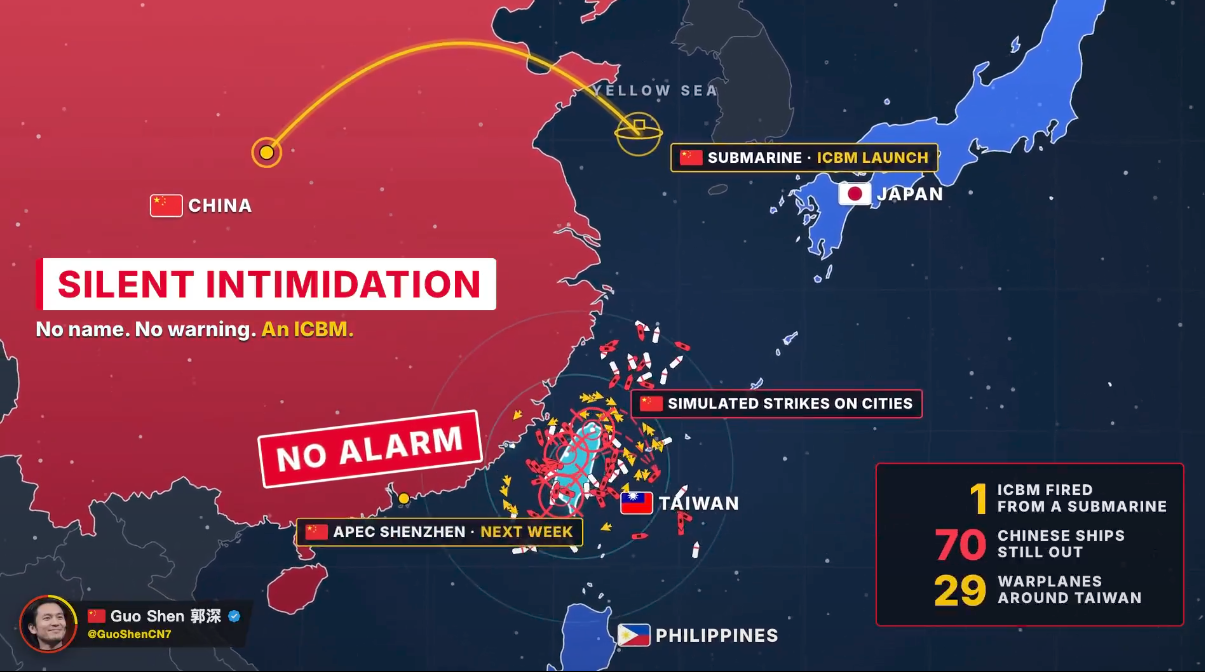
During the first two weeks of November 2026, Chinese naval and coast guard forces executed a massive mobilization across the Western Pacific. According to Taiwanese military sources, this operation involved more than 100 warships and patrol vessels from all three of China’s regional commands—Eastern, Northern, and Southern theaters.
The scope of this deployment extended far beyond routine exercises. Participants conducted coordinated maneuvers simulating attacks on both military targets and civilian infrastructure. Even days after the initial mobilization, around 70 vessels remained positioned near the first island chain, according to official Taiwanese reports.
Military analysts point to the unprecedented coordination between different naval commands as particularly significant. This level of integration suggests a deliberate strategy rather than a routine operation.
Key aspects of the Chinese naval surge:
- Participation from all three major naval commands
- Simultaneous deployment across a vast maritime area
- Coordination between naval and coast guard forces
- Integration of attack simulation exercises
Taiwan’s strategic vulnerability in the crosshairs
The timing and scale of these maneuvers carry particular significance for Taipei. Military strategists warn that such operations could represent practical rehearsals for potential blockades or isolation scenarios against Taiwan.
In a worst-case scenario analysis, China’s naval concentration could effectively sever Taiwan’s maritime routes, restricting critical imports while complicating any potential allied intervention. The Institute for the Study of War has previously identified such anti-access/area denial tactics as a key component of Chinese military strategy toward Taiwan.
This development holds particular importance for Washington, which maintains Taiwan’s security partnership, and Tokyo, whose strategic interests lie just 100 miles from Taiwan’s northern coast.
America’s nuclear reconnaissance aircraft enters the equation
Against this already tense backdrop, the appearance of a specialized U.S. Air Force reconnaissance aircraft has intensified speculation about American intentions. On November 15, reports emerged of a WC-135R Constant Phoenix—dubbed the “Nuclear Sniffer”—operating in the Taiwan Strait area.
This sophisticated aircraft departed from Kadena Air Base in Okinawa, following a flight path that took it south of Taiwan before continuing toward the southwestern approaches of the strait. Unlike conventional surveillance platforms, this specialized aircraft carries atmospheric sampling equipment designed to detect trace amounts of radioactive particles.
While its primary mission involves monitoring nuclear test activities and radiation events, its presence in these waters cannot be overlooked. The WC-135R’s advanced sensors can analyze atmospheric gases and particles, potentially providing early warning of nuclear or radiological developments.
Potential missions for the WC-135R:
- Nuclear test monitoring in the region
- Radiological threat assessment
- Verification of compliance with international treaties
- Strategic intelligence gathering
Strategic calculus: What does this mean for U.S.-China relations?
The convergence of these military activities raises critical questions about Washington’s strategic priorities. While the specific mission parameters of the reconnaissance flight remain officially undisclosed, its timing in relation to China’s naval exercises suggests possible correlation.
Kadena’s role as a critical hub for U.S. military operations in East Asia cannot be underestimated. The base serves as a primary staging area for intelligence, surveillance, and reconnaissance missions across the region, including maritime domains.
However, without official confirmation, any direct connection between the aircraft’s presence and China’s naval maneuvers remains speculative. The United States maintains extensive monitoring capabilities in the region through aerial, naval, and space-based assets.
Taiwan’s critical role in global supply chains
The stakes in this developing situation extend far beyond regional boundaries. Taiwan occupies a pivotal position in global manufacturing networks, particularly in semiconductor production. Any disruption to transportation routes through the Taiwan Strait would have immediate consequences for technology industries worldwide.
A prolonged crisis in the region could:
- Disrupt critical shipping lanes for manufactured goods
- Trigger price volatility in semiconductor markets
- Strain international relations between major powers
- Compromise global technology supply chains
While no imminent military action appears forthcoming, the combination of China’s naval surge, repeated isolation scenarios, and intensified American reconnaissance creates an increasingly volatile security environment in the Western Pacific.
Assessing the broader geopolitical implications
These parallel developments signal what could represent a fundamental shift in power dynamics across the Indo-Pacific. The Western Pacific has emerged as a focal point for strategic competition between global powers, where even minor military movements now command intense scrutiny.
For Taiwan, this evolving security landscape presents both challenges and opportunities. The island’s strategic position remains unchanged, but the methods of potential coercion continue to evolve.
As military postures harden on both sides of the Taiwan Strait, the international community watches with growing concern. The next phase of this geopolitical chess game may well determine the future security architecture of the entire region.