From warnings to widespread exclusion: a state-decreed shift
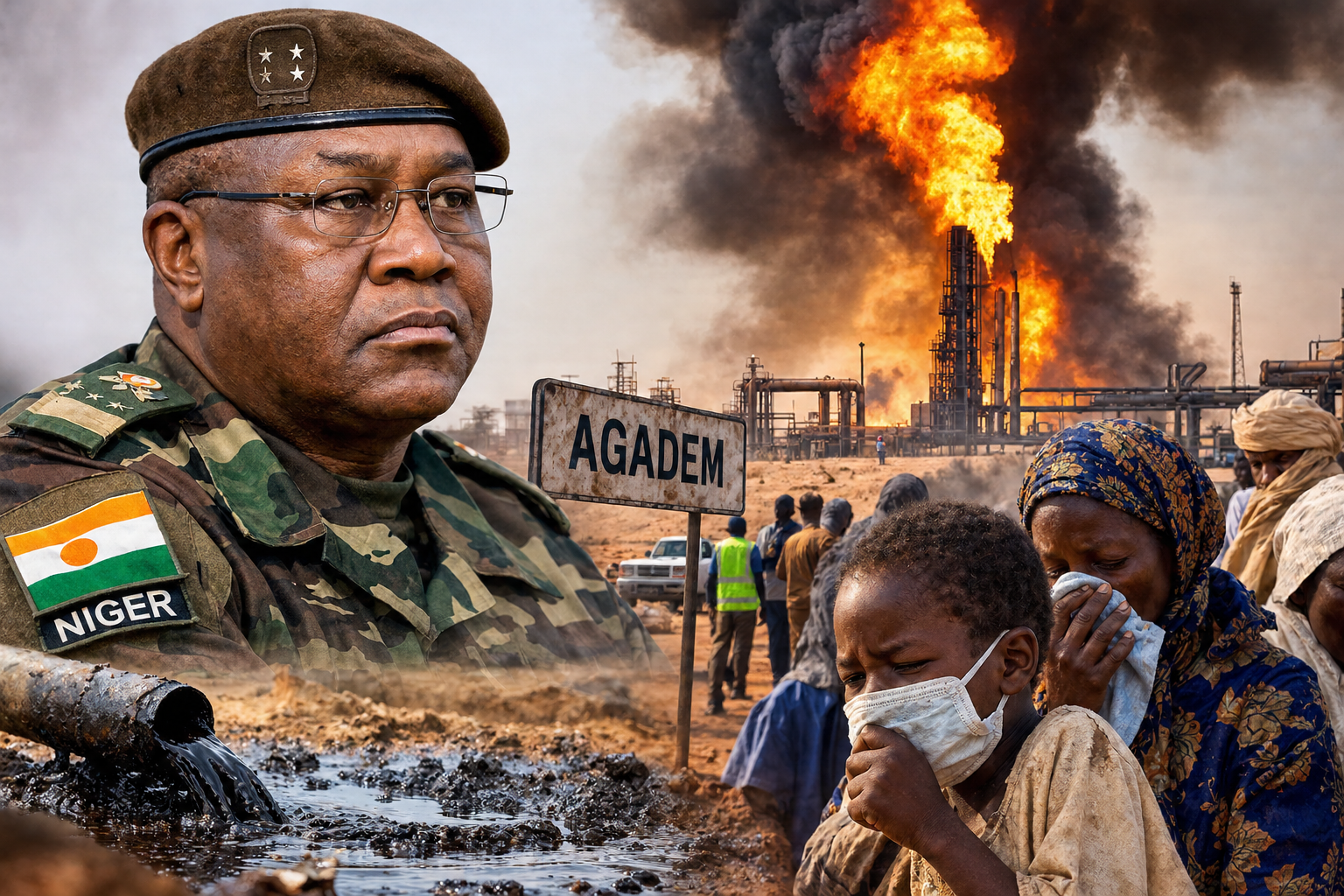
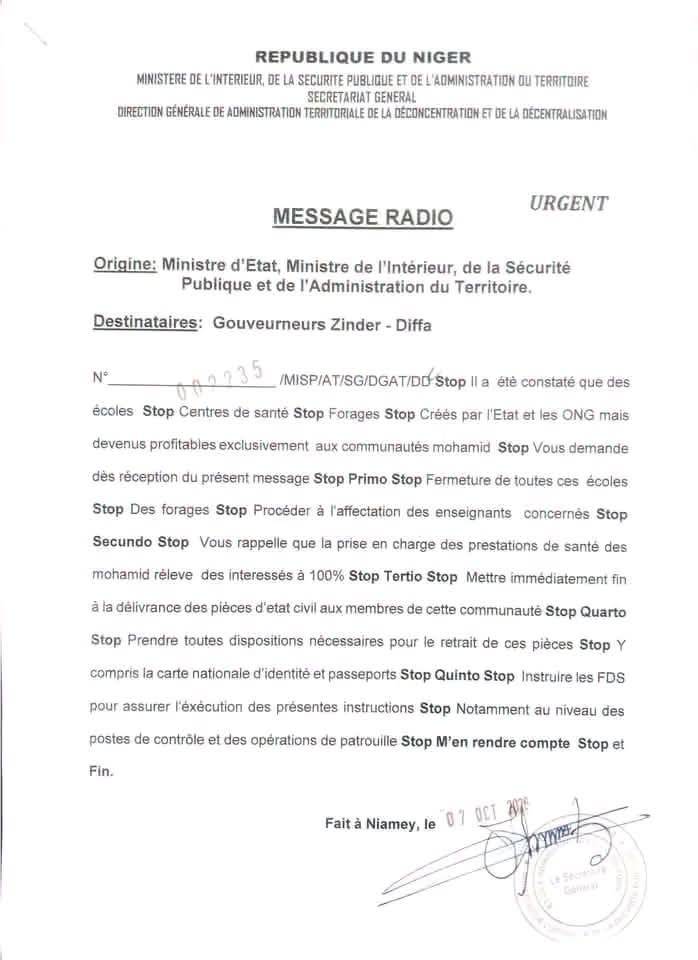
School gates slammed shut, water taps running dry, healthcare denied, and legal identities called into question. These aren’t isolated incidents — they are deliberate measures enforced by a radio directive from Niger’s Ministry of Interior, Interior Security, and Territorial Administration dated October 7, 2026. Targeting the Mohamid community, this policy shifts from rhetoric to reality, raising urgent questions about whether a nation can secure its safety by stripping entire groups of their most basic rights.
Education, water, health and identity: the pillars of exclusion
At the heart of this directive lie four core services — education, water access, healthcare, and legal documentation. But these are not privileges to be revoked at will; they are fundamental rights that underpin human dignity and participation in society.
- Schools closed: Children cut off from education, their future compromised before it begins.
- Water sources sealed: Families and livestock left thirsty in a region where water is survival.
- Healthcare denied: Mothers, children, and the elderly left without care — a silent crisis unfolding behind closed doors.
- Immediately suspend the enforcement of blanket exclusion measures targeting the Mohamid community.
- Reopen schools and restore access to water sources without delay.
- Ensure uninterrupted healthcare and prevent the withholding of medical services based on origin.
- Pause all revocations of legal documents and review each case on individual, legally grounded grounds.
- Conduct an independent audit of the October 7 directive to assess its legality, proportionality, and humanitarian impact.
The impact on legal identity is equally severe. Identity cards, birth certificates, and passports are more than documents — they are lifelines. When these are revoked or denied, people lose their ability to travel, access healthcare, or even prove they exist in the eyes of the state.
Proportionality and justice: where the law must intervene
Administrative errors are not resolved by collective punishment. If misuse of public services is suspected, individual investigations must follow. If crimes are committed, prosecutions must proceed — not discrimination by association. Yet this directive casts a wide net, punishing an entire community for the alleged acts of a few.
Security vs. collective wrath: the false dichotomy
Diffa and Zinder have faced real threats — armed violence, trafficking, and insecurity that demand a firm response. But protecting the nation does not mean targeting all those who share a name or heritage. Justice demands evidence, due process, and individual accountability.
The principle is clear: a person is innocent until proven guilty. Ethnic origin is not evidence. Social belonging is not cause for sanction. When authorities conflate identity with threat, they betray the very rule of law they claim to uphold.
From coup to clampdown: a widening culture of restriction
Since the July 26, 2023 military takeover that ended President Mohamed Bazoum’s elected mandate, Niger has witnessed a tightening of civic space. Political parties dissolved. Civil society organizations restricted. Journalists detained. Voice and dissent stifled in the name of order.
On September 22, 2026, reports emerged of five opposition figures stripped of nationality — bringing the total to 25 since 2024. These actions, though targeting individuals, reflect a troubling pattern: the use of state power to erode rights without transparent legal grounding. They send a chilling signal — one echoed in the October 7 directive against the Mohamid.
Lives in the balance: the human and economic fallout
The Mohamid are not isolated actors. They are neighbors, traders, transporters, and herders woven into the fabric of regional life. Their exclusion doesn’t just harm their households — it disrupts markets, supply chains, and social cohesion. When schools close, children wander. When water runs out, livestock perish. When health services vanish, sickness spreads.
These are not abstract consequences. They are real, immediate, and measurable. The government must weigh not only the rhetoric of security but the human cost of its policies — and act before damage spirals beyond repair.
Can Niger reclaim the path of justice?
The regime of General Abdourahamane Tiani faces a defining test: can it defend the nation without abandoning its moral and legal obligations? Can it restore stability without sacrificing equality? And can it govern with authority, not just force?
The Mohamid community now stands at a crossroads — their right to belong questioned, their place in the nation uncertain. But their crisis is not theirs alone. It is Niger’s crisis. A crisis of conscience, of law, and of leadership. The path forward demands transparency, legal review, and, above all, respect for every citizen’s right to dignity and due process.
The time for decisive action is now — not tomorrow, not next week. Today. For when justice is deferred, humanity is the first to suffer.
What must happen next
To reverse this alarming turn, the government must:
The integrity of the Nigerien state will not be measured by its capacity to exclude, but by its resolve to include — every citizen, every community, fairly and fully.