The turning point in Namibia’s maritime landscape: why Russia’s naval visit matters
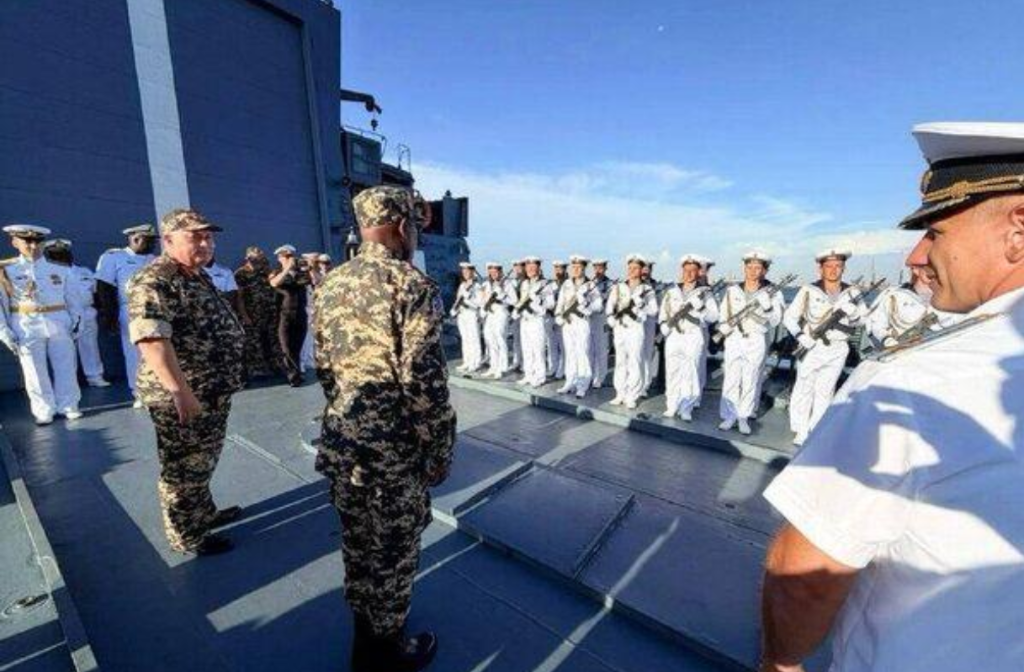
The arrival of Russia’s naval training ship Perekop at Walvis Bay on October 20, 2026, represents more than just another port call. It marks a potential inflection point in Moscow’s expanding naval ambitions across the African continent. While officially billed as a routine training mission for future naval officers, this deployment carries strategic implications that extend far beyond classroom exercises.
With the Perekop having traversed over 1,800 nautical miles in seven days to reach Namibia’s strategic Atlantic coast, the vessel’s presence raises questions about Russia’s long-term maritime strategy in southern Africa. The question now is whether this is a fleeting diplomatic gesture or the beginning of a more sustained naval footprint.
Beyond training: how naval diplomacy serves Russia’s African strategy
At first glance, the Perekop’s mission appears straightforward: training exercises, route planning, and familiarization with long-distance navigation. These activities align perfectly with the vessel’s designated role in Russia’s Baltic Fleet. Yet naval diplomacy often serves multiple purposes, blending education with geopolitical positioning.
The Russian embassy in Windhoek facilitated high-level meetings between the Perekop’s crew and Namibian naval officials, underscoring the diplomatic dimension of this visit. While no new military agreements were announced, such exchanges lay the groundwork for future cooperation. Russia has systematically cultivated defense partnerships across Africa, using training programs and port visits to strengthen its global naval influence.
Logistics as leverage: why Walvis Bay matters for Moscow
Namibia’s Walvis Bay is more than just a geographical landmark—it is a critical node in southern Africa’s maritime trade. Its deep-water port offers repair, resupply, and logistical support capabilities that could prove invaluable for distant naval operations. For a Russian Navy seeking to project power beyond its traditional spheres, access to well-connected ports in Africa is not merely advantageous; it is becoming essential.
While no permanent base is anticipated, the Perekop’s stopover signals Moscow’s interest in securing future access. Each port call strengthens relationships with local authorities, increases the visibility of Russian naval presence, and keeps the option of future cooperation open. In a region where global powers compete for influence, every interaction counts.
A shift in power dynamics: what this means for Africa and beyond
The timing of the Perekop’s visit is significant. In an era of escalating tensions between Russia and Western powers, naval presence serves as both a practical and symbolic tool. Each deployment reinforces Moscow’s claim to being a global maritime actor, capable of operating far from its home waters.
For African nations like Namibia, engaging with multiple partners—including Russia—reflects a pragmatic foreign policy. Diversification allows countries to maximize economic and security benefits while maintaining strategic flexibility. The Perekop’s arrival does not signal an alignment against Western partners, but it does highlight a growing multipolar reality in the Indian and Atlantic Oceans.
Myth vs. reality: decoding Russia’s true intentions
Critics may argue that the Perekop’s mission masks ulterior motives, including intelligence gathering or preparations for a permanent base. However, no public evidence supports these claims. Every naval vessel operates with communication systems and navigational tools, but their presence does not equate to covert operations.
The real measure of this visit’s significance will come in the weeks and months ahead. Repeated port calls, formal agreements on logistical support, or joint naval exercises would indicate a strategic shift. Until then, the Perekop’s mission should be viewed as both a training exercise and a diplomatic overture—one with potential but not yet a fait accompli.
What’s next: tracking the ripple effects of Russia’s naval presence
As the Perekop departs Walvis Bay, the focus now shifts to the long-term implications of this visit. For Russia, the goal may simply be to maintain visibility and nurture relationships. For Namibia and other African states, the question is whether such interactions lead to tangible benefits—trade, investment, or enhanced maritime security.
The Perekop’s arrival may not be a bombshell, but it is a signal. In the evolving chessboard of global naval power, every move counts. Whether this is the beginning of a new chapter or just another temporary alignment remains to be seen—but the momentum is undeniable.