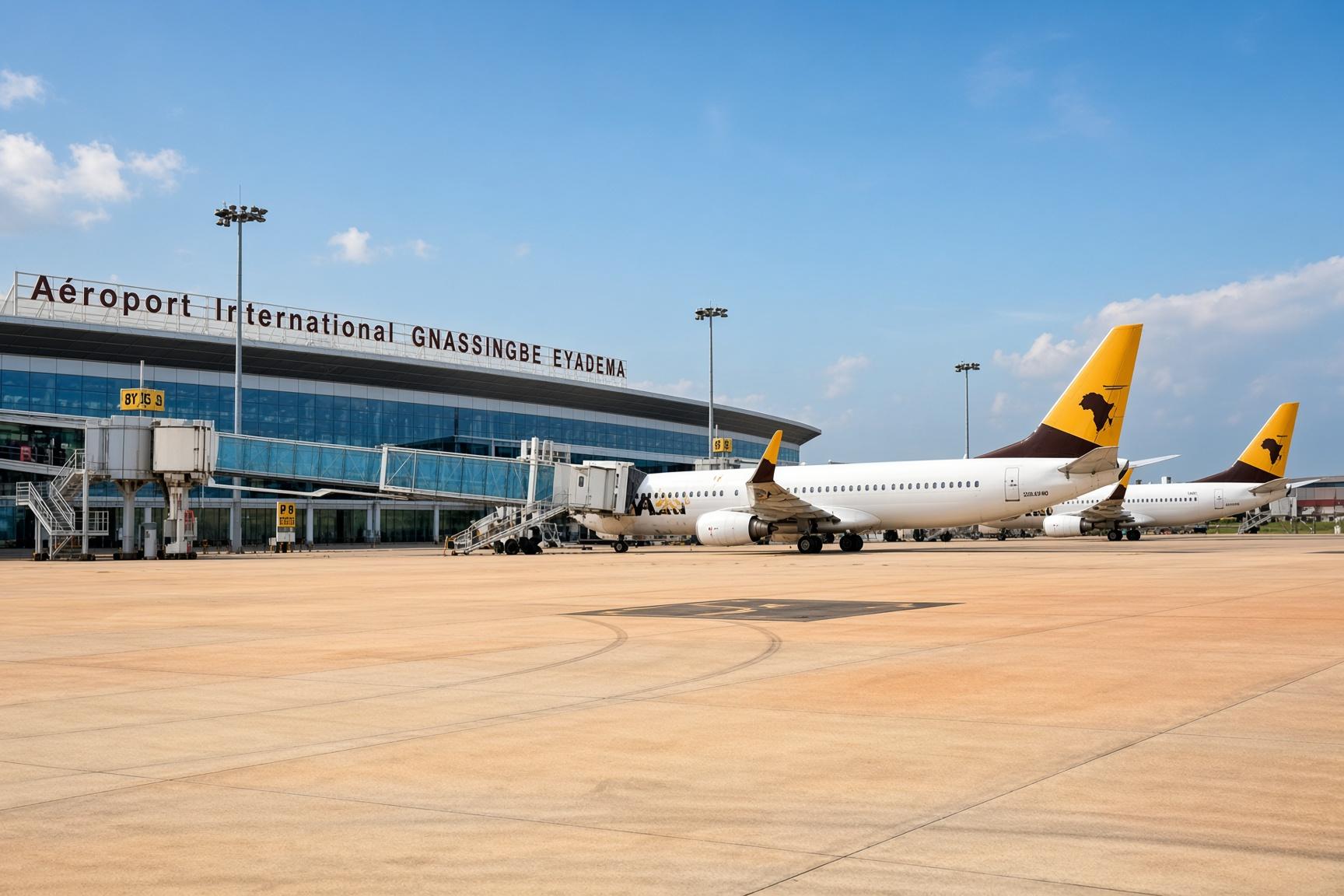
Togo’s international reputation as a rising West African logistics hub has taken a severe hit due to a series of operational failures at its main airport, forcing the government to make a bold strategic decision. Following years of mismanagement under the Société Aéroportuaire de Lomé-Tokoin (SALT), the Togolese authorities have officially greenlit Lagardère Travel Retail—a French retail powerhouse—to assume control of the duty-free zones at Lomé’s Gnassingbé Eyadéma International Airport (AIGE).
From sanitation scandal to sovereign decision
The turning point came on October 12, 2026, when a catastrophic failure in the airport’s waste management system sent sewage cascading through the departure hall, exposing glaring deficiencies in infrastructure maintenance. While officials initially downplayed the incident as a minor technical glitch, public outrage and viral video evidence forced a reevaluation of the airport’s readiness to meet global standards.
Passengers, airlines, and international observers had long noted the stark contrast between Lomé’s lofty ambitions as a regional transport nexus and the reality of crumbling facilities, overcrowded checkpoints, and inconsistent service. The scandal served as the final straw, compelling Togolese leadership to acknowledge the SALT’s inability to deliver operational excellence without external assistance.
Private expertise as the engine of change
The appointment of Lagardère Travel Retail signals a decisive pivot toward private-sector efficiency, bringing French retail and operational know-how to revamp the airport’s commercial and logistical frameworks. The group’s track record in airport retail management—spanning 30+ countries—promises rapid modernization, streamlined passenger experiences, and enhanced revenue generation from duty-free concessions.
Yet this strategic shift is not without controversy. Critics argue that ceding control to a French multinational reopens debates about post-colonial economic influence, particularly as Lagardère operates under the umbrella of the Bolloré Group, a historic French conglomerate already deeply embedded in West African economies. The partnership also raises concerns that local small businesses, artisans, and vendors may be sidelined in favor of global brands dominating the revamped retail spaces.
Balancing act: urgency versus autonomy
For Togo’s government, the decision to entrust Lagardère with the AIGE’s commercial operations reflects a high-stakes gamble. On one hand, the airport’s tarnished image—exacerbated by the sanitation crisis—threatens FDI inflows and regional connectivity. On the other, augmenting foreign control over a critical national asset risks public backlash and long-term sovereignty concerns.
Lagardère now faces the dual challenge of restoring operational credibility while ensuring that the modernization of Lomé’s gateway aligns with national economic priorities. The first 18 months of this partnership will be pivotal, serving as a litmus test for whether privatization can deliver on its promises of efficiency without eroding Togo’s economic agency.
What’s next for AIGE?
- Phase 1: Infrastructure overhaul – Immediate repairs to sewage systems, ventilation, and passenger facilities, followed by phased upgrades to meet IATA and ICAO standards.
- Phase 2: Retail transformation – Introduction of high-end duty-free outlets and niche shopping experiences, with a portion of concession revenue earmarked for local entrepreneurship initiatives.
- Phase 3: Stakeholder integration – Workshops and partnerships with Togolese SMEs to integrate local artisans into the airport’s commercial ecosystem.