Spain stands at a critical juncture after a catastrophic high-speed train collision near Toledo claimed 46 lives and left 179 injured. The devastating accident, which occurred on a key rail corridor linking Madrid to Andalusia, has triggered national soul-searching about rail safety protocols and emergency response measures.
Catastrophic impact reshapes Spain’s transportation landscape
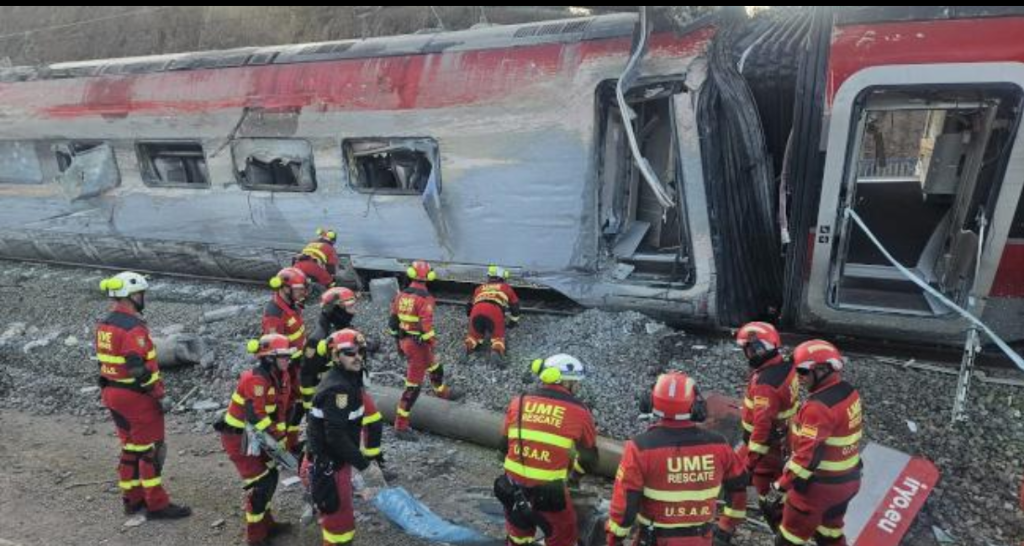
The tragedy unfolded in the early hours near Urda when a public Renfe high-speed train collided with a stationary private Iryo service train. The force of impact sent multiple cars derailing onto an adjacent embankment, creating an unprecedented rescue challenge for emergency crews.
The severity of the crash, which involved dozens of passengers, has forced authorities to reassess safety measures across Spain’s high-speed rail network. While rescue operations continue, the human toll continues to mount as medical teams work to stabilize the most critically injured.
Massive emergency response reveals rescue complexities
The scope of the disaster required an immediate mobilization of every available rescue resource. Firefighters, medical personnel, and civil protection teams worked in unison to extract passengers from severely damaged train cars, while emergency evacuation procedures were implemented under challenging conditions.
Hospitals across the region mobilized to handle the influx of patients, with priority given to those with life-threatening injuries. The coordinated response demonstrated both the strengths and potential vulnerabilities in Spain’s emergency preparedness systems for large-scale transportation incidents.
Rail infrastructure under scrutiny following mechanical failure
Initial investigations suggest the collision may be linked to potential failures in railway signaling systems or traffic coordination procedures. While these remain unconfirmed hypotheses, experts point to the need for immediate review of communication protocols between train operators and control centers.
The accident has prompted immediate suspension of services on affected routes, causing significant disruption for travelers planning to reach Madrid or continue southward journeys. Infrastructure engineers have begun emergency inspections of the collision site to assess potential damage to tracks and signaling equipment.
Urgent questions surface about rail safety regulations
This devastating incident arrives at a time when public confidence in Spain’s rail safety measures has already been fragile following recent incidents. Transportation authorities now face intense pressure to implement rapid reforms that address both technical vulnerabilities and human factors in rail operations.
Multiple factors under investigation in the collision
Forensic teams are examining several potential contributing factors that could explain how two high-speed trains came to collide on a well-monitored route. Key areas of focus include:
- Signal system functionality: Reviewing whether automatic warning systems failed to alert either train operator
- Human error factors: Investigating possible miscommunication between drivers and control centers
- Infrastructure integrity: Assessing roadbed conditions and maintenance records for the affected track section
- Technical safeguards: Evaluating the effectiveness of existing collision-avoidance technologies
The investigation will determine whether existing safety mechanisms were adequate to prevent this preventable tragedy. Preliminary findings suggest opportunities for system improvements that could prevent similar disasters in the future.
Spain’s leaders face dual challenge of truth and reform
Transportation officials must now balance the immediate need to provide closure for victims’ families with the long-term imperative of preventing future tragedies. The government has announced a comprehensive review of rail safety protocols, with particular attention to high-speed corridors.
Community leaders across Spain are calling for transparent reporting of investigation findings, while transport unions demand immediate implementation of enhanced safety training programs for train operators and control center staff.
Human impact drives urgent safety reforms
The collision has left behind broken families, lifelong injuries, and shattered communities. While the final death toll may still rise, the human dimension of this disaster has galvanized both government and private sector stakeholders to take decisive action.
As Spain mourns its dead and tends to its wounded, the nation’s rail system stands at a crossroads. The choices made in the coming weeks will determine whether this tragedy becomes a turning point for safer transportation across the country.