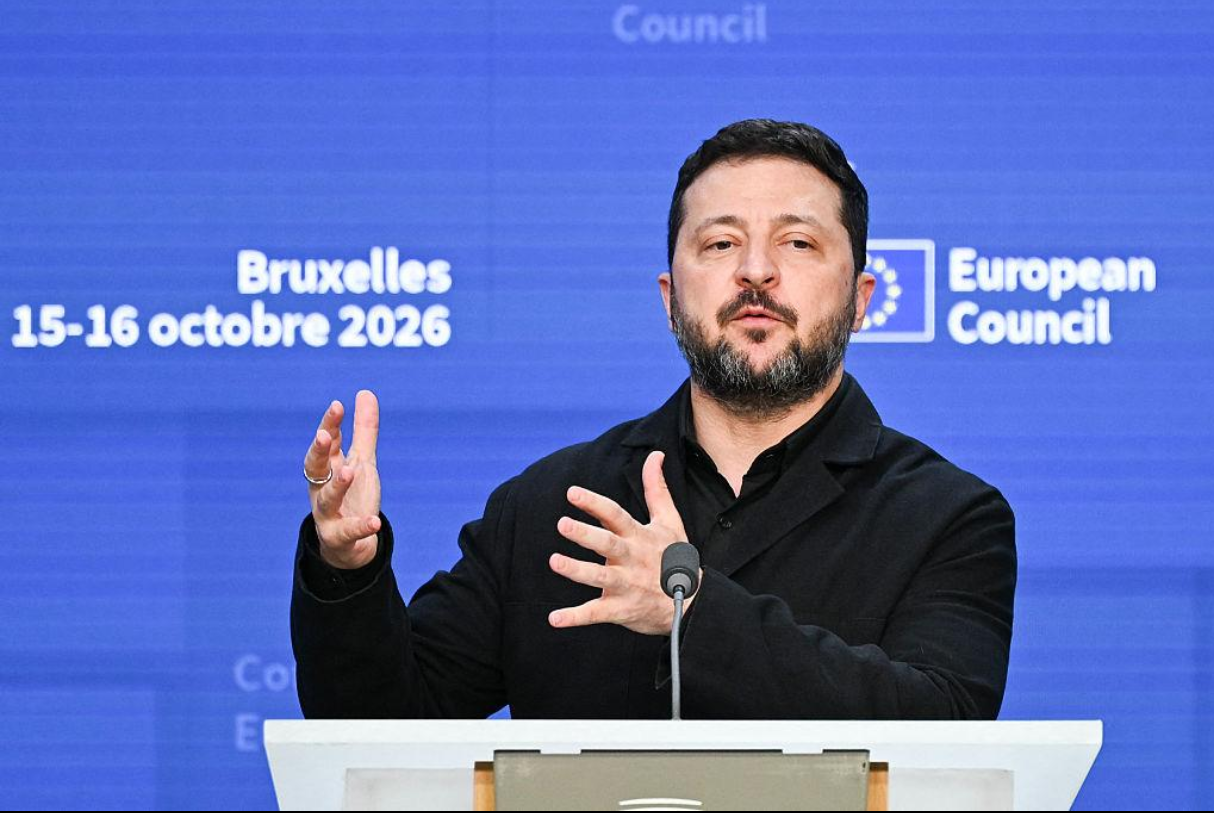
In a bold diplomatic move on October 21, 2026, Ukrainian president Volodymyr Zelensky announced his country’s readiness to halt active combat along current military lines, paving the way for talks on long-term security guarantees with Washington and European capitals. Yet, in a CNN interview the following day, he made it unequivocally clear: this strategic pause would not translate into recognition of Russian-occupied territories or surrender of Ukrainian-held areas.
This is Ukraine’s turning point—a moment where halting the bloodshed meets an unyielding stance on sovereignty. Zelensky’s proposal to freeze the front represents a potential breakthrough, but one that refuses to compromise on the nation’s territorial integrity, the very heart of its conflict with Russia.
Freezing the front: a strategic first step toward peace
During his October 21 discussion with Fox News, Zelensky framed the idea of freezing military positions as a pragmatic path to end the fighting. “We must freeze the situation now,” he stated, arguing that a ceasefire could create the necessary conditions for a political process after years of relentless war.
The Ukrainian leader emphasized that this suspension of hostilities would serve as the minimum expectation from Moscow, aiming first to stop the killing and destruction before tackling the more complex issues at the negotiating table. However, this proposal does not imply Kiev’s acceptance of Russia’s territorial claims. A frozen front would mean halting combat along existing lines without legally legitimizing the annexations Moscow demands.
Following a potential ceasefire, Ukraine seeks ironclad security guarantees from the United States and European nations. For Zelensky, merely pausing the conflict isn’t enough—preventing its resumption is critical. Without robust protective measures, any truce risks being little more than a temporary lull in a prolonged war.
The uncompromising stance on Ukrainian soil
On October 22, Zelensky reinforced his position in a CNN interview, drawing a firm line in the sand. He ruled out any recognition of occupied territories as Russian and dismissed the notion of abandoning areas still under Ukrainian control, particularly in the Donbas region.
“Our land is vital because it’s about our people. It’s not about kilometers,” he declared, underscoring the human cost of defending Ukraine’s independence. He reiterated that even under a ceasefire, occupied territories would remain, in Kiev’s eyes, uniquely Ukrainian.
This stance highlights the core challenge in any negotiation: how to stabilize the front without converting Russia’s military gains into political victories. For Moscow, control over occupied regions is non-negotiable. For Kiev, ceding sovereignty over these areas would mean betraying its territorial integrity and the sacrifices made to preserve it.
The Donbas region epitomizes this standoff. Russia demands full control over Donetsk, while Ukraine refuses to retreat from the areas it still holds. A ceasefire, then, might reduce violence but would leave the underlying dispute—the very fuel of the war—unresolved.
Security guarantees: the backbone of Ukraine’s strategy
Beyond the front lines, the strength of security guarantees emerges as the other critical factor. Ukraine insists on commitments powerful enough to deter Russia from restarting its offensive after a potential truce. This places a significant responsibility on the United States and European partners to design and uphold such a framework.
Yet, key questions linger: What form would these guarantees take? What military or diplomatic pledges would Western allies be willing to make? And how would they respond if Russia violated an agreement?
These concerns arise amid growing tensions between Kiev and Washington. Zelensky acknowledged recent challenges in securing U.S. support, including military capabilities and communication systems vital to Ukraine’s defense. Despite these strains, he continues to view America as indispensable to any lasting solution.
European involvement is equally crucial. Ukraine expects its partners to go beyond merely backing a ceasefire—they must also contribute to the country’s long-term security. However, the concrete scope of these commitments will depend on political negotiations and decisions yet to be made by the involved states.
A diplomatic opening, but no peace in sight
Zelensky’s statements mark a willingness to pause the fighting, but they fall short of signaling an imminent peace deal. Russia and Ukraine remain at odds over territory, the terms of a ceasefire, and the guarantees needed to prevent a renewed war.
Russian president Vladimir Putin, in his own October 22 remarks, indicated Moscow’s openness to restarting talks with Ukraine under U.S. mediation. However, he continues to advocate for a settlement that addresses Russia’s security concerns—a stance that clashes with Kiev’s territorial demands.
At its core, Ukraine’s proposal raises a pivotal question: Can hostilities end without immediately resolving the status of disputed territories? For Kiev, the answer lies in separating the current military reality from the legal recognition of borders. A frozen front could indeed be the first step toward de-escalation—but only if all parties agree on its terms and if credible guarantees back the truce.
Yet, as long as Moscow and Kiev maintain incompatible demands on sovereignty and security, the prospect of lasting peace remains uncertain. Balancing the urgent need to stop the fighting with an unwavering commitment to territorial integrity, Ukraine is navigating a narrow diplomatic path—one that could open the door to negotiations, but offers no guarantees of their success.