In a Senegal where secularism coexists with deep-rooted Sufi traditions, religious fervor and political strategy are increasingly intertwined. The nation’s historical Islamic leaders are now central to nationalist narratives, as contemporary politicians seek to reshape national identity through their legacy.
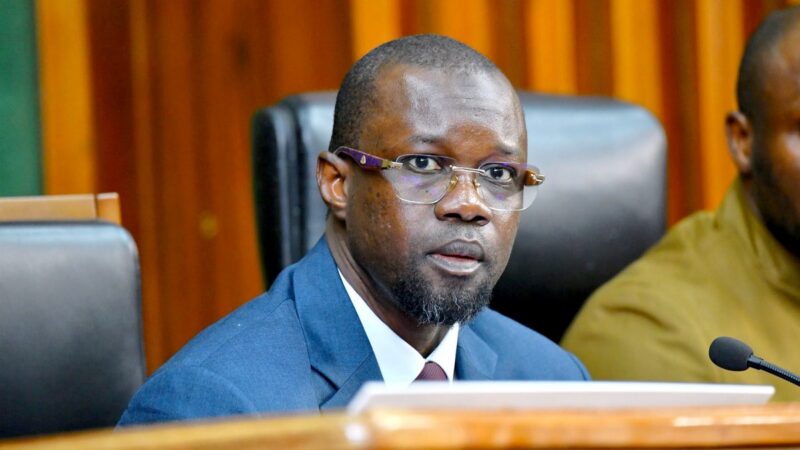
From Bassirou Diomaye Faye to Ousmane Sonko, political figures are drawing on the histories of these religious guides to craft an identity free from foreign influence—while securing the support of influential Sufi leaders. Despite tensions between Faye and Sonko (now Assembly President), both share a conviction: the strategic importance of aligning with these spiritual figures.
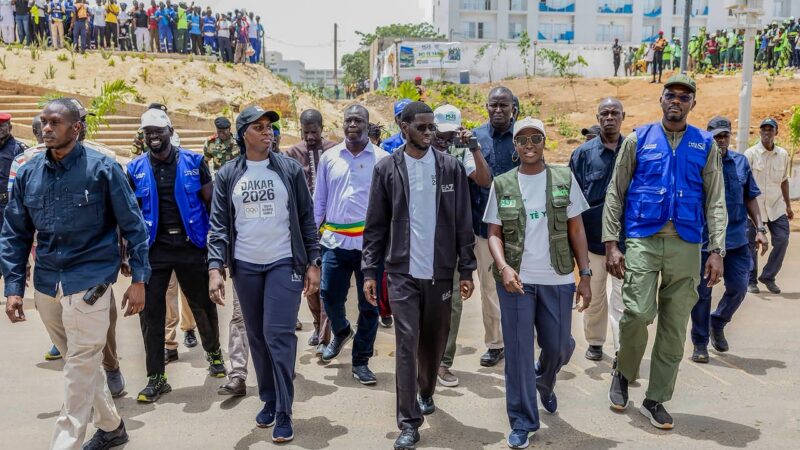
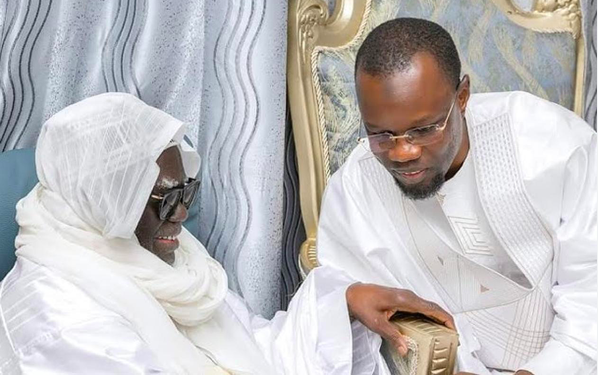
A few days before the Grand Magal pilgrimage on July 26, President Faye visited Serigne Mountakha Mbacké, the general khalif of the Mouride Brotherhood in Touba. Four days later, Sonko followed suit. These institutional pilgrimages underscore the enduring influence of Sufi leaders, who remain “one of the nation’s unifying forces” amid political instability.
During his visit, Sonko took a bold ideological step by claiming the legacy of Cheikh Ahmadou Bamba, founder of the Mouride Brotherhood and a symbol of peaceful resistance against French colonial rule. The Assembly President drew parallels between his policies and Bamba’s model, which famously rejected French funding to “ensure the independence of the faithful”.
Nationalism awakened through religious symbolism
This revival isn’t accidental. It reflects a broader intellectual movement rediscovering the anti-colonial past of Senegal’s religious leaders. Cheikh Gueye, a Mouride scholar, explains: “More people are re-examining Senegal’s Islamic figures through an anti-colonial and political lens.”
The movement highlights figures like El Hadj Oumar Tall (Tijaniyya Brotherhood) and Thierno Souleymane Baal, who founded a theocratic state in the 18th century. Sovereignist activists, including those from the Frapp movement, cite them as “sources of political inspiration without deifying them.”
Yet this unifying narrative faces historical complexities. Some leaders later aided France by recruiting tirailleurs (colonial troops), an ambivalence modern youth—equipped with sharper critical thinking—are learning to navigate. According to Mamadou Fall, editor of the upcoming General History of Senegal, the goal is to integrate these religious icons into school curricula while acknowledging their contradictions, noting that some are also seen in other regions as “violent conquerors.”