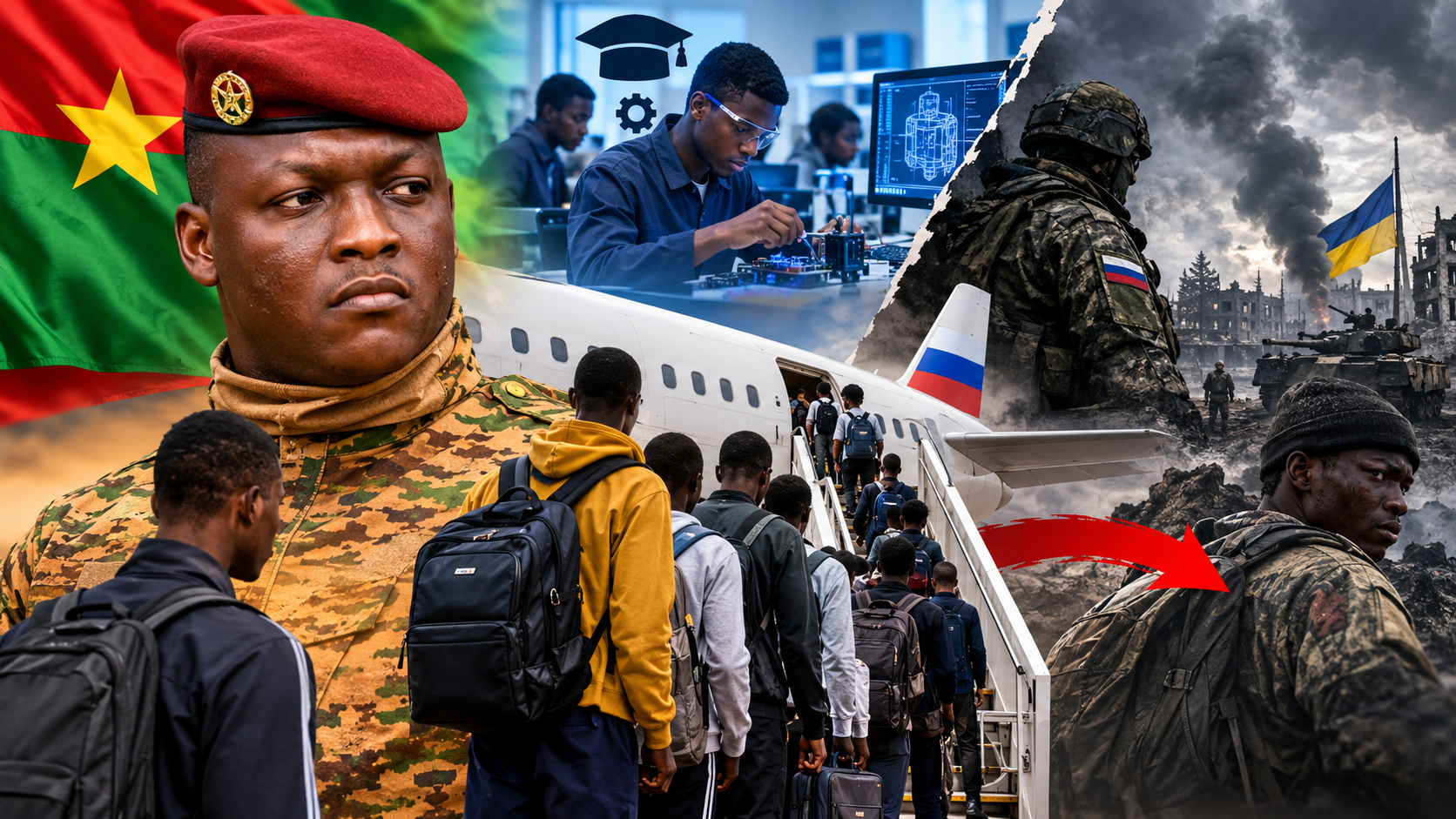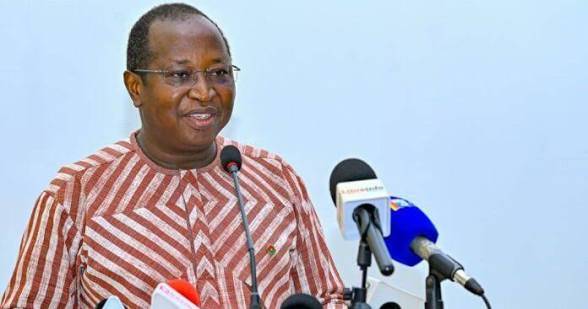
Burkina Faso stands at a tipping point as state authorities escalate repression against students, particularly those educated abroad. Recent remarks by Education Minister Adjima Thiombiano have thrust the nation into uncharted territory, where critical thought is not just discouraged—it is criminalized. The minister’s ultimatum to diaspora students—‘Leave if you don’t like it here’—marks a dangerous departure from governance through dialogue to one of exclusion and intimidation.
From Advocacy to Exile: The Cost of Speaking Out
The minister’s public attack on young graduates returning from abroad signals a deliberate shift in state policy. Labeling these students as ‘lost children’ and warning that all Burkinabè would confront them for their views reveals a governance model allergic to accountability. Under this regime, constructive criticism is no longer treated as civic engagement—it is framed as subversion, sabotage, or betrayal. This not only discourages academic freedom but normalizes a culture of fear within universities.
A Systematic Campaign Against Dissent
Institutional rhetoric has escalated from mere criticism to active suppression. Minister Thiombiano’s call for educators to treat critical thought as a ‘near-rebellion’ and act as a ‘bulwark’ against dissent effectively transforms campuses into surveillance networks. Students are increasingly pressured to conform or face consequences, including potential academic penalties. The message is clear: silence is compliance, and questioning is defiance.
This marks the institutionalization of suspicion, where students who challenge the status quo—whether in classrooms or online—are profiled, reported, or excluded. The result is a chilling effect on intellectual curiosity and public discourse.
Nationality as a Privilege, Not a Right
The minister’s demand that Burkinabè ‘return to where they came from’ if they disapprove of the nation reveals a disturbing redefinition of citizenship. National identity, under this regime, is no longer an inherent right—it is conditional on blind obedience. Diaspora students, often educated in democratic systems abroad, bring valuable perspectives that could enrich Burkina Faso’s future. Yet, the government not only rejects their input but labels their patriotism as suspect because it includes critical reflection.
This narrative contradicts the very ethos of development and progress. A nation that silences its most globally minded citizens cannot hope to innovate or adapt. The diaspora represents a bridge to global knowledge, networks, and resources. By driving them away, the state risks isolating itself from the very forces that could help rebuild it.
Education’s False Rebirth: The NEKRÉ Pact’s Hidden Agenda
The launch of the NEKRÉ Pact, touted as the blueprint for educational reform, is at odds with its stated goals. Rather than fostering an environment of debate, critical thinking, and academic excellence, the program appears designed to enforce ideological conformity. Universities, traditionally spaces for intellectual exchange and challenge, are being recast as ideological training grounds where dissent is treated as treason.
This approach contradicts the very definition of education. True reform requires openness to new ideas, not suppression. When a nation’s academic institutions fear their students’ questions, they reveal a deeper insecurity—one rooted in a lack of confidence in their own systems. The NEKRÉ Pact, as currently structured, risks entrenching mediocrity rather than excellence.
Momentum for Change: A Generation Defines Its Future
Despite increasing repression, a growing movement is emerging among students, both at home and abroad. Social media has become a tool for resistance, as young Burkinabè document their struggles and share their stories globally. This digital activism is not just about protest—it is a demand for inclusion, accountability, and a return to democratic values.
The government’s heavy-handed tactics may suppress dissent temporarily, but they cannot erase the aspirations of a generation that refuses to be silenced. The international community and civil society are also taking notice, amplifying calls for respect for academic freedom and human rights. There is a growing realization that Burkina Faso’s future depends not on ideological purity, but on the ability to embrace diversity of thought.
The Path Forward: Lessons from History and Hope for Tomorrow
History shows that regimes built on fear ultimately crumble under the weight of their own contradictions. The current crackdown on students and academics reflects a desperate attempt to cling to power rather than address genuine grievances. True leadership would recognize the value of critical voices and work to integrate them—not silence them.
For Burkina Faso to progress, its leaders must abandon the rhetoric of exclusion and embrace the principle of engagement. Educating a nation is not about controlling thought—it’s about nurturing it. The same students the government seeks to silence today may well become the architects of a more inclusive, innovative, and resilient tomorrow.
Will the regime double down on authoritarianism, or will it seize this turning point to foster real dialogue? The answer will shape not only the future of Burkina Faso’s universities but the very soul of the nation.