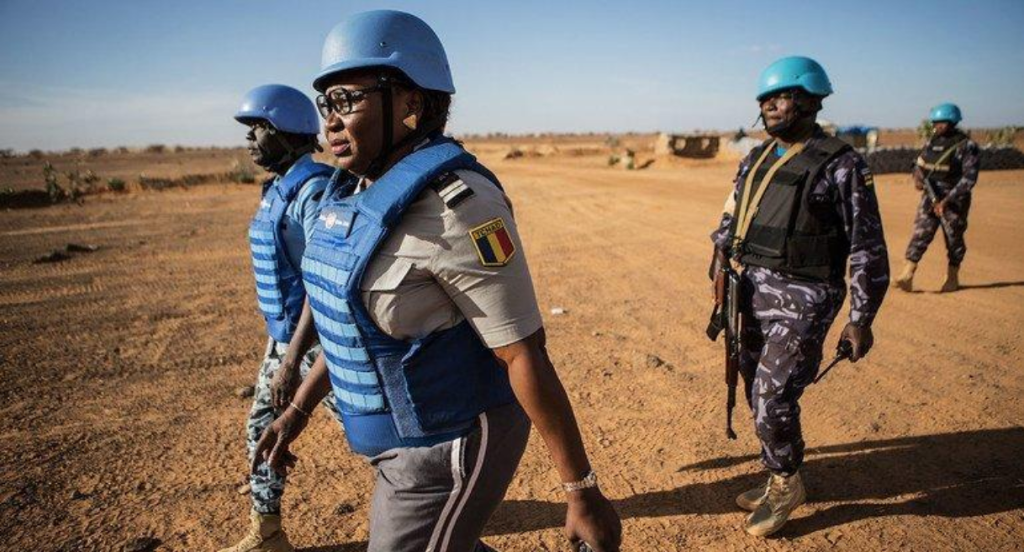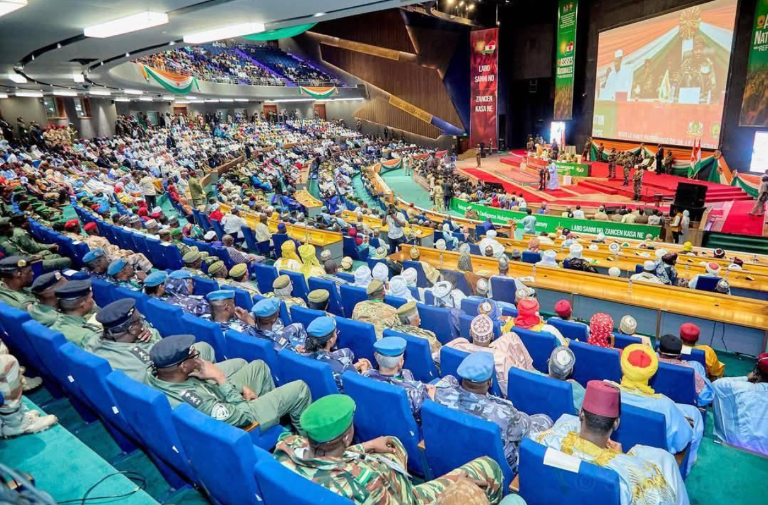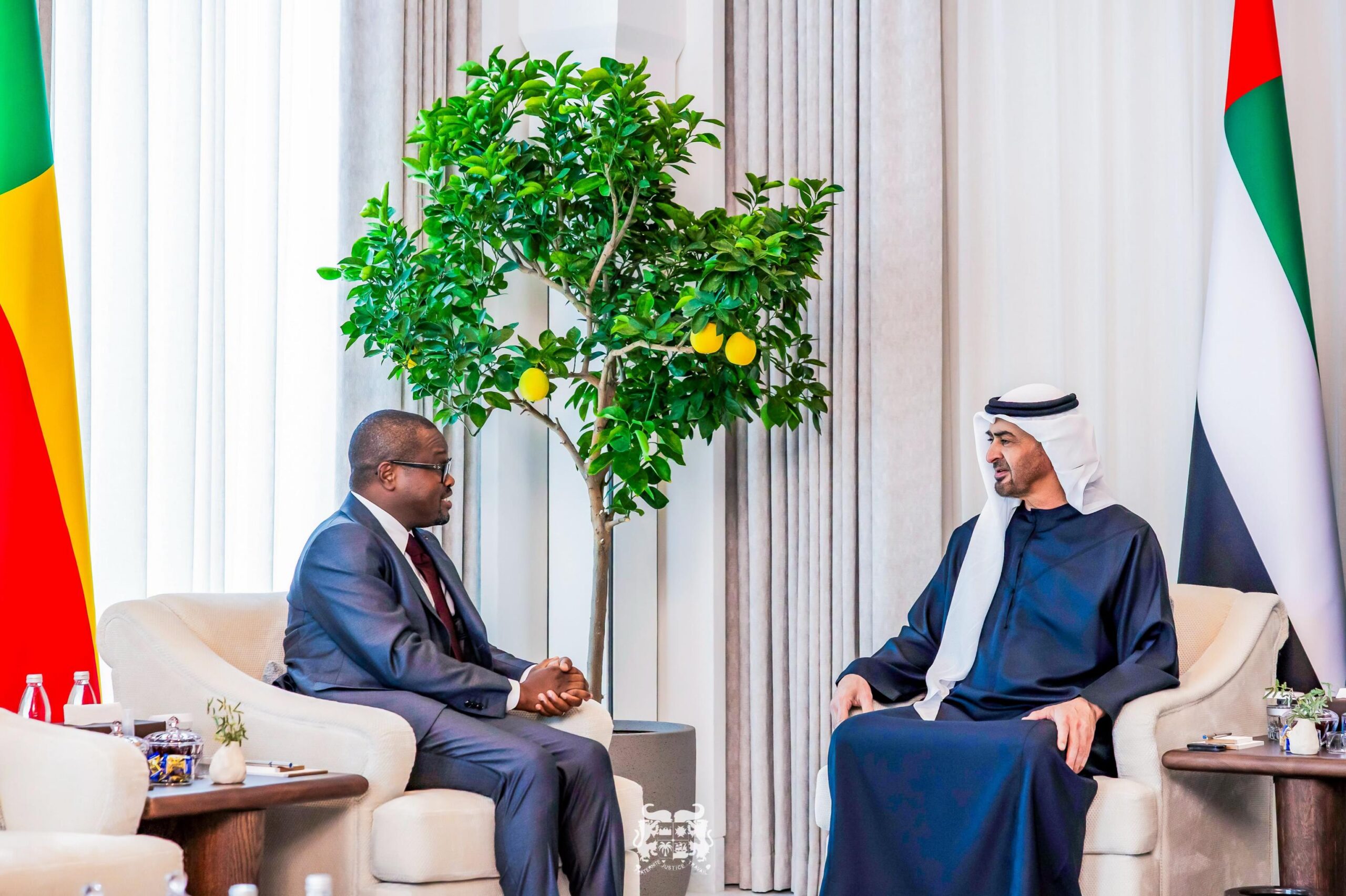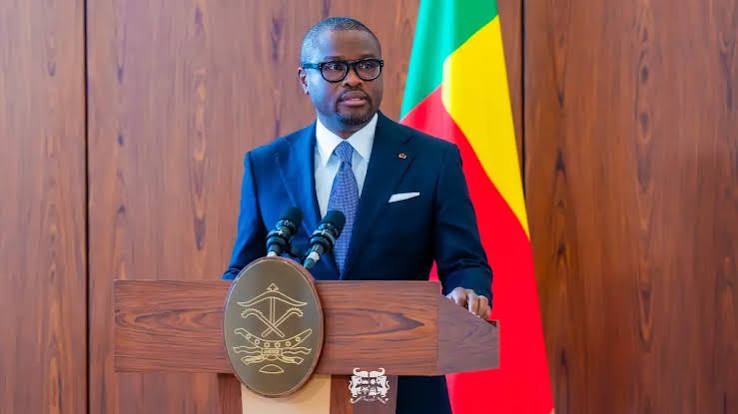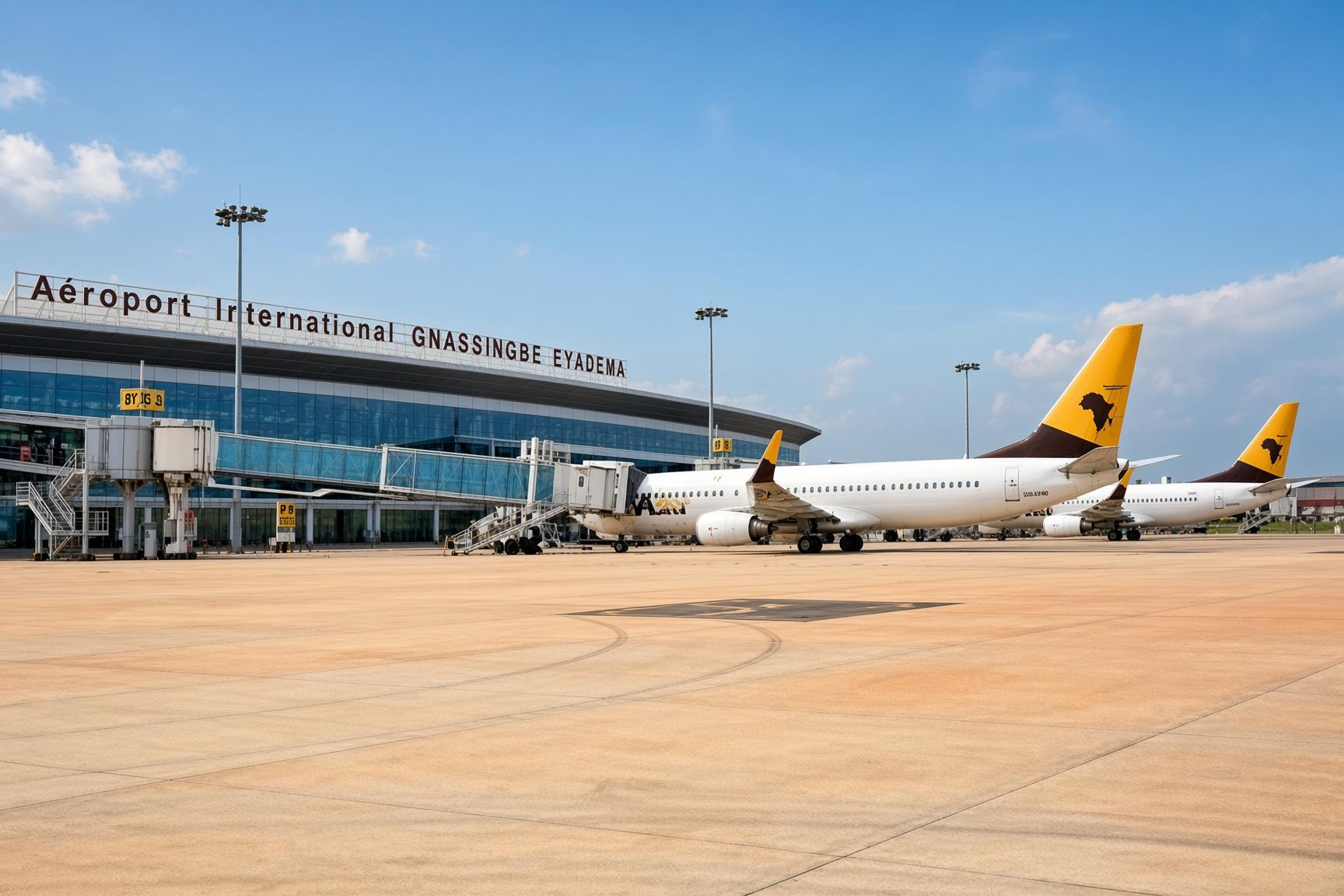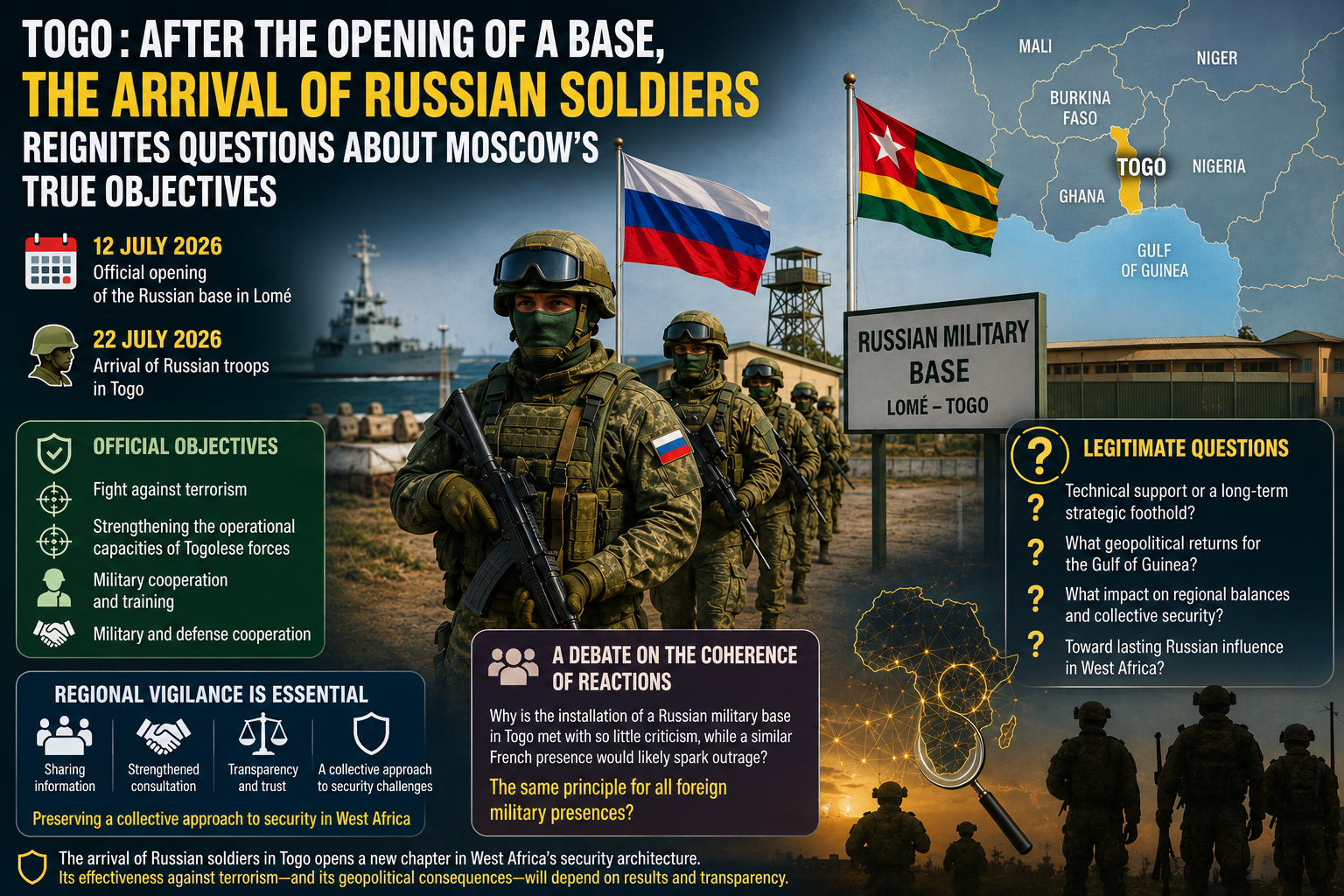
Lomé has entered a new phase in its defense cooperation with Moscow following the announcement of Russian military personnel arriving in Togo on July 22, 2026. This deployment comes just days after the formal opening of a Russian military base in the country on July 12. Officially, the troops are tasked with bolstering counterterrorism efforts and enhancing the operational readiness of Togolese armed forces.
The move has reignited discussions among regional security analysts about the true motives behind Russia’s expanding footprint in West Africa. While Lomé exercises its sovereign right to select defense partners, the enduring presence of foreign military forces in a region grappling with persistent terrorist threats inevitably reshapes the strategic dynamics of the subregion.
Russia’s deepening influence in Africa’s security landscape
Over recent years, Russia has steadily increased its military engagement across the African continent. This expansion spans defense agreements, military training programs, arms deliveries, and, in select nations, the deployment of uniformed personnel. The arrival of Russian soldiers in Togo aligns with this broader trend of deepening security partnerships between Moscow and several African states.
Analysts are now questioning whether this deployment is solely about technical support to assist Togolese forces in combating armed groups in the country’s northern regions or if it also signals Russia’s long-term ambition to establish a foothold in the Gulf of Guinea’s strategic landscape.
Beyond military support: a multifaceted partnership
The implications of foreign military presence extend far beyond direct combat operations. Such deployments often pave the way for enhanced collaboration in intelligence sharing, military training, logistics, industrial cooperation, and defense diplomacy. These developments can have repercussions that extend well beyond the immediate military sphere, influencing regional stability and diplomatic alignments.
A debate on double standards in military partnerships
Public reactions to the Russian military presence in Togo have sparked a separate but equally significant debate. Many observers have noted a stark contrast in how similar military deployments are perceived depending on their origin. For instance, had a French base been inaugurated in Togo under comparable circumstances, social media reactions might have been markedly more critical. This disparity has not gone unnoticed by regional analysts, who point to repeated condemnations of French military presence in West Africa by the Alliance of Sahel States (AES) and its supporters, who often describe such deployments as interference or destabilizing factors.
In contrast, the establishment of a Russian base and the arrival of its troops in Togo have thus far elicited relatively muted criticism from these same circles. This inconsistency has fueled speculation among some analysts that perceptions may hinge more on the identity of the foreign partner than on principled opposition to external military presence itself.
For these observers, this asymmetry raises critical questions about coherence. If external military presence is deemed a threat to national sovereignty or regional stability, this principle should apply uniformly, regardless of the partner nation. Conversely, if certain presences are deemed acceptable while others are not, it becomes essential to clarify the criteria underpinning such distinctions to foster a public debate grounded in verifiable arguments rather than geopolitical considerations.
Regional vigilance and the need for transparency
Neighboring states are closely monitoring these developments, not to challenge Togo’s sovereign right to select its defense partners, but to assess how this cooperation might impact collective security, regional cooperation mechanisms, and West African diplomatic balances. In an era where terrorist threats transcend borders and external power rivalries intensify, transparency emerges as a cornerstone of trust.
Strengthening information-sharing mechanisms and fostering concerted approaches could help mitigate misunderstandings and preserve a unified stance on addressing shared security challenges.
The establishment of a Russian military presence in Togo marks a pivotal moment in West Africa’s security architecture. Its effectiveness in combating terrorism, as well as its geopolitical ramifications, will only become clear through tangible on-the-ground results and the evolving dynamics of relations between Lomé, Moscow, and neighboring states.