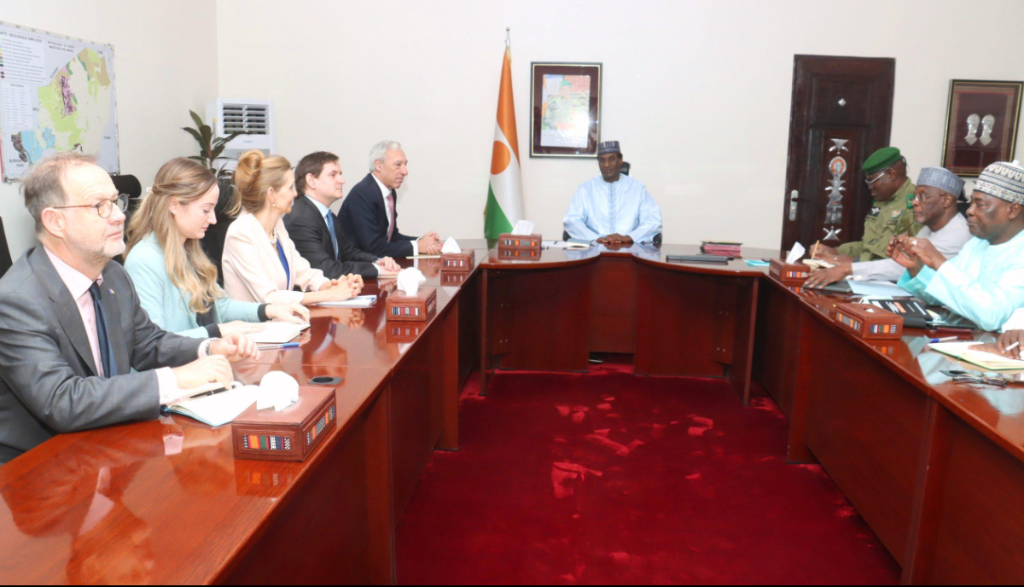
The accreditation of Niger’s new ambassador to the European Union signals a potential turning point in a relationship long strained by political and humanitarian disputes. On 22 October, Adamou Moumouni presented his credentials to António Costa, president of the European Council, and Ursula von der Leyen, president of the European Commission—a formal step that raises a critical question: is Niamey genuinely recalibrating its stance toward Brussels, or is this a calculated move to sustain dialogue amid deep-seated divisions?
Since the 26 July 2023 coup that ousted former president Mohamed Bazoum, Niger’s ties with the EU have been rocked by repeated clashes. Yet, despite the friction, diplomatic channels have remained stubbornly open. The accreditation of Moumouni marks another chapter in this complex engagement, formalising Niger’s representation in Brussels but doing little to resolve the underlying conflicts.
From military takeover to diplomatic stalemate
The military’s rise to power in 2023 triggered a sharp deterioration in Niger’s relationships with Western partners, with the EU at the forefront. Disagreements have centred on governance, humanitarian cooperation, and the treatment of Bazoum, whose detention continues to draw condemnation from European institutions.
Moumouni’s appointment ensures Niger retains a voice in Brussels, allowing it to advocate for its interests even as political tensions persist. But does institutional continuity pave the way for a broader shift, or is it merely a stopgap to keep lines of communication alive?
The 1.3 million euro humanitarian dispute that deepened divisions
A fresh crisis erupted in November 2024 when the EU pledged €1.3 million in aid to victims of severe flooding in Niger—without prior coordination with Niamey’s transitional government. Authorities argued the assistance, channeled through international NGOs like the International Committee of the Red Cross, Danish Refugee Council, and Cooperazione Internazionale, undermined national sovereignty.
Niger’s foreign ministry insisted the government had not requested the funds, which it claimed to be managing independently. The dispute escalated when Niamey summoned EU ambassador Salvador Pinto da França on 14 October 2024, demanding his recall and replacement, citing a breakdown in trust.
The EU, however, stood firm. In a 23 November 2024 statement, it defended its humanitarian principles—neutrality, impartiality, and independence—and warned against the politicisation of aid. Brussels recalled its ambassador to Niger for consultations, underscoring the impasse: while Niamey demands control over interventions on its soil, the EU insists on upholding global humanitarian standards.
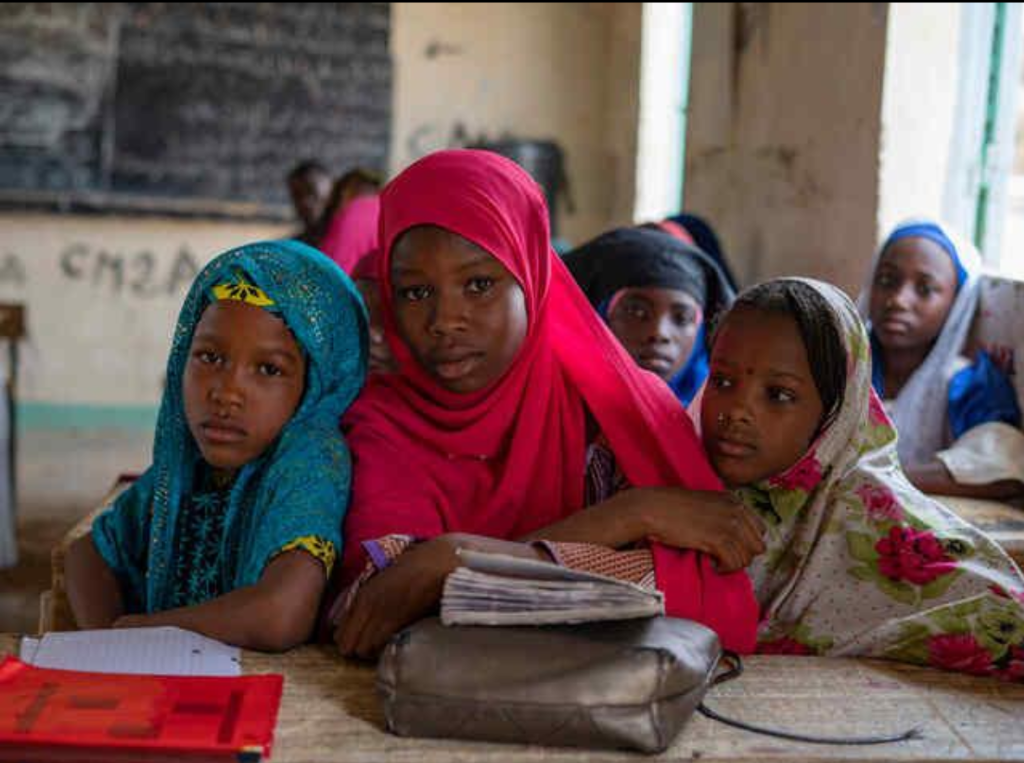
Beyond the diplomatic sparring, the real casualties were the flood-affected populations, for whom the aid remained a lifeline.
Bazoum’s detention: a flashpoint in the standoff
In March 2026, tensions flared again when the European Parliament passed a resolution condemning Bazoum’s continued detention and demanding his immediate, unconditional release. The vote—524 in favour, two against, with 29 abstentions—highlighted the EU’s concerns over Niger’s political trajectory.
For Brussels, Bazoum’s plight and the restoration of democratic order are non-negotiable. Niger’s leadership, however, views external interference in its affairs as a violation of sovereignty. This deadlock reflects broader disagreements over governance since the 2023 coup, presenting another hurdle to full normalisation.
Navigating a fractured partnership
Moumouni’s accreditation suggests Niger is unwilling to sever ties entirely. In a region grappling with security, economic, and humanitarian crises, maintaining engagement with the EU offers strategic value—even amid profound political differences. For Brussels, dialogue provides a framework to address sensitive issues, regardless of broader political alignment.
Yet, a true thaw would require tangible progress: revived negotiations, better coordination on humanitarian aid, or shifts in stance on contentious issues. For now, the accreditation is a diplomatic gesture—neither a surrender nor a reconciliation. It preserves official ties while leaving core disputes unresolved.
Momentum or mere formality?
Is Niger reversing course after years of tension? The answer remains unclear. The credential ceremony alone neither signals retreat nor guarantees reconciliation. It simply reaffirms the persistence of official diplomatic relations between Niamey and Brussels.
The coming months will reveal whether this step fosters meaningful engagement or merely sustains a fragile status quo. For Niger, the challenge is balancing sovereignty with the benefits of international cooperation. For the EU, it’s about retaining influence while upholding its principles.
Ultimately, Moumouni’s arrival in Brussels marks a new phase—not a resolution. Between maintaining contact and achieving political normalisation, the path forward remains uncertain.