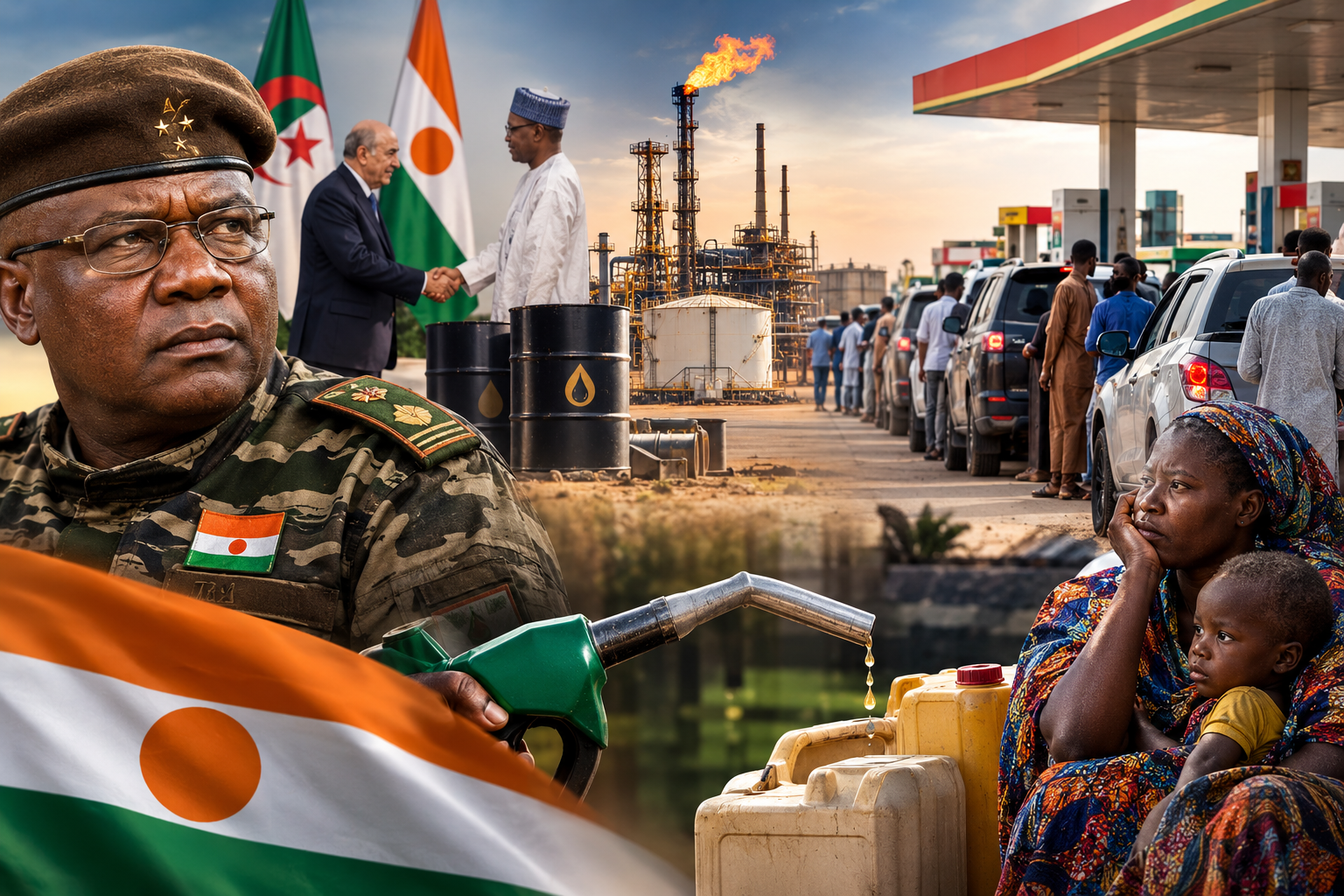
The recent security agreement between Algeria and Niger marks a pivotal moment for Niamey, but it arrives amid a stark domestic challenge: persistent fuel shortages. As the government forges new diplomatic ties and strategic partnerships in the name of national sovereignty, a pressing question lingers how can a petroleum-producing nation struggle to meet its own energy needs?
The contradiction is undeniable. Despite its oil reserves and established extraction infrastructure, Niger continues to face internal supply disruptions. Long queues at fuel stations, transportation hurdles, and economic disruptions reveal the gap between resource wealth and daily accessibility. Citizens, businesses, and logistical networks bear the brunt of these inconsistencies.
The missing link: from extraction to distribution
The core issue extends beyond production volumes to the very mechanics of distribution and resource control. Where does Niger’s crude oil go? How much is allocated for domestic consumption, and under what terms is the rest exported? The refining, storage, and transportation systems must align with national demand but do they? These are the critical questions demanding concrete answers, backed by verifiable data.
Foreign partnerships under scrutiny
The growing involvement of external actors in Niger’s strategic sectors also invites closer examination. Russia’s expanding influence across the Sahel, particularly among military-led governments, raises concerns about the economic and security agreements being negotiated. Transparency in these deals is non-negotiable if Niger aims to assert genuine sovereignty over its resources.
A call for accountability and tangible results
For sovereignty to hold meaning, it must deliver measurable benefits to the people. Regular fuel supply, affordable pricing, and clear accounting of oil revenues are the benchmarks of true resource independence. Security collaborations, while addressing regional threats, cannot substitute for sound energy policies or transparent governance.
Ultimately, many Nigériens ask: what good is oil wealth if it fails to secure domestic energy stability? Sovereignty is not merely a matter of signed accords or high-profile alliances it is proven by a nation’s ability to convert its resources into direct, everyday advantages for its citizens.
Niamey now faces a decisive test: dismantling the ambiguities in its oil supply chain, assigning clear responsibility for shortages, and ensuring strategic decisions prioritize national interests. Until fuel stations reliably meet demand, declarations of economic autonomy will confront an unavoidable reality: who truly benefits from Niger’s oil, and where do its people stand in the equation?
By François Mvondo — Journalist