Traditional leaders in Benin: trusted voices but should they stay out of politics?
In Benin, traditional leaders hold a pivotal role in shaping community values and preserving cultural heritage. Recognized both socially and legally, they serve as pillars of moral authority and guardians of local traditions. Recent legislative reforms, including the 2025 framework law on traditional chieftaincy, have formalized their status, granting legal recognition to 16 kingdoms and 90 chiefdoms while emphasizing their contributions to socio-economic development and social cohesion.
Despite their respected position, traditional leaders often find themselves entangled in political dynamics. Political parties frequently seek their support to sway voter preferences, sometimes offering financial incentives in exchange. In response, Benin has enforced strict regulations prohibiting traditional rulers from engaging in partisan politics, aiming to uphold their neutrality and integrity.
Public perception of these leaders remains complex. While nearly a quarter of citizens report interacting with traditional leaders within the past year, trust in their influence over local governance remains strong. A majority believe their role should be expanded to further support community decision-making. However, concerns about corruption have grown, with three-quarters of respondents suspecting at least some traditional leaders of unethical conduct—a significant rise since 2022. Confidence in their moral authority has also declined compared to 2020.
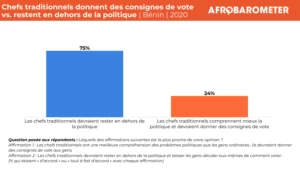
The majority of Beninese citizens argue that traditional leaders should refrain from political involvement, advocating for voters to make independent choices without external influence. This debate highlights the delicate balance between preserving cultural traditions and ensuring democratic principles prevail in public governance.