Libreville, Thursday 24 September 2026 – The dispute between Libreville and Washington over poultry imports goes far beyond what sits in a freezer. It touches on a state’s ability to protect a strategic industry, organise its domestic market and turn food demand into productive activity.
As the 81st United Nations General Assembly brings world leaders together in New York from 22 to 28 September, Gabon has a platform to explain its position and place this dispute within a broader question: its economic sovereignty.
Washington has taken the case to the World Trade Organization over Gabon’s decision to ban imports of broiler chickens from 1 January 2027. Libreville is preparing a legal and diplomatic response, insisting it will defend its economic interests, its food sovereignty and the development of its production base.
The file forces us to move beyond slogans. The question is not simply whether Gabon should close or open its market. It is about determining under what conditions a country can support domestic production without breaching international trade rules.
A trade battle behind a food question
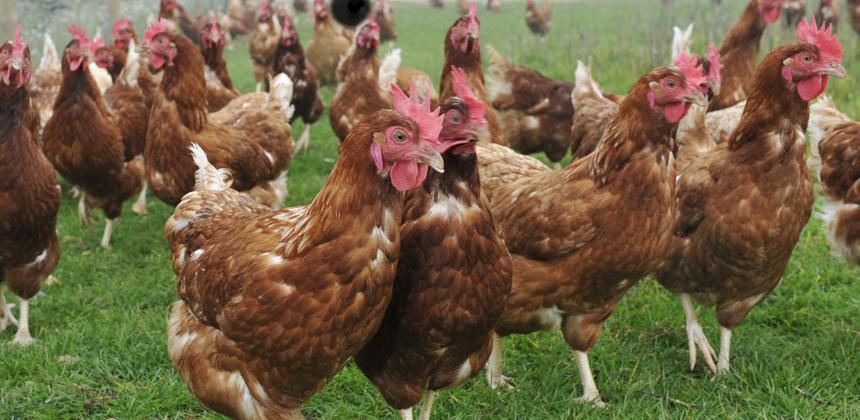
Poultry is a particularly revealing case of this tension. WTO data show that Gabon has for several years sought to reduce its dependence on imported poultry meat. In 2021, those imports amounted to $97.7 million. The organisation had already noted measures taken to develop domestic livestock farming, notably through the PRODIAG programme.
Libreville’s decision therefore fits into a long-standing orientation, but it now unfolds in a more sensitive trade environment. A lasting import restriction cannot be defended solely on the grounds of national preference. It must rest on a coherent, transparent and legally defensible policy, especially when trading partners believe their interests are affected.
This is precisely where recourse to the multilateral system matters. Gabon has been a WTO member since 1995 and, like other members, has rights as well as trade commitments. The current confrontation must therefore be seen as a trade policy dispute as much as a question of agricultural development.
Protecting a market is not enough
For Libreville, the real challenge will be to demonstrate that the planned protection accompanies a genuine strengthening of the domestic industry. Banning more imports will not automatically create competitive farms. Behind the measure, there must be production capacity, animal feed available at sustainable costs, infrastructure, credible health standards, efficient distribution channels and the ability to meet demand regularly.
Purchasing power is also at stake. A local production that cannot cover needs or offer affordable prices could shift the problem rather than solve it. Conversely, a structured industry can turn import spending into income for producers, jobs, investment and added value retained in the national economy.
The debate must therefore avoid a simplistic opposition between imported and Gabonese chicken. It is about the economic model the country wants to build. The goal of credible food sovereignty is not to cut Gabon off from international trade, but to reduce the vulnerabilities that stem from excessive external dependence.
New York as a sounding board
In this context, the UN General Assembly can serve as a diplomatic platform, but it will not replace trade procedures. WTO mechanisms remain the appropriate framework for examining the compatibility of contested measures. The New York sequence can, however, allow Gabon to set out its doctrine, publicly defend its priorities and place the poultry dispute within international debates on development, food security and productive autonomy.
The issue is all the more strategic because the 81st session of the General Assembly is themed around restoring trust and managing transformation, with the stated ambition of delivering results for all.
Gabon would therefore benefit from turning this controversy into a demonstration of public policy rather than a rhetorical confrontation. Its position will gain credibility if it is backed by precise data, solid legal arguments and a clearly identifiable programme for developing the poultry industry.
Ultimately, this case is not just about the origin of a chicken. It raises a central question for many African countries: how to use the instruments of international trade while building economies capable of producing more of what they consume. For Gabon, the 1 January 2027 deadline now gives this ambition a concrete translation. Food sovereignty can only be lasting if market protection becomes the starting point for a real capacity to produce, invest and create value.
FIN/INFOSGABON/SO/2026
Copyright Infos Gabon