Why Senegal’s electoral overhaul plan keeps coming back: the deeper dynamics at play
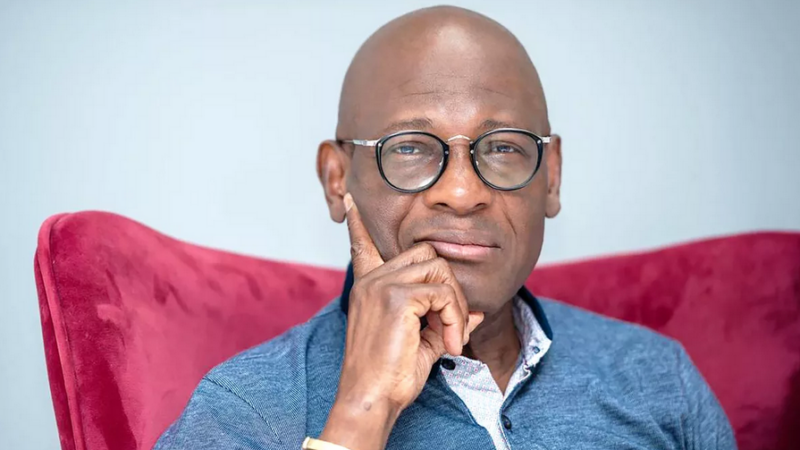
Analysis: The push to rethink Senegal’s voting system is not simply a technical debate about seat allocation. It reflects a deeper tension between party machinery and territorial representation, a tension that has quietly shaped the country’s electoral architecture for years. Khalidou dit Mbaye Sokoma, president of the Mouvement Patriotique pour un Développement Durable (MPPD) / AND DEFAR SUNU REEW, has stepped into that tension with a proposal that goes to the root of how representatives are chosen.
The contribution lands at a moment when the gap between votes cast and seats won has become hard to ignore. But behind the headline calls for change, the real story is about who gets to define the link between a citizen and their representative — and what that means for every quartier and village in the country.
The hybrid system and its quiet distortions
Senegal’s legislative elections rest on a mixed architecture: a single-round majority list vote combined with proportional representation. Of the 165 seats in the National Assembly, 112 are filled through the majority system and 53 through proportional representation on a national list. For municipal elections, the panaché system splits seats between 45% majority and 55% proportional.
Khalidou dit Mbaye Sokoma argues that this hybrid model has limits, and that the composition of assemblies should mirror the actual votes cast by citizens. The underlying issue is not just arithmetic — it is whether the system rewards broad-based territorial support or simply consolidates existing party strongholds.
1. Full proportionality with a local anchor
One of the central proposals is the introduction of a fully proportional vote for both legislative and local elections, while preserving a genuine territorial grounding.
The aim is not merely to distribute seats according to parties’ electoral weight, but to rebuild the link between elected officials and their constituents. Candidacies would open beyond party machines to include citizen movements, independent candidates and, under strict conditions, civil society and competent state services. Endorsement would take root in neighbourhoods and villages, rewarding local presence and popular trust.
In practice, this would shift the incentive structure: instead of looking upward to party headquarters, candidates would have to look sideways to the communities they seek to represent.
2. Redefining the MP’s mandate: from party label to territory
The relationship between citizen, territory and representative needs to be rethought. Khalidou dit Mbaye Sokoma stresses the need for MPs who are clearly identifiable by their constituents and regularly held to account. Political parties would retain a supporting role, but would no longer hold a monopoly on representation: the figure of the ‘party’s MP’ would give way to that of the ‘MP chosen by citizens and carried by a territory’.
This is a subtle but significant shift. It reframes accountability away from internal party loyalty and toward visible, local performance — a change that could alter how campaigns are fought and how incumbents behave between elections.
3. Stabilising and clarifying the local vote
Applied to municipal and departmental elections, stronger proportionality would better reflect the diversity of political sensibilities within a commune. But this openness must be paired with stability of local executives.
Khalidou dit Mbaye Sokoma suggests introducing a second round when no list reaches an absolute majority (50%), allowing a clear decision between competing forces, subject to a prior study of legal and financial impacts. The second round is presented as a stabilising mechanism rather than a political weapon — a way to avoid fragmented councils that struggle to govern.
4. A territorialised electoral administration
To complete the framework, the local organisation of elections could rely more on prefects and sub-prefects within their respective jurisdictions, under the control of the national body and in strict respect of impartiality and equality. Such territorialisation would foster dialogue with grassroots collectivities.
The logic is proximity: decisions taken closer to the ground, but still bound by national oversight. The risk — and the reason the proposal emphasises strict controls — is that local administration can become locally captured if safeguards are weak.
5. The specific case of Kaolack
For Kaolack, a city covering nearly 6,959 hectares (69.6 km²), structured into 45 neighbourhoods and home to a considerable population (1,336,720 inhabitants according to the 2023 RGPH-5), a tailored approach is proposed.
Given its urban growth and economic role, the creation of three or four arrondissement communes or proximity municipal entities is recommended. Such a change would rest on rigorous criteria: demography, infrastructure, living basins, fiscal resources and administrative capacities.
Kaolack serves as a test case for the broader argument: when a city grows beyond its administrative boundaries, representation at the neighbourhood level becomes a practical necessity, not just a democratic ideal.
What the debate reveals
In sum, the quality of a democracy is measured by how clearly citizens can see their vote translated into seats and identify their spokespeople. Khalidou dit Mbaye Sokoma calls for a broad, pluralist and documented national debate to give Senegal a system in which every citizen, every neighbourhood and every village truly weighs in the designation of the nation’s representatives.
Behind the technical proposals lies a simple insight: electoral systems are never neutral. They shape which voices are amplified, which are diluted, and which never make it to the table. The current debate is less about replacing one formula with another than about deciding what kind of representation Senegal wants for the next generation.