In the global chessboard of influence, Russia has spent years crafting an all-encompassing strategy to bolster its presence across Africa. Through aggressive diplomacy, defense pacts, mercenary deployments, and mining accords, Moscow presents itself as a resurgent power reshaping the continent’s geopolitical landscape. Yet beneath this bold facade lies a glaring mismatch: the Kremlin’s grand ambitions far outstrip its actual economic capabilities.
This structural gap is sparking sharp criticism. Analysts warn that with financial firepower dwarfed by rivals like China or the European Union, Russia’s approach in Africa prioritizes aggressive resource extraction over sustainable development, locking partner nations into dependency rather than progress.
The widening gulf between Russia’s ambitions and its economic footprint
Russia’s macroeconomic standing doesn’t match its geopolitical posture. Official data reveals a stark contrast between Moscow’s global aspirations and its domestic economic constraints:
- A middle-tier economy with limited reach: With a nominal GDP hovering between $2.0 and $2.5 trillion—comparable to mid-sized European economies like Italy (~$2.5 trillion) or Canada—Russia commands a mere 2% of global economic output. This places it far behind major players such as the United States (~$28 trillion) or China (~$18 trillion).
- Constraints on aid and investment: Russia lacks the fiscal muscle to underwrite large-scale development projects or offer concessional credit lines. Its ability to fund infrastructure, industrial ventures, or social programs remains severely limited.
- A fraction of Africa’s total trade: Annual trade between Russia and African nations hovers around $27 billion—a mere 3% of the continent’s total external trade. In stark contrast, Sino-African trade exceeds $280 billion each year, while EU-African exchanges approach $300 billion.
- Limited to raw materials and staples: Russia’s exports to Africa consist almost entirely of low-value goods:
- Wheat: Deliveries of 14 to 20 million tons annually.
- Mineral fertilizers: Shipments totaling roughly 1.5 million tons per year.
- Refined petroleum products: Around 10 to 12 million tons of fuel oil and diesel shipped each year.
- No industrial footprint: Russian Foreign Direct Investment (FDI) in Africa accounts for less than 1% of the continent’s total incoming investment. While partners such as China or the EU finance ports, roads, and power plants, Russia’s financial flows go almost exclusively toward securing mining concessions or security contracts.
- Intensive mining raids: Strategic deposits—gold, diamonds, uranium, hydrocarbons—are exploited under opaque arrangements, often shielded from public oversight.
- Revenue hemorrhage: Profits flow outside formal economic channels, bypassing national budgets and depriving governments of vital fiscal resources for health, education, and infrastructure.
- No value addition: Agreements seldom include clauses for local processing or industrial transformation, leaving raw materials to be shipped abroad with minimal local benefit.
- Stronger transparency: Clear contracting, auditable revenue flows, and open tendering to curb graft and ensure public accountability.
- Local processing and industrialization: Policies requiring that raw materials be refined or manufactured locally before export.
- Partnerships built on equity: Deals that prioritize skill transfer, employment creation, and shared economic gains over short-term rents and political favors.
Paradoxically, Russia compensates for this shortfall by focusing on targeted security and political partnerships. It leans heavily into states experiencing political transition, security crises, or international isolation, offering military support or political cover in exchange for access to strategic assets.
Commercial ties that serve Moscow’s narrow agenda
Trade data exposes just how modest Russia’s footprint is on the continent:
This imbalance means Africa imports little more than energy and food staples from Russia, while Moscow secures resource rents without fostering local economic growth.
The rise of extractive dominance
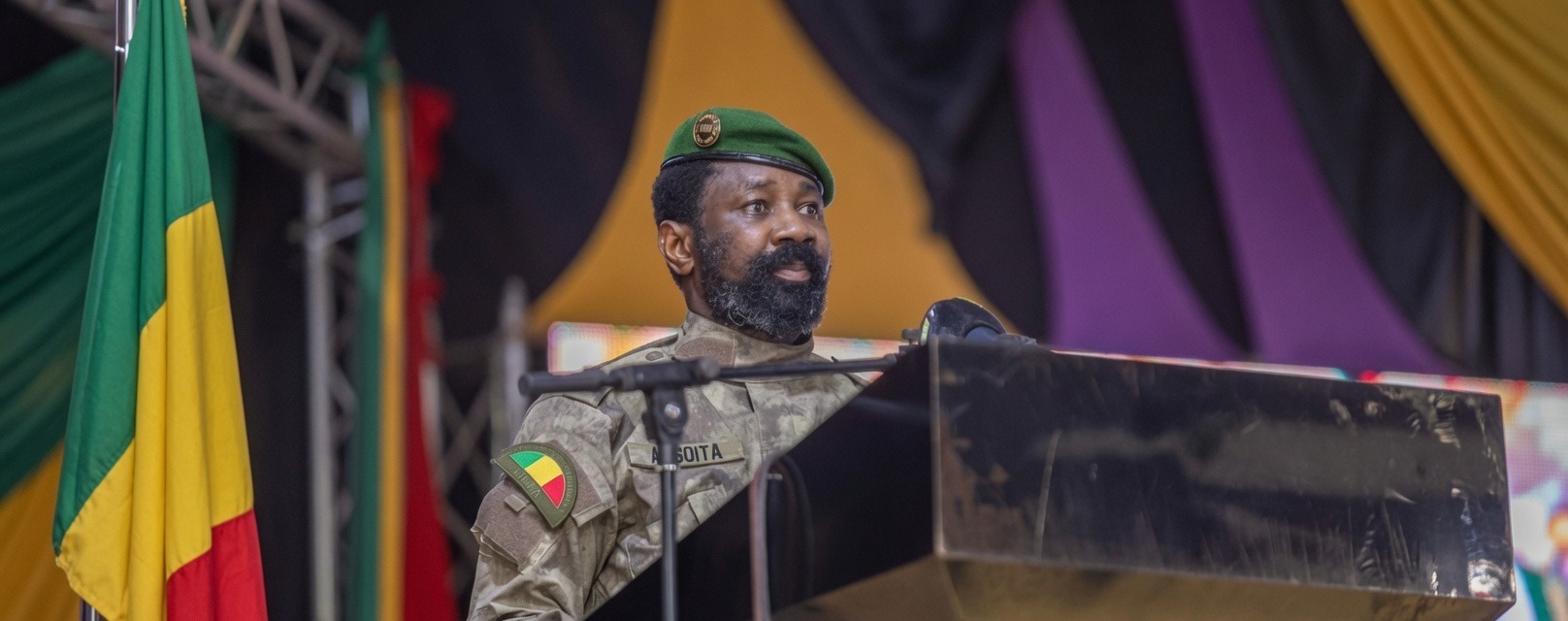
Unable to compete in heavy industry or diversified economic investment, Russia’s strategy in Africa hinges on an inequitable exchange: access to natural resources in return for military or political backing. Several countries in Sub-Saharan Africa and the Sahel, often led by regimes facing domestic turmoil or international isolation, have struck such deals with Moscow.
The consequences of this model are stark:
The paradox of riches amid poverty
Africa’s longstanding paradox—abundant resources coexisting with entrenched poverty—finds a harsh illustration in nations entangled with Russian extraction networks. While elites, intermediaries, and extractive conglomerates reap financial rewards, ordinary citizens continue to face deprivation, underdevelopment, and a lack of economic opportunity.
This dynamic reinforces dependency rather than unlocking the potential for shared prosperity. Without meaningful technology transfer, local processing, or equitable revenue sharing, resource-rich states risk becoming mere suppliers of raw materials to foreign interests.
Towards a new African economic sovereignty
In response to this reality, a growing chorus within Africa is calling for a rethink of external partnerships. Experts and civil society leaders argue that diversifying alliances must not merely swap one form of dependency for another. For Africa to fully harness its natural wealth, the path forward demands:
Without these safeguards, even the boldest geopolitical realignments will yield little more than temporary gains—and leave Africa’s vast potential untapped for generations to come.