Moroccan monarch leaves accountability questions unanswered after 27-year reign
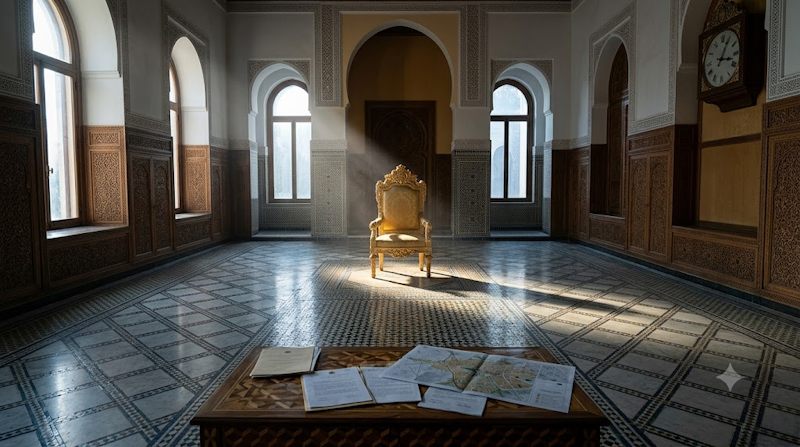

2026 throne address: A balance between strategic pride and persistent unanswered questions
The speech delivered by King Mohammed VI on the 27th anniversary of his ascension to the throne on July 29, 2026, stands as a pivotal political document. It encapsulates two and a half decades of national strategy while subtly outlining the contours of the post-2026 era. Delivered with measured confidence amid regional volatility, the address champions institutional continuity as Morocco’s « strategic capital. » Yet beneath the veneer of achievements, the speech inadvertently exposes a glaring gap: the lingering issue of political accountability for the challenges that have accumulated over nearly three decades.
Claiming sovereignty through strategic vision
In a rare moment of personal reflection, the Monarch rejected the notion of passive leadership, asserting: « I have never sought personal glory… My sole concern has always been to fulfill the responsibility entrusted to me to the best of my ability. » The successes highlighted—described as anything but coincidental—were attributed to a « clear strategic vision » and meticulous governance.
The economic achievements outlined were substantial. The King emphasized a 4.9% growth rate in 2025, Morocco’s position as Africa’s leading car exporter, and a record-breaking tourism performance with nearly 20 million visitors. These milestones, he argued, transcend individual governments or parliamentary terms, emerging instead from « major choices » and a « virtuous cumulative dynamic »—the result of long-term decisions rather than short-term executive actions.
The accountability paradox: successes celebrated, failures obscured
This is where the speech’s underlying logic creates a paradox. By attributing success to a transcendent strategic vision, the address elevates accountability to the highest level of the state. Yet this very framing raises an unavoidable question: if strategy is the mother of success, why do persistent « difficulties and constraints » or social challenges endure after 27 years under the same guiding vision?
While the royal address champions institutional stability and effectiveness, it also calls for cohesion and a « shared sense of responsibility » among state bodies. However, this holistic view of power complicates the political narrative, making it difficult to confine failures to mere government shortcomings when successes are framed as national triumphs. While the King alluded to « constructive self-criticism » as a core principle of his doctrine, this call remained implicit in the public assessment, leaving room for interpretation.
The way forward: continuity or cautious evolution?
Rather than closing the debate, the 2026 speech opens it further by announcing a « new cycle » following legislative elections. This cycle is set to prioritize « safeguarding achievements » and « advancing reforms, » reinforcing the existing trajectory rather than signaling a radical departure. The address thus positions itself as a consolidation of political legitimacy, anchoring future trust in the narrative of past accomplishments while leaving the question of accountability for the shadows of the past unresolved for both political and media spheres.