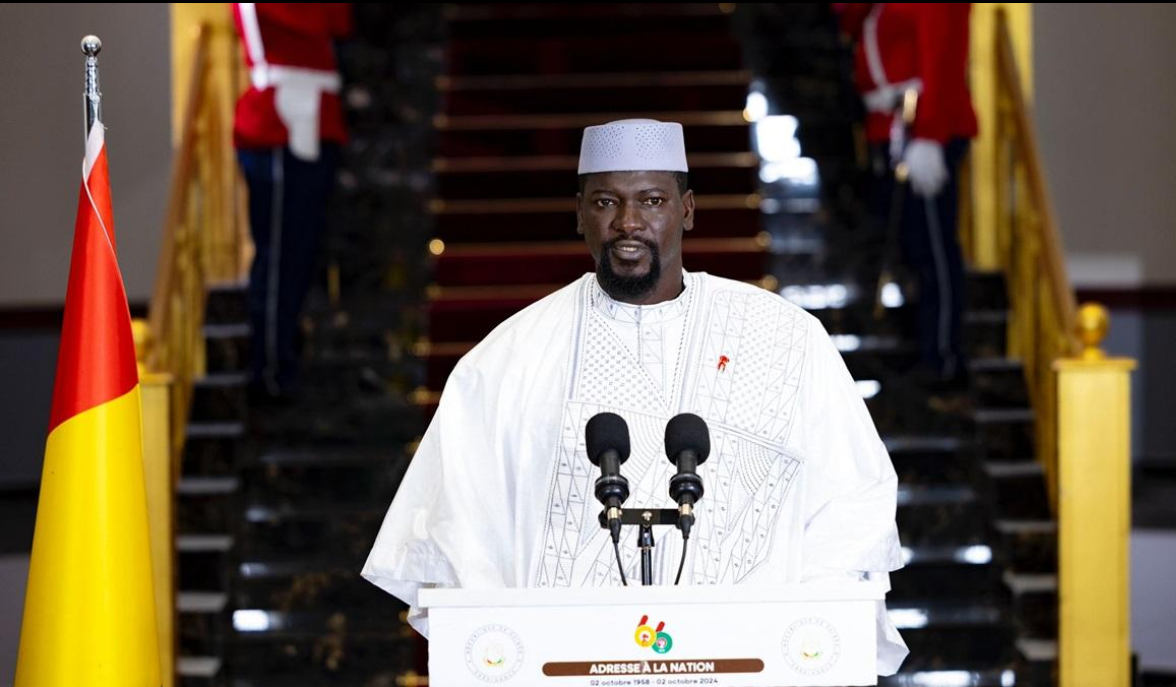
The President of Guinea, Mamadi Doumbouya, has signed a landmark decree removing 22 territorial officials from public service, marking a decisive turn in the fight against illegal gold mining and environmental degradation. Among those removed is Colonel Fayimba Mara, the Prefect of Siguiri, a major gold-producing region. This bold administrative purge signals a new phase in the government’s efforts to enforce mining laws and safeguard the country’s natural resources.
Administrative shake-up targets key figures in Guinea’s gold rush
The decision, announced via national television, comes as part of a broader strategy to dismantle networks involved in clandestine gold panning and illegal mining operations. The officials, spanning administrative and security roles across Siguiri and surrounding areas, have been accused of enabling or participating in activities that harm the environment and undermine regulatory compliance.
Who are the dismissed officials?
The list of those removed includes:
- Colonel Fayimba Mara, Prefect of Siguiri
- Captain Mohamed Lamine Keita, interim Prefect of Kintinian
- Captain Sory Camara, interim Prefect of Siguirini
- Commandant Fodé Isaac Camara, Sub-Prefect of Niagassola
- Lieutenant-Colonel Pépé Doualamou, Sub-Prefect of Bankon
- Naman Kourouma, Sub-Prefect of Kiniébakoura
- Abou Kanté, Sub-Prefect of Norassoba
- Richard Yaradouno, Sub-Prefect of Naboun
These dismissals reflect a sweeping crackdown across multiple local governments and security institutions in one of Guinea’s most critical mining zones.
Environmental costs fuel government’s tough stance
The decree highlights severe environmental damage linked to unauthorized mining activities. Issues include soil degradation, water pollution from heavy metal runoff, and destruction of arable land—threats that jeopardize both public health and economic stability in local communities. Some operations have also been linked to the use of hazardous chemicals, further escalating ecological risks.
Inter-ministerial task force takes charge
The implementation of this order falls under the purview of multiple ministries, including:
- Territorial Administration and Decentralization
- National Defense
- Security and Civil Protection
- Justice and Human Rights
- Employment and Social Protection
- Modernization of the Public Service
This coordinated response underscores the government’s commitment to enforcing mining regulations and ensuring accountability at all levels.
Nimba Gold Refinery heralds new era for Guinea’s gold industry
Two days before the dismissals were announced, President Doumbouya inaugurated the Nimba Gold Refinery (NGR) in Conakry. As Guinea’s first-ever gold refinery, this facility represents a major step toward adding value to the country’s mineral wealth locally rather than exporting raw materials.
The refinery, located in the Cité de l’Air area, aligns with the Simandou 2040 program, which aims to drive industrialization, job creation, and equitable economic growth through sustainable resource management. Officials emphasized the refinery’s role in reducing dependency on unprocessed gold exports while fostering national economic sovereignty.
The inauguration ceremony drew high-ranking officials, diplomats, and industry stakeholders, signaling a unified push for structural transformation in the mining sector.
From sanctions to sustainable growth: can Guinea balance enforcement and development?
While the dismissals send a strong message against corruption and environmental violations, the long-term success of this campaign hinges on several factors:
- Strengthening real-time monitoring of mining sites
- Ensuring transparency in gold trading and certification
- Protecting local communities from the fallout of illegal mining
- Sustaining regulatory oversight amid economic pressures
Only time will tell whether these measures can transform Guinea’s gold sector into a sustainable engine of prosperity—without repeating past failures that prioritized short-term gains over environmental and social well-being.
The road ahead: enforcement, justice, and community resilience
The coming months will be critical. Authorities must now demonstrate that dismissals are not merely symbolic but part of a broader, enforceable strategy. This includes:
- Prosecuting individuals involved in illegal mining networks
- Restoring degraded ecosystems in affected regions
- Supporting alternative livelihoods for communities dependent on artisanal mining
- Monitoring compliance with environmental safeguards at all mining sites
The challenge is immense: to turn Guinea’s gold wealth into a driver of inclusive growth, while ensuring that its natural heritage remains intact for future generations.