Drc: opposition c64 maintains constitutional reform ultimatum

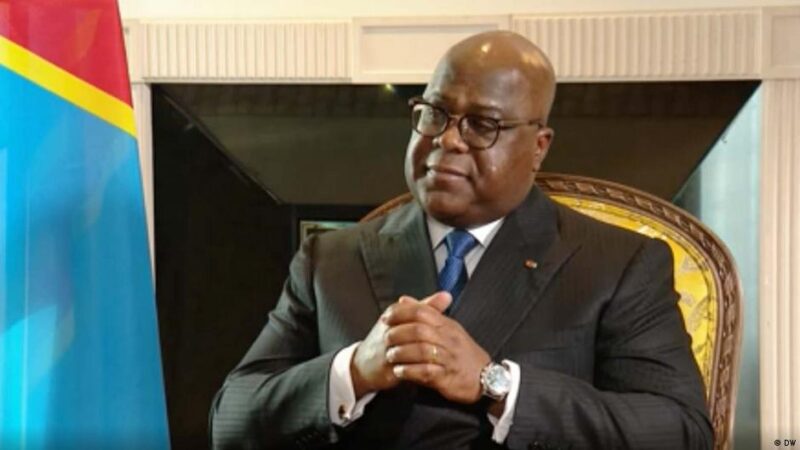
In the Democratic Republic of Congo, the C64 opposition coalition continues its robust campaign against the presidential camp’s proposed constitutional revision. From Kinshasa, leaders of the C64 have reiterated a firm ultimatum to Head of State Félix Tshisekedi, demanding the complete abandonment of any efforts to alter the nation’s fundamental law. This political standoff escalates against a backdrop of already heightened security tensions in the eastern regions of the country.
A united Congolese opposition against constitutional revision
The C64 platform, which brings together several prominent figures from the Congolese opposition, specifically coalesced around its rejection of the constitutional revision promised by Félix Tshisekedi. Its leaders assert that tampering with the foundational text would pave the way for an institutional reconfiguration tailored to serve the interests of the incumbent power. Their message to the President of the Republic remains unwavering: publicly renounce the project or face widespread mobilization.
For the coalition, the 2006 Constitution, adopted by referendum following the post-conflict transition, represents a non-negotiable democratic achievement. Its members particularly fear modifications to provisions that safeguard the number and duration of presidential terms. This perspective resonates with a segment of civil society and several religious institutions, which have voiced their concerns over any rewriting of the document in recent months.
President Tshisekedi’s political strategy in Kinshasa
Re-elected in December 2023 for a second term, Félix Tshisekedi had, as early as autumn 2024, highlighted the necessity for a new Constitution, which he claimed would be better adapted to Congolese realities. The presidential argument underscores the current text’s supposed inadequacy in meeting the development and governance imperatives of a continent-sized nation with over one hundred million inhabitants. Conversely, opponents denounce this as a pretext designed to circumvent term limits and solidify the ‘Union sacrée’s’ hold at the pinnacle of state power.
The Head of State announced the formation of a commission tasked with deliberating on the matter, a move perceived by his detractors as the initial step in a process whose outcome is already predetermined. For the opposition coalition, this is neither a technical discussion nor an academic exercise, but a pivotal political turning point. The situation evokes previous instances observed across the continent, where revisions presented as modernizing efforts ultimately led to shifts in electoral calendars.
Tense social and security climate in the DRC
The constitutional debate unfolds within a particularly grave context. In the eastern part of the country, the provinces of Nord-Kivu and Sud-Kivu have been enduring a large-scale offensive by the armed group M23 since the beginning of the year, reportedly supported by external forces according to several UN expert reports. The fall of Goma, followed by Bukavu, in the first quarter, has significantly weakened state authority and fueled internal dissent. The opposition contends that the government’s priority should be the restoration of territorial sovereignty rather than an institutional overhaul.
Economically, the DRC remains a strategic supplier for global cobalt and copper supply chains, materials essential for the energy transition. Investors are closely monitoring the evolving political climate in Kinshasa, aware that any prolonged institutional crisis could impact the clarity of major mining contracts. Regional partners, notably Angola and South Africa, are also observing the next phases of this political struggle with keen interest.
It remains to be seen whether the C64’s ultimatum will translate into coordinated street actions or a purely political escalation. Previous calls for demonstrations by the opposition have resulted in uneven mobilizations, often contained by a robust police presence. The coalition is now banking on an expanded alliance with civil society and religious confessions to influence the presidential agenda and maintain pressure until an explicit renunciation from the Head of State.