In Burkina Faso, the struggle for press freedom has shifted from newsrooms and streets to the digital realm, where dissent is silenced through systematic online harassment campaigns.
Ibrahim Traoré’s alleged digital militia
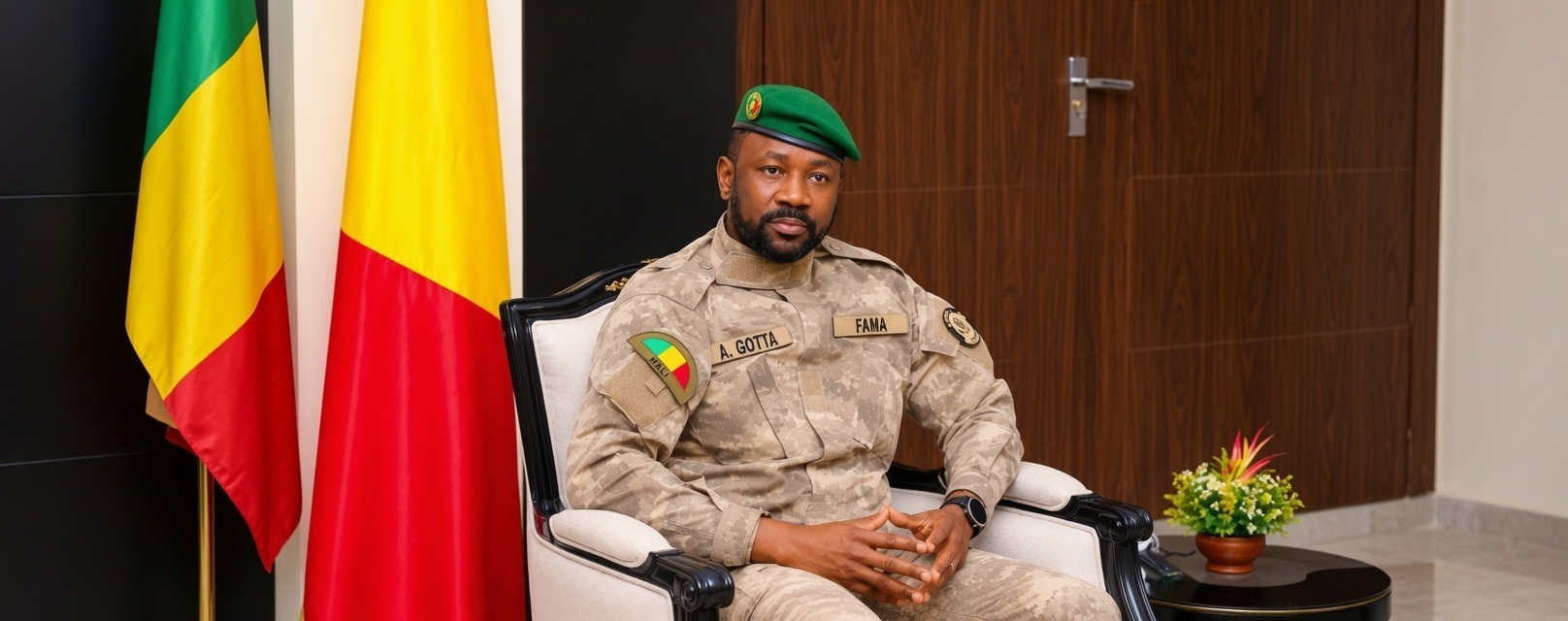
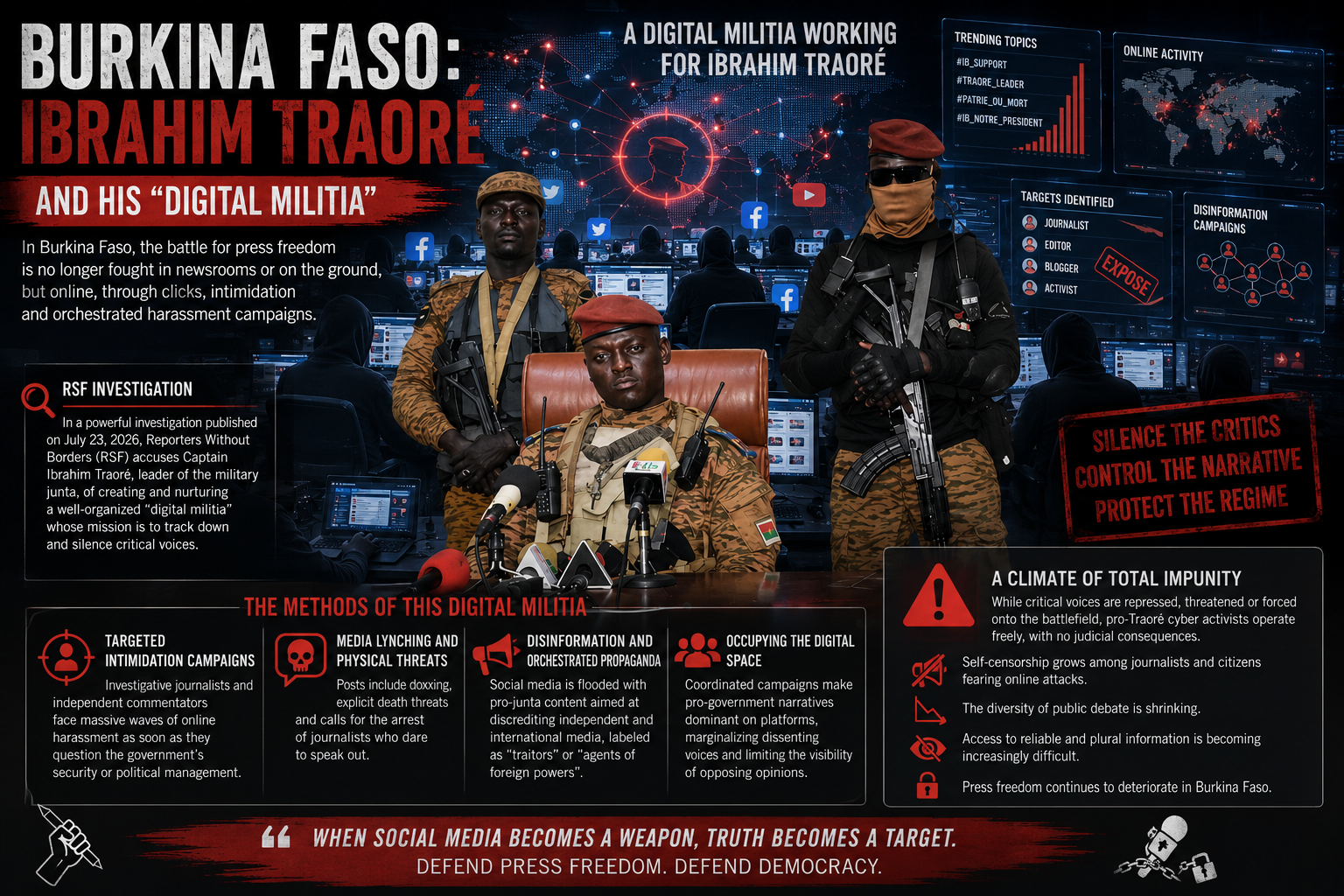
The captain and leader of Burkina Faso’s military junta, Ibrahim Traoré, faces allegations of orchestrating a coordinated network of cyberactivists to suppress critical voices. This strategy, according to a comprehensive investigation, has given rise to what observers describe as a digital militia, deployed to monitor, intimidate, and neutralize journalists, commentators, and activists who challenge the regime’s policies.
The BIR-C: a virtual force to silence opposition
At the heart of this repression mechanism lies the Bataillons d’Intervention Rapide de la Communication (BIR-C), a shadowy network operating under a name evoking military precision. Unlike traditional supporters of the regime, these groups specialize in digital warfare, flooding online platforms with pro-junta narratives while systematically drowning out dissenting opinions.
Tactics employed by the BIR-C
- Targeted intimidation campaigns: Investigative journalists and independent columnists face coordinated cyberharassment as soon as they critique government actions, particularly on security or political matters.
- Doxxing and physical threats: The network does not hesitate to expose personal data of critics, issue death threats, or call for their arrest, creating a climate of fear.
- Disinformation and propaganda: Pro-regime content floods social media to discredit independent and international outlets, often labeling them as traitors or foreign agents.
- Digital dominance: Coordinated campaigns ensure pro-government narratives dominate trending topics, pushing critical voices to the fringes of public discourse.
A climate of unchecked impunity
The absence of legal consequences for these actions has fostered an environment where critics face repression while pro-regime cyberactivists operate with impunity. This lack of accountability contributes to widespread self-censorship among journalists, bloggers, and citizens, who increasingly avoid sensitive topics such as security policies or military operations to avoid harassment.
While no formal ban on free speech exists, the psychological pressure exerted by these campaigns serves as an effective deterrent, restricting public debate without overt censorship.
Eroding democratic discourse
Experts warn that when digital spaces become monopolized by coordinated propaganda, public debate loses its plurality. Divergent opinions struggle to gain visibility, while pro-government narratives dominate online conversations. This polarization is particularly concerning in a country grappling with persistent security challenges, where access to pluralistic information is vital for citizens to assess national policies.
The methods documented align with tactics observed in authoritarian or hybrid regimes worldwide, where cyberactivist networks are weaponized to suppress dissent, discredit independent media, and manipulate public opinion. International press freedom advocates now recognize these digital campaigns as a covert but potent tool for suppressing criticism.
A broader crackdown on journalism
Digital repression does not exist in isolation. It compounds pre-existing restrictions on media freedom in Burkina Faso, including the suspension of international outlets, intimidation of journalists, and arbitrary detentions. The cumulative effect of administrative measures, security pressures, and online harassment has significantly narrowed the space for independent journalism.
International implications of Burkina Faso’s digital repression
The findings underscore a troubling decline in Burkina Faso’s democratic space since the junta’s rise to power. By weaponizing social media, the regime has transformed digital platforms into instruments of political coercion, making independent journalism increasingly hazardous.
This trend also raises concerns among international partners, who consider press freedom indicators when evaluating governance quality and institutional stability. A sustained decline in these metrics could tarnish Burkina Faso’s global image, affecting investment, development aid, and diplomatic relations.
The future of information warfare
This evolution reflects a broader shift in propaganda strategies. While state-controlled media once dominated, social networks now serve as strategic battlefields where algorithms, viral content, and rapid dissemination amplify certain narratives while marginalizing others. Observers highlight this as one of the most pressing challenges to press freedom and democratic discourse in politically unstable regions.