How a single attack reshaped Burkina Faso’s political landscape
The events of September 26, 2022, remain etched in Burkina Faso’s recent history as a turning point that not only claimed dozens of lives but also redrew the nation’s political map. On that day, a military convoy carrying essential supplies to the besieged town of Djibo was ambushed near Gaskindé, in the northern reaches of the country. The assault, claimed by the Group for the Support of Islam and Muslims (GSIM), an Al-Qaïda affiliate, resulted in at least 37 fatalities, including 27 soldiers, alongside numerous injuries.
The coup that followed: a political earthquake
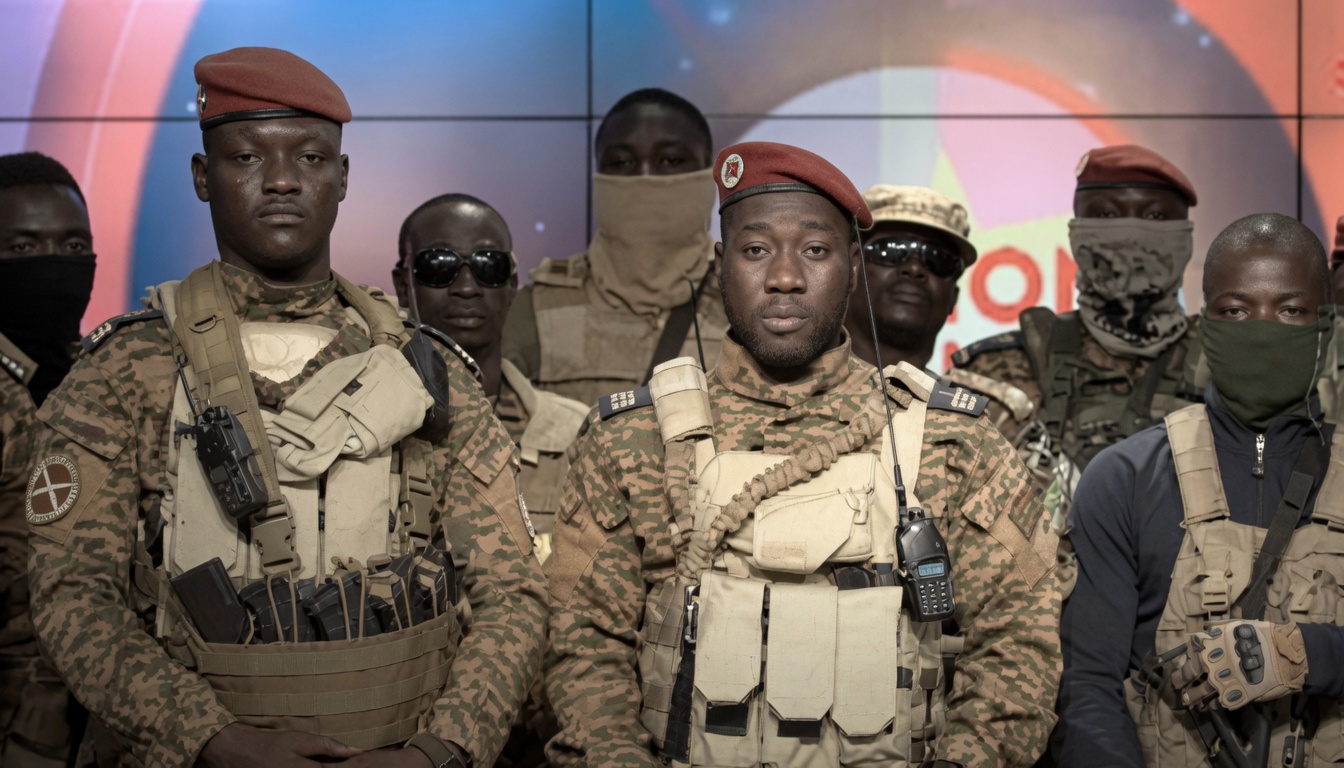
The attack’s devastating impact extended beyond its immediate human cost. Just four days later, on September 30, 2022, Captain Ibrahim Traoré orchestrated a coup that ousted Lieutenant-Colonel Paul-Henri Sandaogo Damiba. The rapid succession of these events—first the ambush, then the overthrow—has since sparked intense debate about the true circumstances surrounding Gaskindé and the motivations behind the power shift.
An investigation left in the dark
In the immediate aftermath of the ambush, military authorities announced the launch of internal inquiries to uncover how a strategically vital convoy could have been so precisely targeted. Key questions emerged early on:
- The attackers’ exceptional level of preparation and coordination
- Their apparent knowledge of the convoy’s exact route
- Gaps in the security protocols meant to protect it
- The possibility of internal leaks or complicity within the armed forces
These lines of inquiry pointed toward a sensitive investigation that could have implicated military personnel. Yet, before any conclusions could be made public, the coup took place, abruptly halting the process.
To this day, no official report has been released to clarify the attack’s circumstances, leaving lingering doubts about what truly transpired that day.
Institutional silence fuels lingering doubts
In the wake of a tragedy of this magnitude, transparency is not merely desirable—it is a necessity. Standard procedures in such cases would include independent probes, detailed public reports, the identification of any responsible parties, and, where applicable, legal consequences. Yet in Burkina Faso, these steps have not been taken.
The lack of official communication has left three critical questions unanswered:
- Why have no comprehensive findings been shared with the public?
- Have any internal investigations led to disciplinary or judicial actions?
- How can families of the victims receive closure without knowing the full truth?
This opacity has not only fueled speculation but has also eroded trust between citizens and the military leadership.
The political weight of Gaskindé
The ambush became a central argument used to justify the need for change in Burkina Faso’s leadership. Captain Traoré’s coup was framed as a necessary response to the country’s escalating security crisis. Yet a perplexing question persists: if the new regime aimed to correct the failures of its predecessor, why has it not addressed one of the defining events that justified its rise to power?
A genuine break with the past would logically include uncovering the full truth behind Gaskindé. Instead, the attack remains shrouded in ambiguity, creating a paradox where the very incident that propelled Traoré to power is now overshadowed by uncertainty.
Transparency as the cornerstone of governance
Leadership built on promises of reform carries an inherent responsibility: to demonstrate accountability not only toward past administrations but also within its own ranks. Governance cannot thrive on denunciations alone; it must also provide tangible answers to unresolved questions.
By failing to disclose the status of investigations into Gaskindé, the military leadership risks reinforcing a damaging narrative: that it demands transparency from others while resisting the same scrutiny for itself. This double standard fosters an environment of mistrust, ultimately undermining the credibility of Burkina Faso’s institutions.
Why internal failures matter in the fight against terror
International experience shows that armed groups often exploit systemic weaknesses within states—whether through intelligence gaps, corruption, infiltration, inter-service rivalries, or command failures. To attribute Burkina Faso’s security crisis solely to external threats would be to overlook the internal vulnerabilities that enable such attacks to succeed.
When a military convoy falls victim to an ambush of this scale, the issue of internal responsibility cannot be ignored. Effective counterterrorism depends not only on operational prowess but also on the willingness of institutions to confront and rectify their own shortcomings.
A strong army is built on three pillars: discipline, cohesion, and the trust of both its soldiers and the population. This trust cannot endure when national tragedies remain mired in secrecy.
The enduring demand for truth
Nearly four years after the ambush, the Gaskindé case remains a sensitive and unresolved chapter in Burkina Faso’s political narrative. The families of the victims, soldiers on the front lines, and citizens alike deserve clarity on what happened that day. Beyond politics, this is a matter of justice, remembrance, and public accountability.
History teaches that no nation can build lasting stability on unresolved questions. The mystery of Gaskindé will continue to haunt Burkina Faso until a credible, independent, and transparent inquiry provides definitive answers. Only then can the country hope to close this chapter—and only then can its institutions begin to restore the trust so vital to their mission.