Diplomatic property conflict reaches critical phase in Dakar court
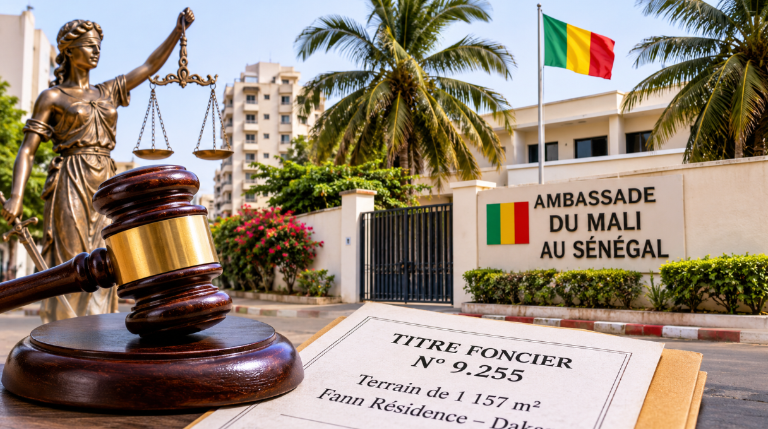
The long-standing land dispute between Mali’s diplomatic mission in Senegal and a local developer has escalated into a decisive legal turning point. A Senegalese court has ruled that the Malian embassy must vacate a 1,157-square-meter plot in the upscale Fann neighborhood, marking a significant shift in a case that has drawn attention to the delicate balance between diplomatic immunity and property rights.
Developer wins court battle over contested Dakar plot
At the heart of this legal confrontation is Immoland SARL, a Senegalese property firm that claims ownership of the disputed parcel through land title number 9.255. The company initiated legal proceedings after determining that the Malian embassy was occupying the land without valid legal documentation, leading to a court decision that now threatens to upend diplomatic operations on the site.
The judicial ruling stipulates not only the evacuation of the embassy but also mandates the removal of all associated belongings and occupants under its authority. This comprehensive approach underscores the court’s determination to resolve the property conflict definitively, though the actual enforcement process remains to be seen.
Key questions remain unanswered in the legal aftermath
While the verdict represents a clear victory for Immoland SARL, several critical aspects of the case remain unresolved:
- Will the Malian embassy pursue legal appeals to contest the decision?
- What mechanisms will be employed to execute the court’s evacuation order?
- Could this ruling set a precedent affecting other diplomatic properties in Dakar?
- How will the governments of Senegal and Mali respond to this judicial development?
Diplomatic immunity versus property claims: a complex legal landscape
This case introduces particularly thorny legal considerations, as diplomatic missions enjoy special protections under international law. The Vienna Convention on Diplomatic Relations (1961) safeguards embassy premises from forced entry and protects diplomatic communications, but these provisions do not grant automatic ownership rights over occupied properties.
Legal experts note that while diplomatic immunity shields missions from certain enforcement actions, it does not create an exception to property ownership laws or court rulings. The precise application of these principles in this specific case could have far-reaching implications for future diplomatic property disputes in urban centers.
The road ahead: enforcement and potential diplomatic repercussions
With the court’s decision now on record, the focus shifts to implementation and potential diplomatic fallout. The absence of detailed reporting on the embassy’s counterarguments or potential appeals leaves many questions unanswered about the next steps in this evolving saga.
This land dispute, which began as a routine property conflict, has now escalated into a high-stakes legal and diplomatic confrontation. Both Dakar and Bamako will be closely monitoring developments, as the outcome could influence how similar cases are handled in the future. For now, the Malian embassy faces an unprecedented legal challenge to its presence on the contested parcel in Senegal’s capital.