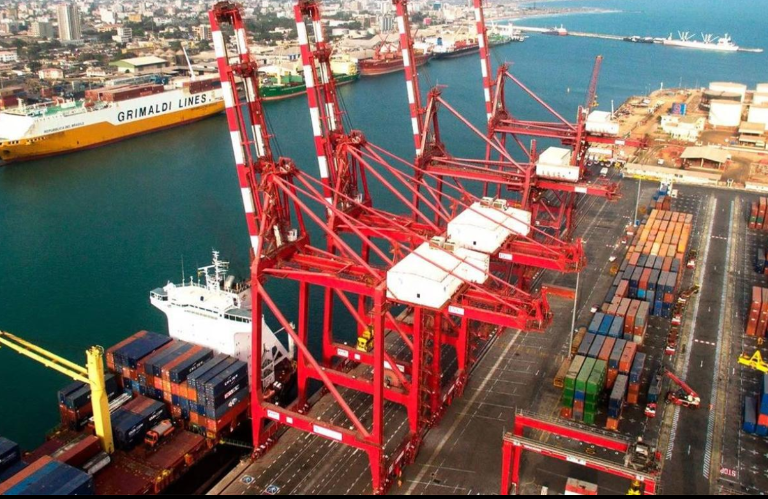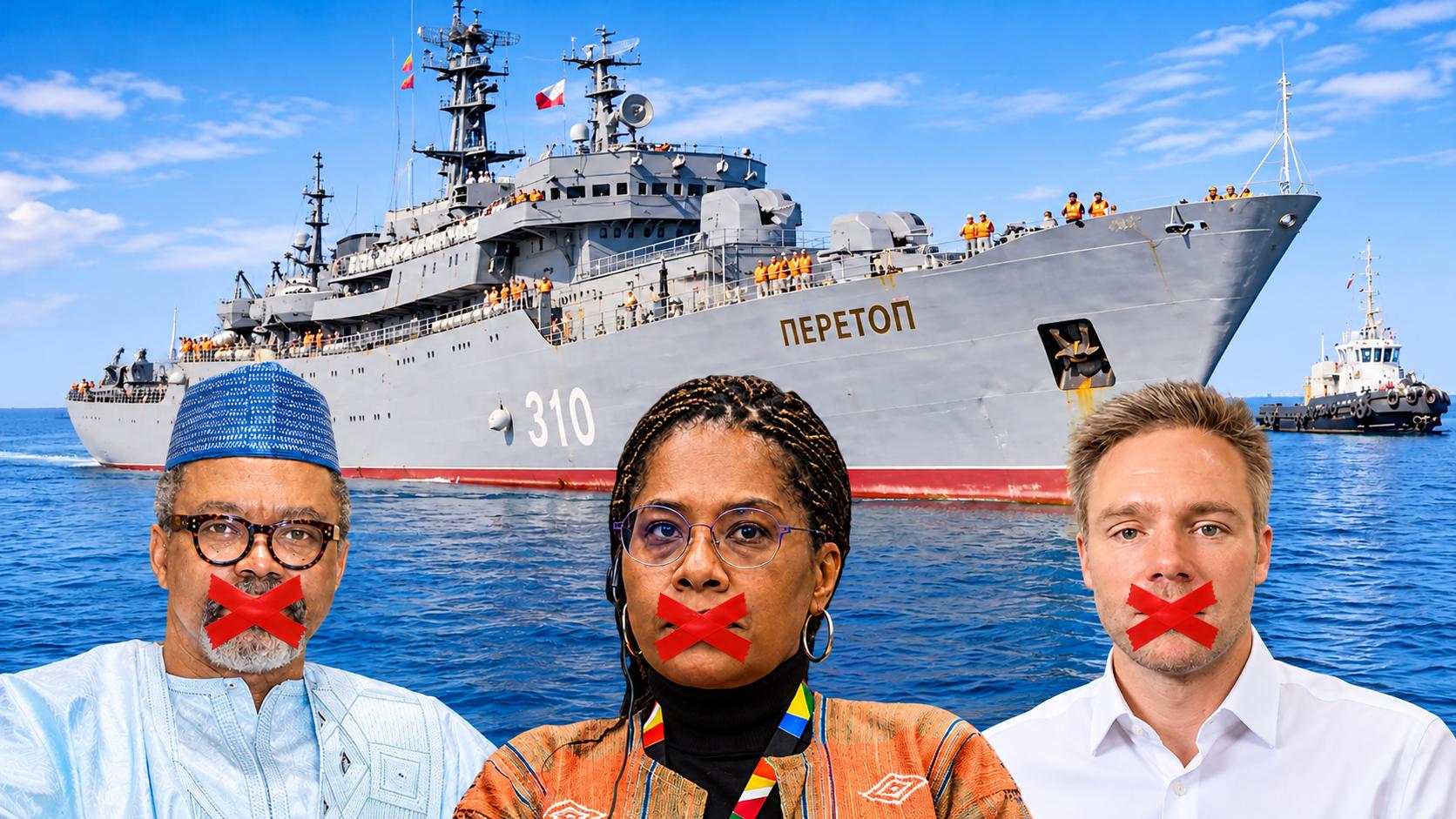
The recent docking of a Russian vessel at the Port of Cotonou marks a stark contrast to the uproar that greeted a French warship’s arrival just weeks prior. While the earlier visit sparked a wave of allegations and insinuations from certain media outlets, the Russian ship’s presence has been met with near-silence, raising critical questions about selective media narratives.
During the French warship’s visit, accusations of undermined sovereignty and hidden agendas dominated headlines. Yet, when a Russian vessel from a nation often at the center of geopolitical debates anchored in the same waters, the usual chorus of criticism was conspicuously absent. This disparity in reactions demands scrutiny, particularly as it reflects broader patterns in how maritime visits are framed by certain regional voices.
From outcry to indifference: the shifting tone of media discourse
When the French ship arrived, media personalities closely aligned with the Alliance of Sahel States (AES) were quick to voice concerns over Benin’s sovereignty. Figures such as Nathalie Yamb, Antoine 2Moscou, and Franklin Nyamsi, known for their pro-Russian stance and critical stance on France‘s African policies, led the charge. Their commentary fueled narratives that questioned Benin’s diplomatic choices, often without clarifying the nature or purpose of the visit.
Yet, when a Russian vessel docked in Cotonou, these same commentators remained largely silent. The absence of urgent coverage or allegations of sovereignty violations invites reflection: why is the arrival of a Russian ship treated with such muted responses compared to a Western vessel? Does the sovereignty of Benin become less worthy of defense when the visiting nation is a non-Western power?
The contrast is striking. In one case, skepticism and suspicion proliferated; in the other, indifference prevailed. This inconsistency underscores a troubling trend: the application of media scrutiny appears contingent on geopolitical preferences rather than factual rigor.
Sovereignty should not be treated as a selective concept
The principle of sovereignty is the cornerstone of any independent nation. Benin, as a sovereign state, has every right to engage in diplomacy and cooperate with partners that align with its national interests. This principle applies equally to all foreign nations, whether Western allies or other global powers.
Yet, the differing reactions to the French and Russian vessels suggest that sovereignty is being framed as negotiable worthy of defense only when it involves certain international players. This double standard risks undermining the very notion of independence, reducing it to a political convenience rather than a fundamental right.
For Benin’s leadership, the message must be clear: the country’s foreign partnerships are determined by its own strategic priorities. For the media, objectivity must remain paramount. Facts, not geopolitical biases, should guide reporting regardless of the nationality of the visiting vessel.
Media accountability in an era of shifting alliances
This episode highlights a broader challenge facing regional media: the tendency to prioritize narratives that align with political or ideological preferences over factual accuracy. When a Western nation’s actions are scrutinized, the spotlight is immediate and intense. When a non-Western power, particularly one with growing influence in Africa, is involved, the same scrutiny often fails to materialize.
This is not a call for uniformity in criticism but an insistence on consistency in standards. Journalistic integrity requires the same level of transparency, verification, and rigor for all vessels docking in Cotonou whether they fly the flag of a long-standing ally or a rising global power.
Benin’s sovereignty is not a bargaining chip to be played in geopolitical games. It is a non-negotiable principle that must be defended with equal vigor, regardless of the international context. Similarly, the media’s role is to inform not to amplify preconceived narratives or serve as a mouthpiece for foreign agendas.
What this moment signals for Benin’s diplomatic future
The arrival of the Russian vessel, devoid of the controversy that surrounded its French counterpart, may mark a turning point in how Benin’s maritime engagements are perceived. It suggests a possible recalibration in regional media expectations, where objectivity begins to take precedence over geopolitical posturing.
For Benin’s leaders, this moment presents an opportunity to reinforce the country’s commitment to equitable partnerships. For media professionals, it is a reminder that impartiality is not optional it is the bedrock of public trust.
As Benin continues to navigate its role in an evolving global landscape, one truth remains constant: sovereignty is not a concept to be wielded selectively. It is a right that demands uncompromising respect, and that responsibility extends to everyone from policymakers to journalists and beyond.
By François Mvondo — Journalist