From economic growth to job creation: the turning point for Benin
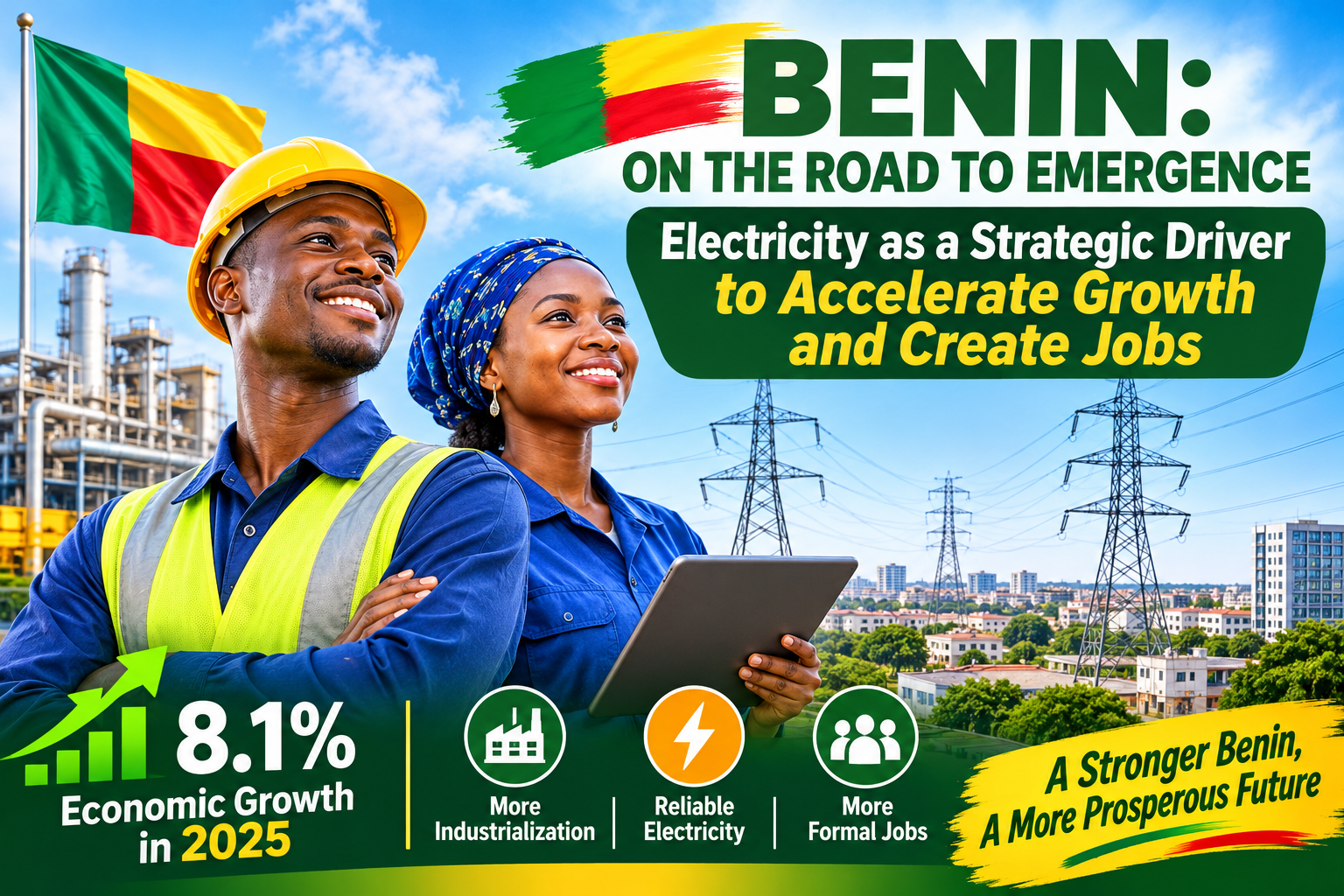
Benin’s economy hit an impressive 8.1% growth rate in 2025, solidifying its position as one of West Africa’s most dynamic markets. Sustained by consistent annual growth of 7.1% since 2021, the country’s momentum stems from strategic investments in infrastructure, industrialization, and economic modernization. Yet despite these gains, a critical gap remains: the expansion of formal, stable employment opportunities has failed to keep pace. Rather than a lack of growth, the real challenge lies in transforming economic progress into meaningful, well-compensated jobs.
The World Bank highlights this disconnect in its 2026 economic outlook. In 2022, a staggering 96.3% of workers operated in the informal sector, with eight out of ten new jobs categorized as self-employment. By 2024, only 19.8% of workers held formal salaried positions just 9% among young people. The implications are clear: while Benin’s economy expands, too many citizens remain trapped in precarious work without contracts, steady income, or social protections. This reality underscores why industrialization must accelerate not just as a policy goal, but as a practical pathway to broad-based employment.
Why unreliable energy is stalling Benin’s industrial ambitions
The tide could turn with a focused push in energy reliability. Currently, nearly half of Beninese businesses cite electricity access as a major obstacle to operations. A staggering 86.1% report frequent power outages, disrupting production, inflating costs, and eroding competitiveness. For small manufacturers from textile workshops to food processors these interruptions translate into lost time, wasted materials, and missed export opportunities. Industry leaders estimate that production stoppages due to unreliable power can slash output by up to 30%, directly threatening profitability and scalability.
The energy crisis isn’t confined to availability. In 2024, transmission losses on Benin’s grid reached 24.7%. Over half of the country’s power lines and substations were installed over 25 years ago, and reliance on heavy fuel oil forced by gas supply shortages has driven energy costs upward. These inefficiencies create a dual burden: rising operational expenses for businesses and limited affordability for households. The result is a self-reinforcing cycle where poor infrastructure and high costs suppress both production and demand.
Industrial zones show promise but scale is critical
The Glodjigbé Industrial Zone (GDIZ) offers a glimpse of what’s possible. By 2025, it employed 22,798 people up 28.8% from the previous year demonstrating how targeted industrial investment can generate formal jobs at scale. These roles span local processing, textiles, and manufacturing sectors with high job multipliers. Yet for every success story like GDIZ, thousands of small enterprises struggle to expand due to power constraints. Without reliable electricity, even promising ventures risk stagnation, leaving entrepreneurs unable to hire or upgrade operations.
Mission 300: Benin’s pivotal energy leap to power future jobs
In response, Benin has aligned with the Mission 300 initiative a joint effort with the African Development Bank to connect 300 million Africans to electricity by 2030. For Benin, this translates into a National Energy Pact that prioritizes grid modernization, renewable energy expansion, and private sector engagement. The initiative isn’t just about adding capacity; it’s designed to create an enabling environment where businesses can thrive, hire, and innovate.
Key projects are already underway. Four new solar plants in Natitingou, Djougou, Bohicon, and Parakou will add 50 MW of clean energy to the grid, while the 128 MW thermal plant in Onigbolo aims to bolster baseload supply. Together, these developments signal a strategic pivot from dependency on costly fossil fuels toward a diversified, resilient energy mix. But the most transformative impact lies in the projected job creation: up to 159,000 new or improved jobs by 2030, according to World Bank estimates.
From potential to progress: the conditions for success
Realizing this potential demands more than infrastructure investment. Success hinges on governance reforms to reduce technical and commercial losses, stringent cost controls to keep energy affordable, and accelerated grid connections for businesses. Transparency in procurement and equitable access to power will determine whether the energy boom translates into real economic inclusion. Without these safeguards, Benin risks exchanging one crisis for another where new capacity exists but remains out of reach for the very sectors it’s meant to empower.
A turning point for Benin’s workforce
Benin’s growth story is no longer just about GDP figures. The true measure of progress will be seen in payrolls: the number of new salaried jobs, the productivity of small businesses, and the reliability of electricity underpinning every transaction. Sustained industrialization fueled by stable power could shift the narrative from one of economic promise to one of tangible opportunity. Young professionals, small-scale manufacturers, and agricultural processors all stand to benefit from an energy-secure future where businesses can scale, hire, and compete globally.
As the country approaches 2030, the question isn’t whether Benin can grow it’s whether it can grow inclusively. Reliable electricity isn’t a luxury; it’s the foundation upon which thousands of businesses and the livelihoods they support can finally flourish.
By Thérèse Nguimfack — Journalist