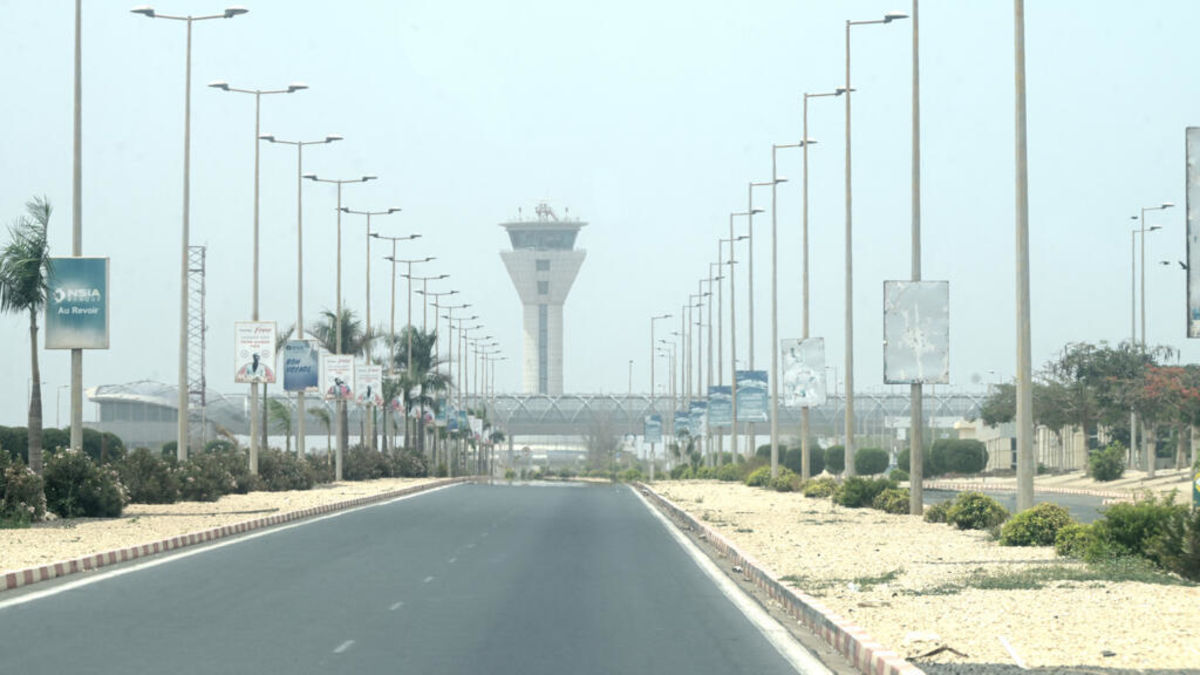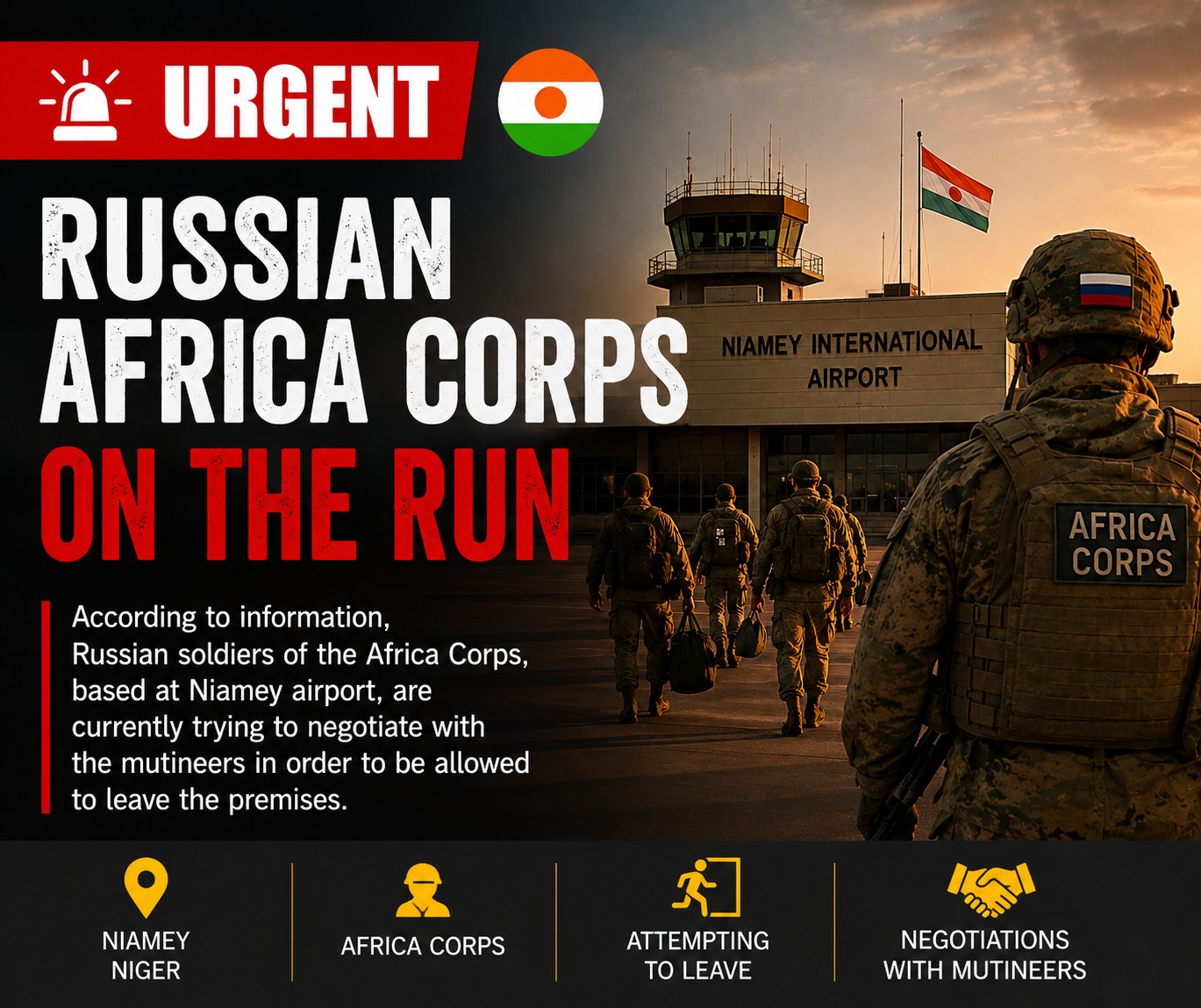
Recent gunfire and heightened tensions surrounding Niamey’s Diori-Hamani International Airport have cast a spotlight on a developing situation involving elements of Russia’s Africa Corps. According to on-site observations, Russian personnel are reportedly engaged in urgent negotiations with Nigerien military officials controlling the airport, seeking to secure their evacuation under precarious circumstances.
If verified, this incident transcends a mere local security disruption. It exposes fundamental vulnerabilities in the security models upon which several Sahelian military regimes have increasingly depended.
Questioning the myth of an infallible partner
In a marked departure from traditional allies, several Sahelian juntas have pivoted toward Moscow, entrusting a portion of their national security architecture to Russian-backed forces. The Africa Corps, which has assumed a growing role across African theaters previously held by Wagner Group elements, was promoted as a solution to bolster regime security, protect leadership, and combat jihadist factions.
Yet the unfolding events at Niamey pose a critical question: what becomes of a security partnership when internal discord erupts or when foreign interests diverge from those of the host regime?
Russian objectives overshadow local priorities
Unlike national armed forces, foreign military contingents operate foremost in alignment with the geopolitical and strategic interests of their home state. Their presence is not rooted in long-term defense of local institutions or populations, but rather in the fulfillment of external political and military agendas.
This creates an inherent contradiction. A Sahelian regime may view Russian support as vital to its survival, while Moscow may reassess its exposure when risks escalate and prioritize the safety of its personnel. The reported standoff at Niamey may exemplify this tension: when conditions deteriorate, self-preservation can supersede commitments to allies.
The trap of security dependence
By heavily relying on external forces, military regimes risk substituting one form of dependency for another. The stated goal — reclaiming sovereignty, reducing reliance on Western powers, and regaining strategic autonomy — may remain elusive when security is outsourced to foreign fighters and advisors.
The presence of external troops in critical zones — airports, bases, logistical hubs, command centers — introduces a paradox: control over national security assets is ceded to foreign actors. A sudden withdrawal does not eliminate the vacuum; it magnifies it. Sovereignty, it appears, cannot be achieved through foreign occupation.
Foreign forces cannot substitute for national resilience
While foreign combatants and trainers may temporarily enhance operational capacity, they cannot resolve the structural causes of insecurity. Effective counter-jihadist strategy demands more than firepower:
- A robust intelligence apparatus;
- A coherent and unified chain of command;
- A well-trained and equipped national army;
- Consistent state presence in rural areas;
- Genuine cooperation with local communities;
- Reliable logistics networks;
- And, above all, a political vision capable of addressing the root drivers of insurgency.
No foreign force, regardless of its technological prowess, can permanently replace these pillars of national defense.
Measuring the true cost of foreign military cooperation
Proponents of Russian engagement often claim it has shifted the strategic balance in favor of Sahelian states. Yet tangible outcomes remain difficult to verify. When attacks persist, zones remain contested, and military losses mount, the value of such cooperation must be scrutinized through empirical results.
Is the cost justified by tangible gains in security, governance, or public trust? Or does it merely serve as a temporary palliative, masking deeper institutional weaknesses?
Niamey: a crisis with political and symbolic weight
The significance of the airport incident extends beyond its immediate military implications. It carries profound symbolic weight.
If Russian personnel — tasked with safeguarding the regime — are compelled to negotiate their withdrawal with local military elements, it reveals a disconcerting truth: external powers do not control the internal power dynamics of the host nation.
The presence of a foreign force does not guarantee the cohesion of the national army, the stability of the regime, or the legitimacy of the government. In fact, it may inadvertently highlight vulnerabilities that were previously concealed.
The illusion of invincibility crumbles
Russia has cultivated an image of military efficacy and resolute intervention in Africa, positioning itself as a reliable alternative to Western partners. Yet this narrative relies on perception as much as performance.
An episode in which a seemingly indispensable force seeks urgent evacuation undermines that image. It sends a powerful signal: the regime may be weaker than portrayed, the external ally less committed than assumed, and the alliance less sustainable than promised.
Such a development could embolden opposition forces, sow doubt within the military, and erode public confidence in the government’s security strategy.
Strategic isolation and internal fragility
Regimes that have severed ties with Western and regional partners have narrowed their diplomatic options. If their primary military ally proves reluctant or unable to intervene during a domestic crisis, they may find themselves isolated when it matters most.
The question evolves from “Who will fight the jihadists?” to “Who will truly defend the regime in times of peril?”
This shift in perception can have dangerous consequences. Loyalty within the armed forces is not guaranteed, and the perceived inability of foreign partners to ensure stability can weaken deterrence and fuel internal dissent.
Economic strain and the burden of unsustainable partnerships
Military cooperation with external powers carries a substantial financial cost, particularly for states with limited resources. Yet effectiveness cannot be measured solely by the number of foreign troops or the volume of weaponry delivered.
A sustainable defense strategy must be evaluated by its outcomes: controlled territory, protected civilians, prevented attacks, reduced casualties, and the eventual autonomy of national forces. When insecurity persists despite escalating expenditures, the model becomes increasingly unsustainable.
Building a defense that endures
The Niamey incident serves as a stark reminder: changing partners does not guarantee lasting security. A durable defense architecture is built on institutional cohesion, professionalized armed forces, reliable intelligence, trust between soldiers and citizens, and the state’s ability to exert authority across its territory.
External support can play a supporting role. It cannot serve as a foundation.
If the reports of Russian forces negotiating their withdrawal are confirmed, Niamey may emerge not merely as a scene of localized conflict, but as a cautionary tale. It would underscore a critical flaw in the prevailing model: replacing one dependency with another without addressing the underlying weaknesses that sustain the crisis.
For Sahelian juntas aligned with Moscow, the deeper question is no longer tactical. It is existential:
What happens when the partner deemed indispensable decides to prioritize its own interests above all else?
The events unfolding at Niamey may provide an answer — one that future generations will study not as a footnote, but as a turning point in the region’s troubled search for security and sovereignty.