Military claims and ground realities diverge in Burkina Faso
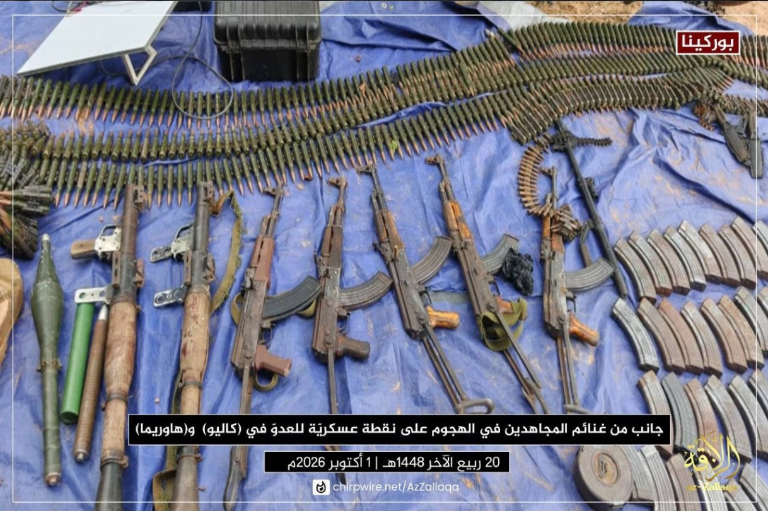
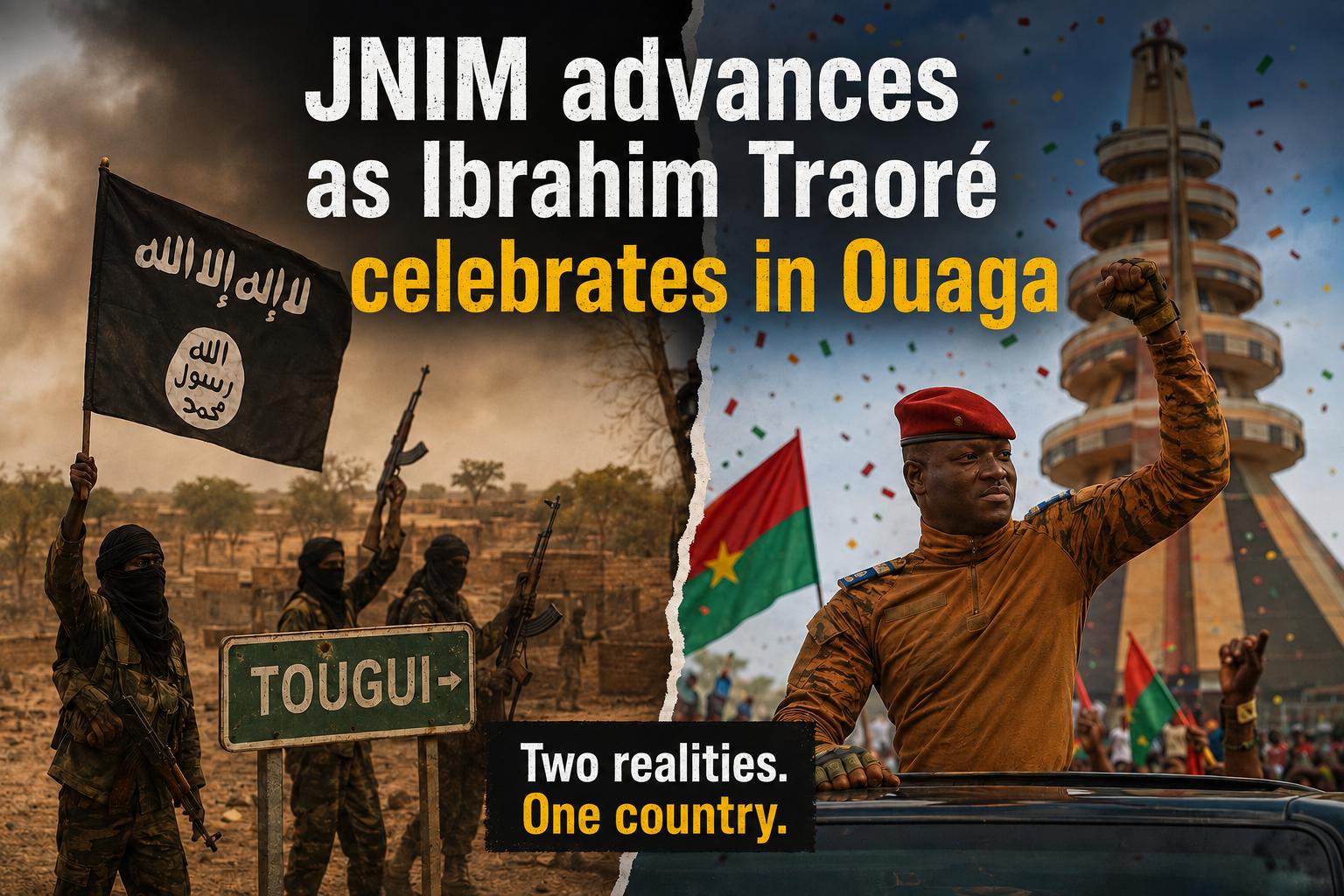
While official communications from Captain Ibrahim Traoré’s administration continue to highlight a methodical territorial recovery, recent events near Ouahigouya reveal a more complex and concerning picture. On the evening of August 26, 2026, the Group for the Support of Islam and Muslims (JNIM) asserted control over a military outpost previously held by local militias in Tougui. Though this claim remains unverified by independent sources, it underscores a critical discrepancy: if territorial recovery is advancing as proclaimed, why do armed groups retain the capacity to challenge authorities in key northern regions?
Territorial control demands more than military presence
The incident in Tougui serves as more than just another clash—it exposes the gap between political rhetoric and operational realities. Genuine territorial control requires more than fleeting military victories; it necessitates sustained state presence, secure supply routes, civilian protection, and the prevention of armed group resurgence in reclaimed zones. The persistence of attacks and competing claims suggests that stabilization efforts remain precarious.
Operational gains do not guarantee lasting security
Even when military forces retake a locality, the challenge lies in maintaining control. A successful operation is only meaningful if it enables the return of administrative services, public infrastructure, markets, and displaced populations. Without these foundations, military gains risk being temporary, leaving communities vulnerable to renewed instability.
The vulnerability of isolated positions
Tougui’s case highlights the risks associated with forward operating bases dependent on local fighters. When such positions lack robust logistical and intelligence support, their long-term viability is compromised, particularly against better-organized armed groups capable of rapid maneuvering.
The human cost of asymmetric warfare
The expansion of the Volunteers for the Defense of the Homeland (VDP) has bolstered government forces, but at a significant human cost. Deploying civilian militias to rural frontlines shifts a disproportionate share of the burden onto untrained populations, exposing them to asymmetric warfare tactics that military professionals are better equipped to counter.
Beyond numbers: the determinants of sustainable security
Increased troop numbers alone do not ensure lasting stability. Critical factors include intelligence gathering, mobility, logistics, inter-unit coordination, road surveillance, and post-operation retention strategies. The absence of any one of these elements can undermine even the most ambitious military campaigns.
Zones of ambiguity threaten progress
Between officially declared secure territories and areas truly accessible to civilians lies a spectrum of contested zones. These intermediate regions often serve as operational hubs for armed groups, enabling recruitment, resupply, and movement. Their persistence undermines broader stabilization efforts.
The dangers of selective communicationOfficial narratives frequently emphasize successes while downplaying setbacks. While certain regions—such as the Nazinon area—may experience temporary calm, such positive assessments cannot be generalized across the country. The lack of transparent reporting on operational challenges fosters public uncertainty, making it difficult to distinguish between isolated victories and structural improvements.
Credibility hinges on balanced reporting
A government’s credibility is not strengthened by triumphalist rhetoric alone. Acknowledging operational difficulties—not as failures, but as part of a complex struggle—enhances public trust and aligns expectations with reality. The battle against misinformation should not devolve into a one-sided narrative that obscures persistent threats.
Measuring success through tangible outcomes
The true benchmark of security progress lies not in the volume of operations conducted or positions reclaimed, but in measurable human outcomes: villages that remain safe long-term, displaced populations able to return home, functional schools and markets, and roads where civilians can travel without fear. These indicators reflect whether stability has taken root or remains superficial.
The role of civilian administration in post-conflict recovery
A zone is not truly secured by military presence alone. The restoration of administrative services—healthcare, education, economic activity, and governance—is equally vital. Military victories must transition into sustainable public order, ensuring that civilians no longer live under the shadow of armed groups.
The paradox of perpetual victory narratives
As authorities present an image of controlled progress, each new attack or contested position becomes a political liability. The disconnect between official claims and ground realities not only undermines credibility but also risks eroding public confidence in the government’s strategic direction. Transparency is not a sign of weakness; it is a cornerstone of effective leadership.
Rural realities challenge urban optimism
From the capital, reports of territorial recovery may suggest steady advancement. For residents of conflict-affected regions, however, security is measured in everyday terms: the ability to sleep without threat, cultivate land, travel freely, trade safely, and send children to school. These are the unfiltered metrics of stability—or its absence.
Evaluating Burkina Faso’s security strategy
Burkina Faso’s approach—mobilizing national forces, expanding the VDP, seeking regional cooperation, and reinforcing combat units—must ultimately be judged by its results. Do these measures reduce violence sustainably? Do they dismantle armed group sanctuaries? Do they restore normalcy to civilian life? The case of Tougui forces a necessary question: Can territory truly be considered mastered if armed groups can still contest key positions?
The debate should not revolve around simplistic notions of victory or defeat, but around concrete outcomes. A credible security strategy is not measured by patriotic slogans, political speeches, or social media triumphs—it is measured by its ability to protect lives, restore dignity, and return hope to communities long besieged by conflict.
Captain Ibrahim Traoré’s administration may continue to showcase military progress, and authorities may highlight improvements in select areas. Yet incidents like the one in Tougui serve as a stark reminder: a war is not won merely because a government declares it so. The final verdict belongs to the land itself—and most importantly, to the people who call it home.