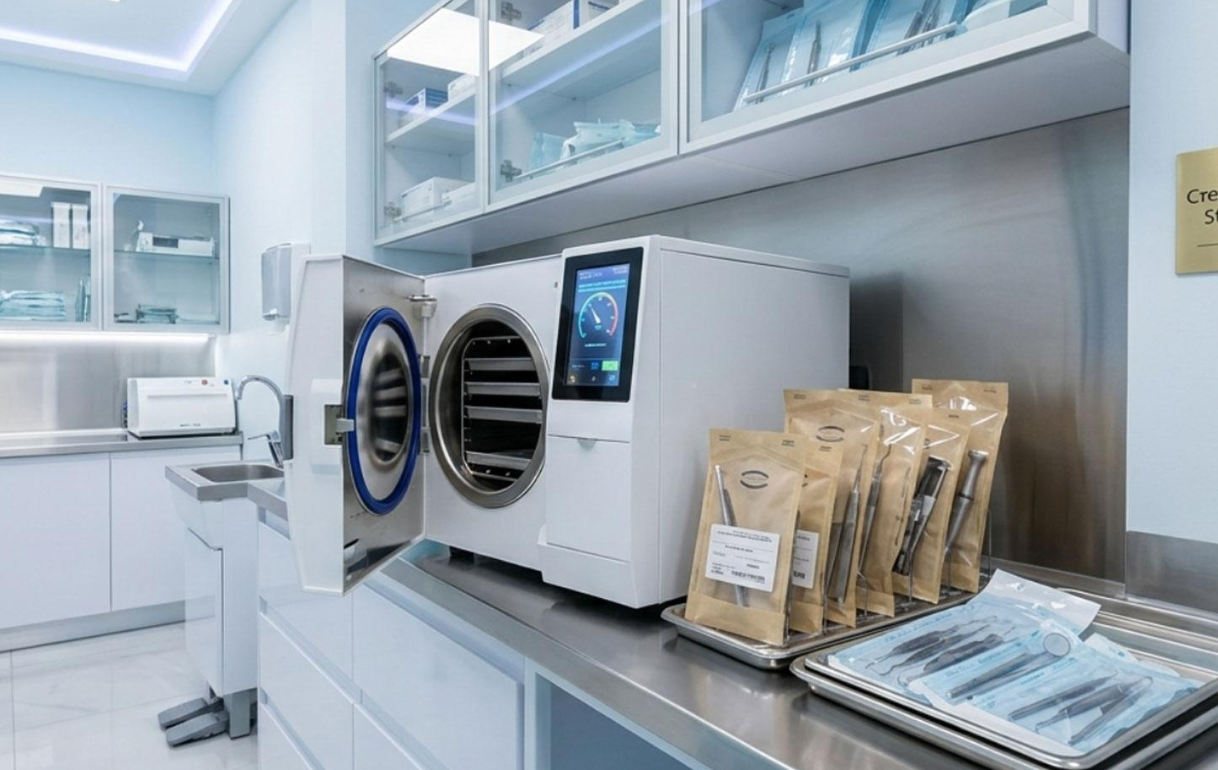
When a central-France dental clinic’s sterilisation process failed, health officials declared it a turning point in infection control. Nearly 500 patients who received care in Orléans last August are now being summoned for HIV and hepatitis B and C screening after regulators discovered critical shortfalls in sterilisation protocols.
From routine inspection to urgent public-health call
The regional health authority’s probe uncovered a catalogue of breaches: a steriliser used despite failing mandatory function tests, inconsistent instrument packaging, inadequate storage conditions, and missing traceability records. Confronted with these lapses, authorities suspended the clinic’s licence and launched the unprecedented mass screening drive to halt any silent transmission.
How a sterilisation lapse can transmit life-changing viruses
Every reusable dental tool must undergo rigorous cleaning and sterilisation before the next patient. When this chain breaks, microscopic traces of blood can harbour HIV, hepatitis B, or hepatitis C. Reusing such instruments exposes the next person to unnecessary risk—risks that are invisible until tests reveal a positive result.
The summoning of patients is a precautionary step, not confirmation of infection. Authorities stress the theoretical risk is low, yet they cannot rule it out entirely. Fast action allows early detection and treatment if needed, with post-exposure prophylaxis for HIV ideally started within 48 hours.
Beyond France: the African dental hygiene challenge
While the Orléans episode highlights systemic fragility even in advanced healthcare systems, it also casts a spotlight on African dental clinics where resources, training, and oversight are uneven.
Surveys in cities like Yaoundé have flagged gaps in sterilisation knowledge among staff, shortages of reliable equipment, and inconsistent monitoring. Public and private clinics alike face these hurdles, making rigorous infection-prevention protocols harder to maintain.
Key gaps identified
- Outdated or poorly maintained sterilising machines
- Limited supplies of single-use disposables like needles and syringes
- Insufficient staff training on updated sterilisation techniques
- Infrequent, unannounced hygiene inspections
Strengthening these pillars—training, equipment, and oversight—is vital to rebuild patient trust across the continent.
What patients can do to protect themselves today
Dental safety begins with transparency. Patients should feel empowered to ask simple but critical questions before any procedure:
- Are hands washed or disinfected and gloves changed between patients?
- Are instruments opened in front of the patient only after confirming they came from sealed, sterilised packaging?
- Are needles, syringes, and other single-use items brand new?
If there’s any doubt about sterilisation standards or if a patient learns they were treated with potentially contaminated instruments, urgent medical advice is essential. Early screening and timely prophylaxis can dramatically alter outcomes.
Sterilisation is non-negotiable: a pledge every clinic must keep
Cutting-edge dentistry hinges on more than skillful hands and state-of-the-art chairs. It rests on an uncompromising commitment to sterilisation protocols. The Orléans incident is a stark reminder that lapses anywhere can swiftly escalate into a public-health crisis.
In Africa and beyond, the drive for wider access to dental care must march in lockstep with watertight infection control. Only then can every patient sit in the chair knowing that hygiene is as integral to their treatment as the drill itself.