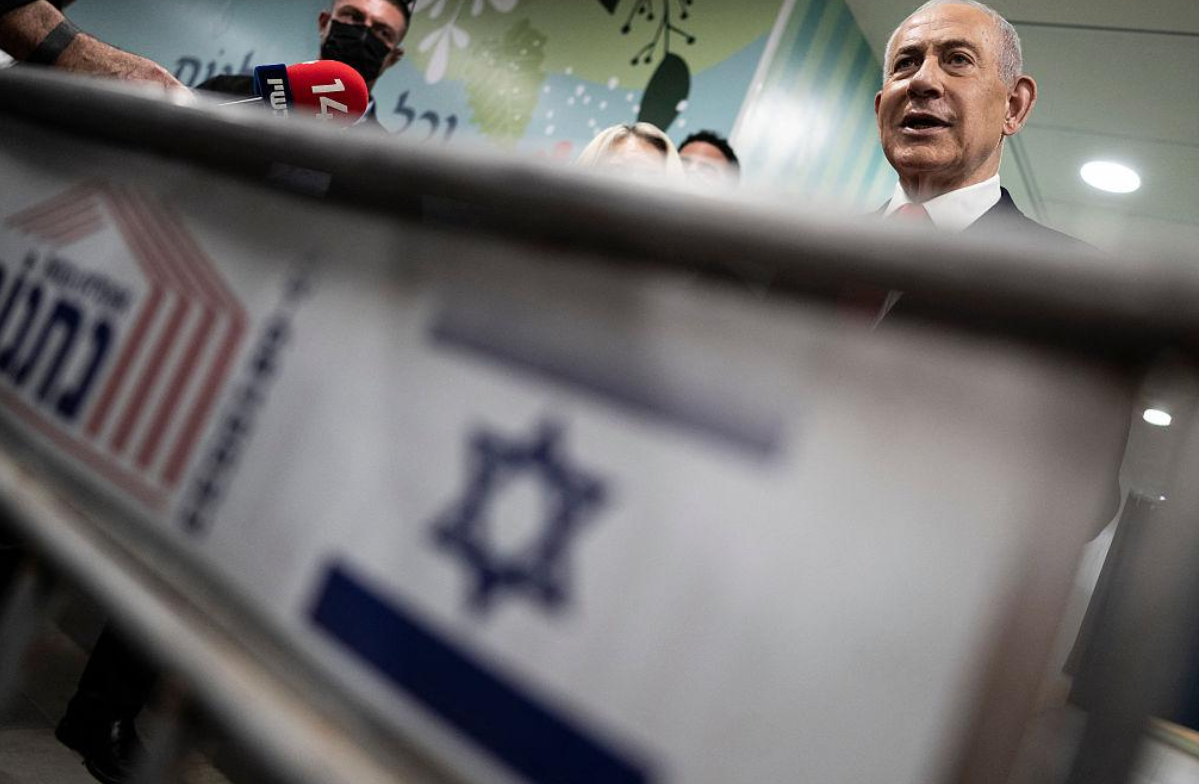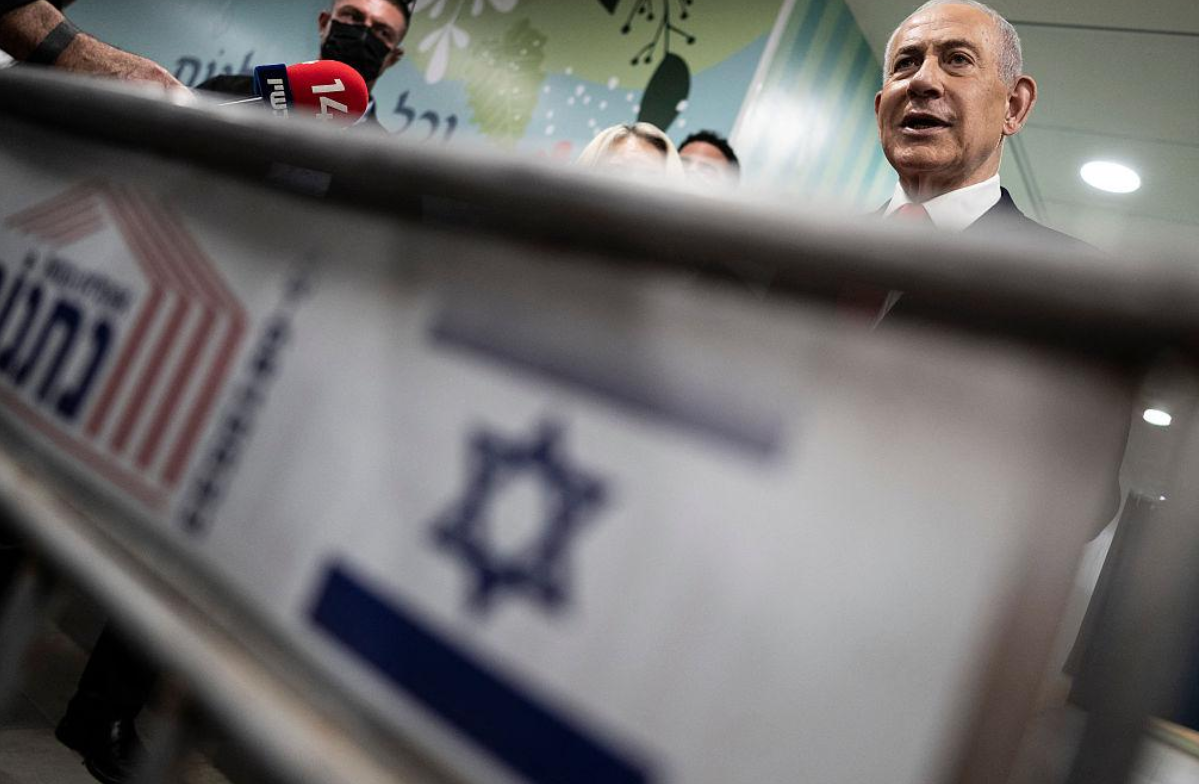
Benjamin Netanyahu has claimed victory in Israel’s legislative elections, but the result comes with critical caveats. Securing 53 seats in the 120-member Knesset, his coalition falls short of the 61-seat threshold needed to form a government. This narrow margin has plunged Israeli politics into uncharted waters, with far-reaching implications stretching from Gaza to Tehran and reshaping alliances across the Middle East.
From ballot box to power struggle: a fragmented mandate
Israel’s political landscape has become markedly more divided following the October 27, 2026 vote. Netanyahu’s Likud party remains the largest single faction with 27 seats, yet his entire right-wing coalition totals only 53. The opposition, led by former military chief Gadi Eisenkot, holds 48 seats, while Arab-majority parties, including the Joint List and Ra’am, have secured 19—an unprecedented high.
This fragmentation underscores a dramatic erosion of the premier’s parliamentary base, which previously commanded 68 seats. The election results reflect growing public discontent with years of governance marked by internal strife, military conflicts, and widespread protests against government policies. Under these conditions, Netanyahu’s path to governance is not guaranteed—it hinges on fragile negotiations that may redefine Israel’s political and regional trajectory.
Coalition calculus: the pivotal role of Arab parties
The Arab parties now occupy a pivotal position in the Knesset. While their 19 seats could theoretically tip the balance toward an opposition-led coalition, deep-seated ideological divides complicate this scenario. Most Zionist parties remain reluctant to form alliances with Arab factions, citing profound policy differences over security, national identity, and governance.
Several potential outcomes loom on the horizon:
- A minority coalition supported by outside agreements on specific votes
- A national unity government encompassing rival blocs
- A second election if coalition talks collapse
The uncertainty carries immediate consequences. Without a stable majority, policymaking—especially on contentious issues—could stall, prolonging a period of political paralysis that may ripple across the region.
Gaza’s future hangs in the balance
The humanitarian and political crisis in Gaza remains one of the most urgent challenges facing the next government. Reconstruction efforts, border security, and the fate of Palestinian governance will weigh heavily on any coalition formed in Jerusalem. While a Netanyahu-led government would likely maintain a hardline stance on security and Iran-backed groups, an alternative coalition might explore conditional dialogues, though without a guaranteed shift in policy.
For Palestinians, the election outcome offers no immediate relief—it merely highlights that Gaza’s future will be dictated by the alliances that ultimately define Israel’s next executive. Any progress will depend not on election results alone, but on the willingness of political leaders to compromise under intense internal and external pressure.
Iran and Lebanon: flashpoints in a weakened leadership
The region’s most volatile dynamics—Israel’s confrontation with Iran and its proxy networks, and the simmering tensions with Hezbollah in Lebanon—pose existential questions for any incoming government. A fractured Knesset could further constrain Israel’s ability to respond decisively to threats, yet security policy has traditionally enjoyed broad bipartisan support in times of crisis.
While the new government may struggle to articulate a unified stance on Iran’s nuclear program or Hezbollah’s militarization, intensifying regional escalation risks triggering broader humanitarian and economic crises. The fragile political environment in Israel only amplifies the stakes, turning every military or diplomatic decision into a potential catalyst for regional instability.
Diplomatic fallout: Washington and Arab capitals rethink engagements
The United States, Israel’s closest ally, will closely monitor the coalition-building process. While the U.S.-Israel strategic partnership remains intact, differences over Gaza, military operations, and regional de-escalation could strain relations during a period of political transition in Jerusalem. Washington may face tough choices in how to engage with a government lacking clear mandates or stability.
Regional actors—including Egypt, Jordan, Saudi Arabia, the UAE, and others—are also recalibrating their strategies. For Riyadh, normalization with Israel remains a strategic priority, but only in the context of a credible peace process anchored in Palestinian rights and regional stability. A government unable to govern decisively could slow diplomatic momentum, while one open to negotiation might unlock new avenues—but not necessarily a comprehensive regional agreement.
Beyond Jerusalem: a fractured society in search of direction
This election has laid bare deep societal divisions over security, governance, religion, and national identity. The rise of Arab representation, the decline of the governing bloc, and the absence of a clear majority signal not just political turbulence, but a moment of reckoning for Israeli society. With three plausible paths forward—Netanyahu’s retention with new alliances, an opposition-led coalition, or a return to the polls—the nation stands at a crossroads.
For the Middle East, the stakes could not be higher. The composition of Israel’s next government will influence the trajectory of Gaza, the fate of the Palestinian issue, the contours of confrontation with Iran, and the potential for rapprochement with Arab states. Netanyahu may have won the election—but the voters have denied him the mandate to govern alone. In a region where every decision reverberates globally, this outcome may well mark the beginning of a new era of geopolitical uncertainty.