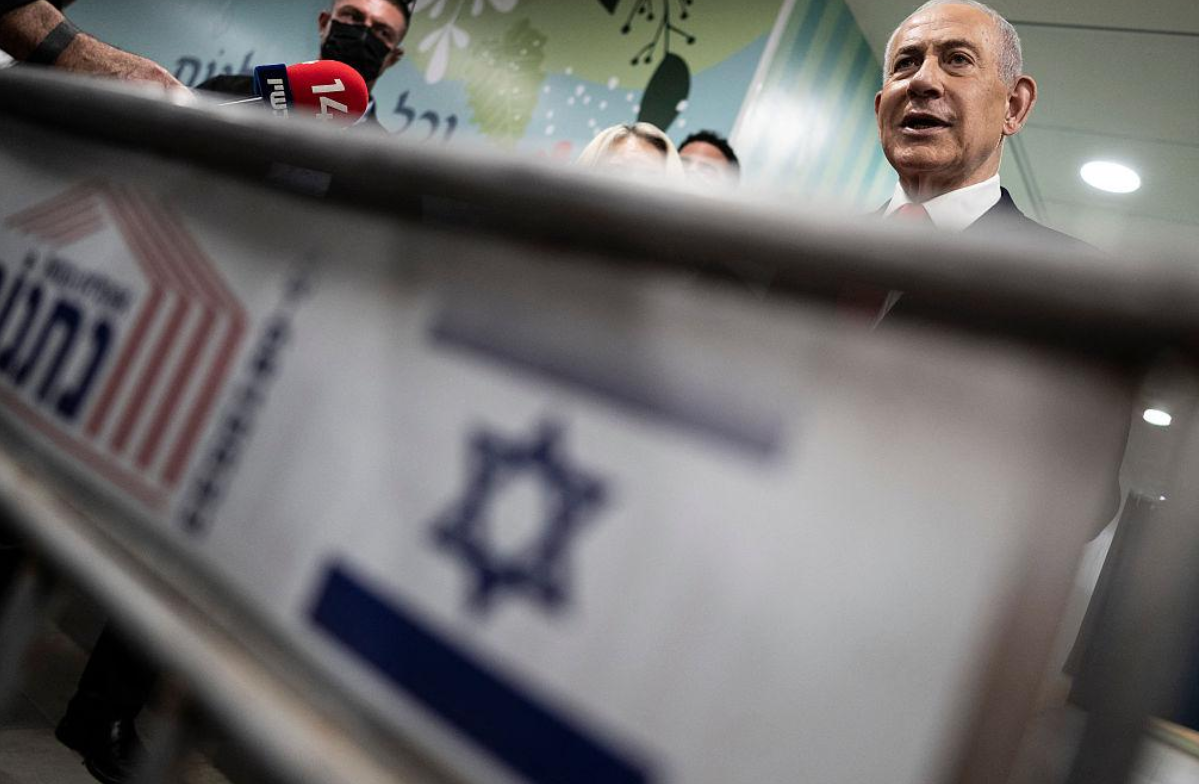
After Israel’s tightly contested October 27, 2026 parliamentary vote, Prime Minister Benjamin Netanyahu has emerged with the most seats — yet still falls short of the 61-seat majority needed to govern decisively. His coalition holds just 53 seats, while the opposition bloc, led by former IDF Chief Gadi Eisenkot, commands 48, and a historic 19-seat alliance of Arab-majority parties reshapes the political landscape. This razor-thin outcome marks not just a shift in power, but a turning point — one that may redefine alliances from Gaza to Tehran, and from Beirut to the corridors of Washington.
From Victory to Impasse: Netanyahu’s Coalition Challenge
The Likud party, while retaining the top position with 27 seats, has lost ground compared to its previous coalition strength of 68. A fragmented Knesset now demands urgent negotiations, leaving Netanyahu without a clear path to reconfirm his leadership. His traditional allies in nationalist and religious factions hold fewer seats, forcing a reckoning over core policy positions on security, settlements, and governance.
With no bloc securing a majority, three possible outcomes loom: a new coalition with uneasy partners, a minority government relying on confidence and supply, or another round of elections if talks collapse. Each scenario carries profound implications, not only for Israel’s domestic stability but for the entire region.
Gaza at the Crossroads: Security Stands at the Heart of the Transition
The humanitarian and strategic urgency in Gaza remains unchanged. Reconstruction progress, border security, and the future of Palestinian governance are critical flashpoints. If Netanyahu reassembles power with hardline allies, continuity in military and settlement policies is likely. However, even within the opposition, divisions persist over the future of Palestinian statehood, Hamas policy, and regional de-escalation.
For now, no faction offers a clear blueprint for change. Palestinians in Gaza and the West Bank face continued uncertainty, as the election result signals more about political fragmentation than transformative policy shifts.
Iran and Lebanon: Where Regional Tensions Meet a Fragile Government
The specter of Iran’s nuclear program, its ballistic missile advances, and its support for proxy forces across the Levant remain top security priorities for Israel. A weakened government could struggle to maintain a unified deterrent posture, though defense and national security traditionally enjoy cross-party consensus.
The Hezbollah question in Lebanon adds further risk. Any misstep in managing tensions along the northern border could ignite wider conflict, destabilizing a fragile postwar recovery and straining regional economies already under pressure.
Syria: Continuity in Oversight Amid Regional Realignment
Israel will maintain close surveillance of Syria, where shifting alliances and the presence of Iranian-backed forces continue to alter the strategic balance. Even without a strong government in Jerusalem, the Knesset’s composition sends signals to Damascus and beyond about Israel’s red lines and deterrence posture.
International Partners in Limbo: From Washington to Arab Capitals
The United States remains Israel’s most critical ally, particularly on defense and intelligence. But differences over Gaza, military operations, and the path to regional peace may test the alliance as a new government takes shape. President Biden’s administration has emphasized de-escalation and reconstruction, and any Israeli government unable to articulate a coherent policy may face diplomatic friction.
For Arab states — Egypt, Jordan, Saudi Arabia, and the UAE — the path to normalization still hinges on Palestinian progress and regional stability. A government mired in internal negotiations could slow diplomatic momentum, especially in Riyadh, where the Abraham Accords remain a strategic pillar but are conditioned on tangible progress toward a Palestinian state.
Yet, if Israel forms a coalition open to dialogue, new opportunities for dialogue could emerge — though no breakthrough is guaranteed.
A Nation Divided: The Bigger Picture Beyond the Ballot
Beyond seat counts, these elections reveal a deeply polarized society. Disputes over religion, governance, and national identity have crystallized into a political gridlock with no immediate resolution. The unprecedented rise of Arab-majority parties to 19 seats marks a turning point in political representation, though their inclusion in government remains contested among Zionist factions.
Three potential paths now lie ahead: Netanyahu regains power through unconventional alliances, a unity government emerges against the odds, or Israel returns to the polls. Whatever the outcome, the region will react — in Gaza, Beirut, Tehran, and Washington. In a landscape where every decision reverberates across borders, this narrow win has not secured power — it has merely framed the next stage of a high-stakes geopolitical reckoning.