Niger’s military rift: the fallout from Tiani’s command strategy
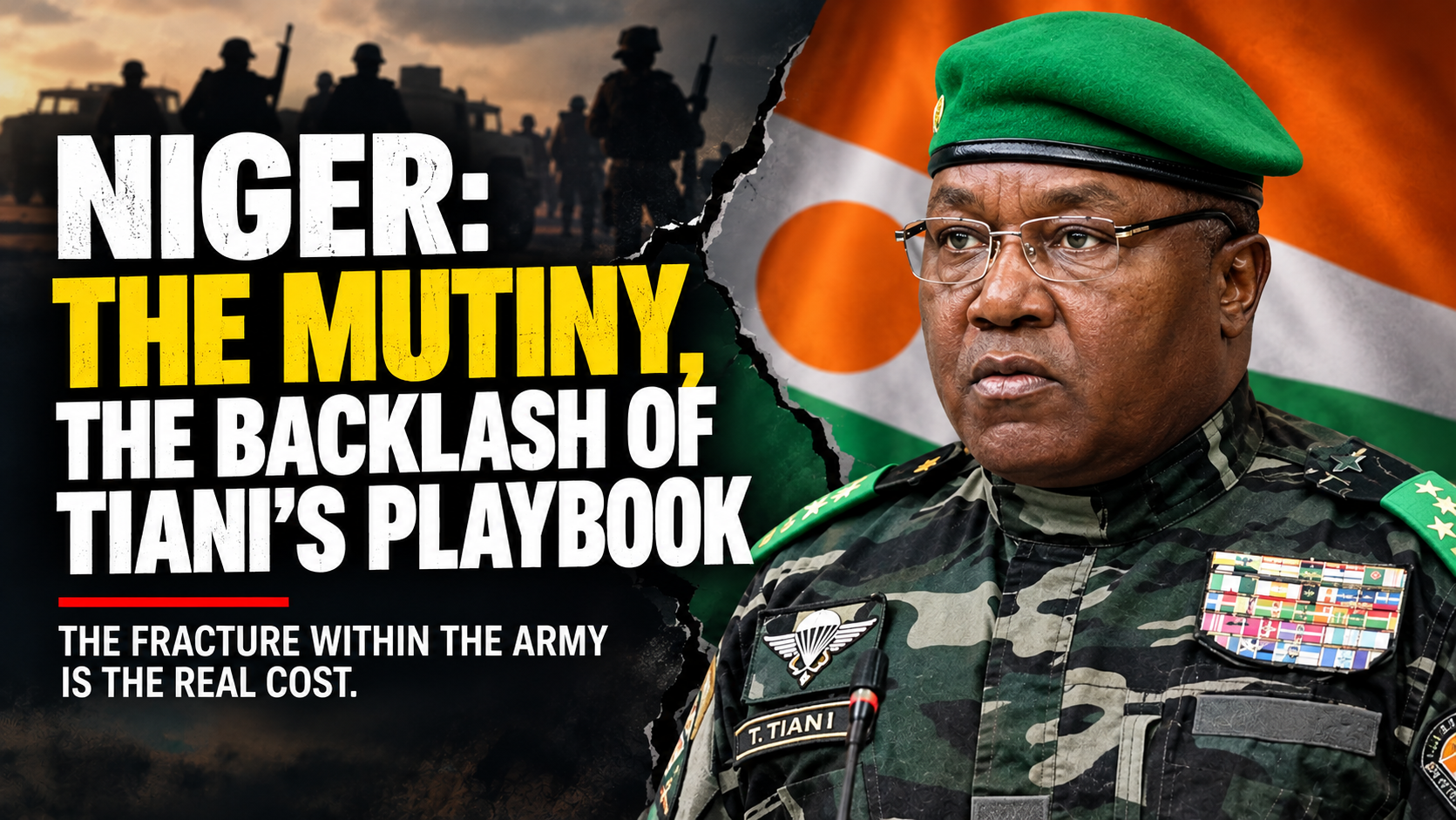
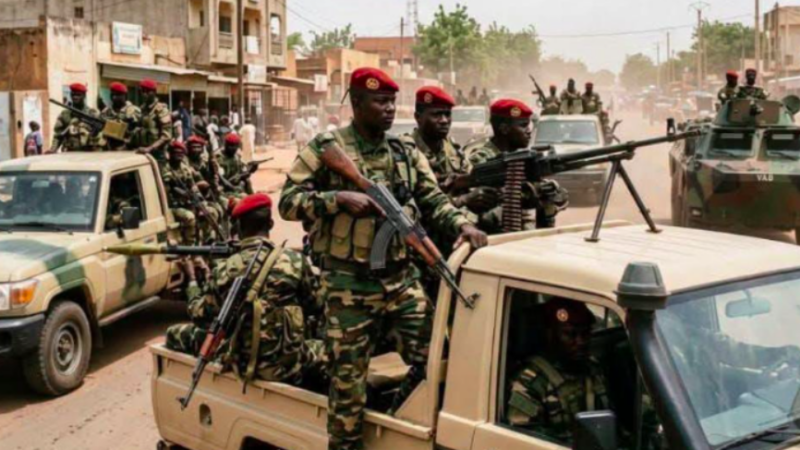
The recent mutiny in Niger has cast a spotlight on a deeper crisis within the nation’s armed forces. While the immediate events of August 28-29 have been contained, the underlying issues that led to this breakdown are far from resolved. The situation is not merely a disciplinary lapse but a symptom of systemic problems that have been festering since General Abdourahamane Tiani assumed power.
The roots of unrest: politicisation of the military
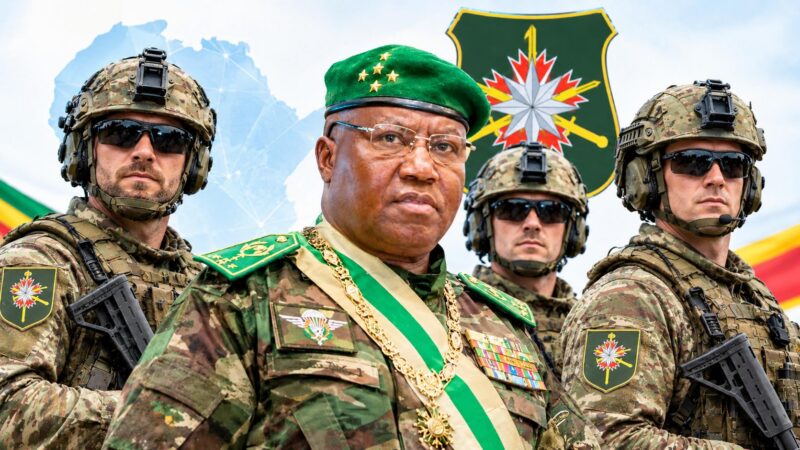
General Tiani’s leadership has been marked by a gradual transformation of the military from a national defence force into a tool for political control. By appointing loyalists to key positions, sidelining independent-minded officers, and prioritising personal loyalty over professional merit, he has disrupted the internal balance that once ensured cohesion. As fidelity to the leader became more important than experience or competence, distrust began to seep through the ranks.
Consequences for national security
This politicisation has serious implications. When soldiers believe their career advancement depends more on their proximity to power than on their service record, feelings of injustice take root. Frustrations grow, rivalries intensify, and trust between different levels of command erodes. The mutiny, therefore, cannot be dismissed as an isolated act of insubordination. It is a clear indicator of a profound malaise, nurtured over years of tension and disillusionment within the military establishment.
The stakes are particularly high because the army is a cornerstone of stability in a country facing persistent security threats. A divided military, suspicious of its own leadership and preoccupied with internal vendettas, cannot operate as effectively as one united behind a credible chain of command. When soldiers begin to view their comrades with suspicion, operational cohesion fractures. In a context where Nigerien forces confront armed groups on multiple fronts, every additional fissure within the security apparatus directly jeopardises territorial defence.
Opacity and its impact
The official silence regarding the fate of the arrested soldiers is telling. It reflects a crisis management approach based on secrecy and uncertainty. As long as no one knows who has been detained, where they are held, or what accusations they face, fear can spread throughout the ranks. This uncertainty becomes an instrument of control, making every soldier wonder if they might be next.
Moreover, this lack of transparency prevents any chance of easing tensions. Instead of clarifying responsibilities and providing an institutional way out of the crisis, the silence fuels rumours, suspicion, and contradictory interpretations. Families of the arrested remain in limbo, their colleagues remain wary, and the leadership loses further credibility. A crisis that could have been handled as a purely military affair risks escalating into a broader crisis of confidence.
The spectacle of force
By parading military hardware on television, the regime is doing more than communicating; it is constructing a narrative designed to frame the events in a specific light. Showing weapons and vehicles as ‘proof’ of a conspiracy may help convince the public that the arrests are justified. However, such a display does not address the real questions: What exactly were the mutineers’ demands? What individual responsibilities can be established? What procedures have been initiated? And crucially, why did such a crisis erupt within the very forces meant to be the regime’s main defence?
This theatrical communication risks diverting attention from the core issue. Presenting weapons or vehicles is not enough to prove an organised plot. Facts must be established, verifiable evidence must be presented, and a transparent process must be followed. Otherwise, official communication may seem more like a way to legitimise arrests than a genuine response to the nation’s concerns.
A fundamental contradiction
More deeply, this strategy exposes a major contradiction. The regime claims to strengthen the state and restore authority, yet it appears to govern through distrust within the military itself. An army cannot remain effective if its members feel that any dissent might be interpreted as a threat to those in power. Discipline rests on obedience, but also on confidence in leadership, fairness of procedures, and a sense of belonging to a shared institution serving the country.
The repeated purges and sidelining of officers have an operational cost. Each experienced officer pushed aside, each weakened command, and each unit destabilised by fear represents a loss of skill, experience, and cohesion. In a conflict against armed groups with extensive networks, local intelligence, and adaptability, Niger cannot afford to weaken its command structures to resolve internal political issues.
The paradox of power
There is a troubling paradox: while the regime’s rhetoric emphasises sovereignty, security, and territorial defence, much of its energy is spent monitoring, controlling, and neutralising dissent within the security apparatus. This focus on political security may come at the expense of national security itself.
An army that fears internal purges more than external threats will inevitably lose its mobilisation capacity. Soldiers must concentrate on their primary mission: protecting civilians and defending the nation. If their attention is diverted to internal power struggles and fear of being accused of disloyalty, the military becomes less effective even as the regime gains more political control.
Ultimately, the questions raised by the August 28-29 mutiny go far beyond the fate of the arrested soldiers. They directly challenge how General Tiani envisions power, the military, and loyalty. A national army cannot be turned into a tool for protecting a regime without generating internal tensions.
By focusing on hunting down internal opponents rather than restoring genuine military cohesion, Tiani risks weakening the very institution upon which the country’s security depends. Dividing the armed forces may offer short-term political advantages, but it poses a long-term strategic threat.
This is the fundamental political responsibility of the junta leader: he has progressively conflated regime security with state security. In seeking to guarantee his own political survival, he risks undermining military unity, eroding trust within the armed forces, and further destabilising Niger in the face of ongoing threats. The current crisis appears less as an isolated incident and more as the culmination of governance based on distrust, concentrated power, and the gradual politicisation of the security apparatus.