Niger: the mystery of Moussa Kaka’s disappearance and Tiani’s prolonged silence

Two silences. Two absences. And a single question that is beginning to impose itself: what is truly happening at the highest level of the Nigerien state?
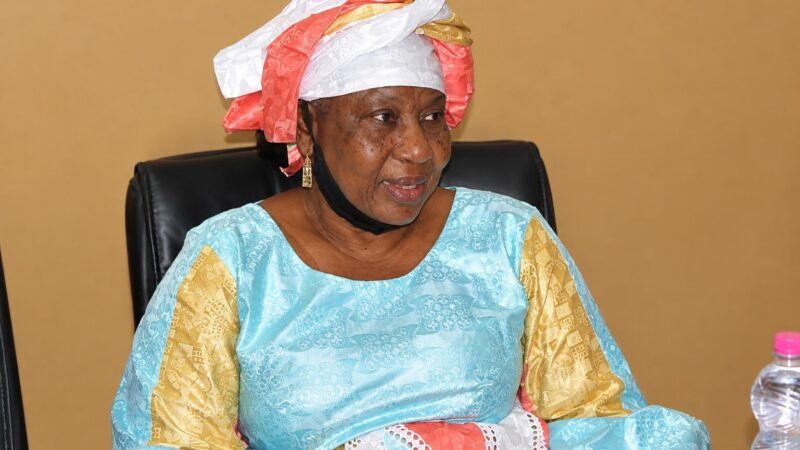
Since 31 August, Moussa Kaka has not given any public sign of life. The journalist, a well-known figure in the Nigerien press and a correspondent for international media, is said to have left the premises of Radio-télévision Saraounia (RTS) in Niamey before becoming practically invisible.
The timing is intriguing. His disappearance occurred just days after the mutiny that took place in the capital. No direct link between the two events has been established at this stage. But in a country where information about movements within the security apparatus has become particularly difficult to verify, this temporal proximity inevitably raises questions.
Where is Moussa Kaka? Is he being held? By which service? For what reasons? And why does no clear official communication put an end to the speculation?
These are simple questions. Yet they remain unanswered.
A journalist vanishes in an already tense Niger
The concern now goes beyond the journalist’s immediate circle. Human rights and press freedom organisations are asking the Nigerien authorities to clarify his situation.
The stakes are considerable. Since the July 2023 coup, the Nigerien media landscape has gradually closed. The transitional authorities have strengthened their control over the public space in the name of sovereignty, national security and the fight against foreign influence.
But this logic reaches its limits when silence becomes the only response.
A military transition can invoke security. It cannot turn uncertainty into a rule of governance.
If Moussa Kaka is being detained, the authorities must be able to explain why. If he is not, they must allow understanding of where he is. In both cases, prolonged silence fuels suspicions more than it protects the state.
And meanwhile, Tiani remains invisible
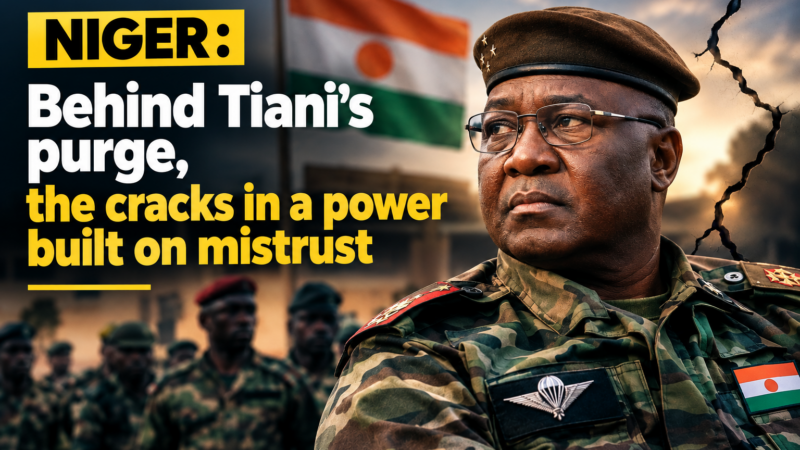
The other element drawing attention is the public absence of General Abdourahamane Tiani.
Since the mutiny that occurred in Niamey in late August, the head of the regime is said not to have made any known public appearance. Again, this absence alone does not allow concluding a loss of control by the authorities.
But it comes at a particularly sensitive moment.
After a mutiny, while questions circulate about the state of the command chain and several changes are said to have affected the military apparatus, the prolonged absence of the principal leader necessarily becomes a political issue.
Is Tiani still directly leading the country? Are decisions being taken under his effective authority? Or does power now operate through a narrower circle of military and security officials?
For now, no sufficiently solid public information allows a definitive answer.
And that is precisely the problem.
Power in the fog
In a democracy, the absence of communication can already be worrying. In a military regime born of a coup and facing internal tensions, it becomes far more consequential.
For when the leader remains silent, journalists disappear from the public space and information about movements in the security apparatus becomes difficult to verify, a question inevitably emerges: who really controls the state machine?
The Moussa Kaka case could then become more than a press freedom issue. It could be the revealer of a system where information has become a strategic variable of power.
Does silence protect the regime or seek to mask its fragilities?
What we know… and what we do not
For now, several facts must be distinguished from speculation.
Moussa Kaka has been publicly missing since 31 August. His fate remains to be clarified. Organisations are demanding explanations from the authorities.
Tiani, for his part, has not been publicly visible since the events of late August, according to available information. This does not mean he has lost power, nor that he is excluded from decisions.
But one thing is certain: the lack of verifiable information leaves a void that rumours immediately fill.
And in today’s Niger, that void becomes politically dangerous.
For behind the question “where is Moussa Kaka?”, another question, even more sensitive, is beginning to appear:
“Where is the Nigerien power really located since the mutiny?”
As long as Niamey does not clearly answer these two questions, doubt will continue to set in.