An unprecedented challenge to authority
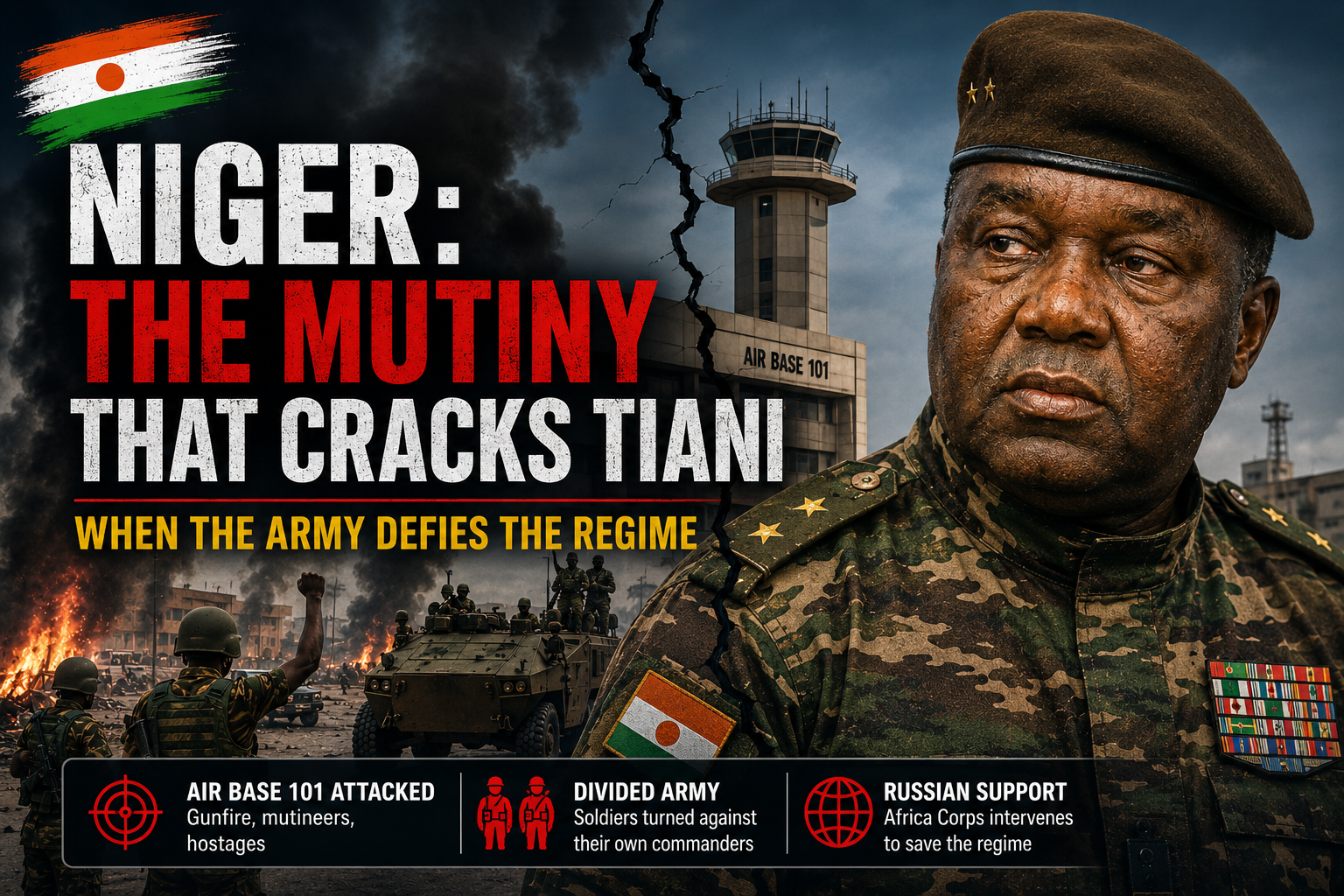
The violent confrontation that unfolded in Niamey on August 29, 2026, transcends the official narrative of revolutionary impatience. Military personnel’s coordinated assault on Air Base 101 and multiple critical installations in the capital represents a seismic shift in the nation’s recent political landscape. Authorities acknowledged that soldiers detained their own comrades before targeting strategic sites, confirming the gravity of the breach.
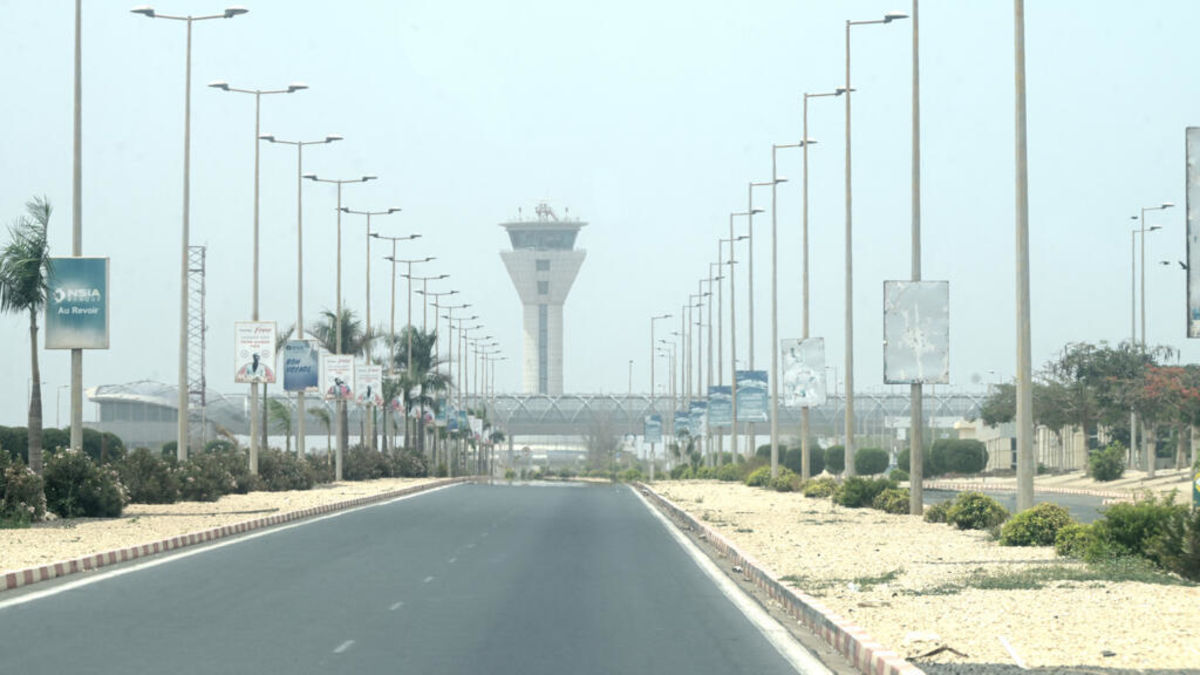
This was no mere display of discontent. The targeting of a core military facility in the heart of the capital, exchanges of gunfire near the presidential palace and airport, and temporary interruptions to state media broadcasts collectively exposed vulnerabilities in the nation’s power structure. Reports indicated sustained firefights around these high-security zones over several hours, with national television and radio services temporarily suspended during the crisis.
A fracture within the ranks
The claim that mutineers were merely impatient officers eager to accelerate geopolitical realignment fails to capture the severity of their actions. When members of Niger’s armed forces direct firepower at their own nation’s strategic assets and confront loyalist units, the crisis ceases to be ideological—it becomes fundamentally institutional.
The most pressing concern is the erosion of military cohesion. While political disagreements or internal rivalries may persist within any armed force, the eruption of armed conflict between soldiers sworn to the same republic signals a far graver deterioration. The mutineers were not isolated protesters lacking access to security apparatuses; evidence suggests they originated from multiple regions, including Ouallam, Téra, and Dosso, before seizing control of a facility as critical as Air Base 101.
A paradox of control
Since assuming power in July 2023, General Abdourahamane Tiani’s administration has positioned itself on pillars of sovereignty, national security, and military restructuring. Yet three years later, the very institution tasked with safeguarding these values has become the source of a direct threat to the regime.
This paradox underscores the regime’s precarious position. A leadership that asserts full command over the state, restructures defense systems, and reinforces national sovereignty should theoretically possess an unassailable chain of command. The fact that soldiers could seize a strategic military site, detain colleagues, and engage in prolonged clashes within the capital before loyalist forces regained control serves as a stark warning. Even a suppressed mutiny carries implications that cannot be ignored.
External intervention and its political cost
The crisis was further complicated by the reported involvement of Russian forces from the Africa Corps in retaking Air Base 101. Regional accounts confirm their role in supporting loyalist units during the operation to reclaim the facility.
This intervention exposes a critical contradiction in the regime’s narrative. Sovereignty has long been the cornerstone of its legitimacy, yet when internal stability faltered, the government found itself dependent on foreign military support to secure one of its most vital installations. The symbolism is profound: a regime that claims to have restored full state capacity now relies on external partners to defend its core security infrastructure.
Such reliance risks deepening resentment within the national army. If soldiers perceive foreign forces as gradually assuming greater roles in national defense, questions about their own purpose and relevance may fuel further discontent. The psychological and operational implications of this shift could prove destabilizing in the long term.
Military victory does not resolve political fractures
The recapture of Air Base 101 and the surrender of mutineers constitute a tactical success for the authorities. However, suppressing armed dissent does not address the underlying causes that drove soldiers to turn against their own command structure.
The government may restore order in the streets and reclaim military installations, but it cannot erase the fundamental question: why did members of the defense apparatus choose to challenge the very institutions they were sworn to uphold? This unresolved tension threatens to undermine the regime’s stability in the coming months. While repression can prevent an immediate power grab, it does little to restore fractured trust within the armed forces.
A security dilemma compounded
This internal fracture emerges against a backdrop where security restoration remains the regime’s central promise. General Tiani’s ascent to power was predicated on reversing the tide of jihadist insurgencies and reclaiming national security sovereignty. Yet despite these assurances, violent attacks persist across the country, and the capital itself has witnessed multiple assaults on military and airport facilities in 2026.
The irony is stark: while the government champions its security reforms as a definitive break from past failures, external threats continue unabated, and a new, internal threat has now materialized within the military. The regime faces a dual challenge—containing armed groups operating across the territory while preventing internal military frustrations from escalating into further insubordination.
The illusion of unity crumbles
Historically, the military leadership presented itself as the unifying force against the former political order and foreign influences. The August 29 mutiny, however, reveals a far more complex reality.
The apparent unity under the National Council for the Safeguard of the Homeland (CNSP) masks profound divisions within the armed forces. The dissent is no longer external; it has emerged from within the very institution tasked with preserving the regime’s stability. For General Tiani, this development is particularly ominous.
A regime may withstand political opposition or international criticism, but when members of its own military apparatus take up arms against it, the foundations of its authority are fundamentally shaken. The mutiny may have failed militarily, but it succeeded in exposing a critical weakness: beneath the image of an unassailable regime, fractures have formed within the very structure meant to ensure its survival.
An ominous precedent, not a passing incident
It would be premature to interpret the August 29 mutiny as the definitive collapse of General Tiani’s administration. Loyalist forces reclaimed control of Air Base 101, and authorities declared the situation stabilized. Yet dismissing the event as a mere disciplinary matter would be equally shortsighted.
This was the first time since the 2023 coup that the Tiani regime faced a military challenge of such magnitude, one that triggered armed confrontations across multiple strategic zones of Niamey. The mutiny was thwarted militarily, but it succeeded in revealing a dangerous truth: behind the facade of a tightly controlled regime, significant fractures now exist within the apparatus that sustains it.
Perhaps the most enduring lesson of August 29 is this: General Tiani may have won the battle for Niamey, but he has just discovered that the most perilous threat to his authority may now come from within.