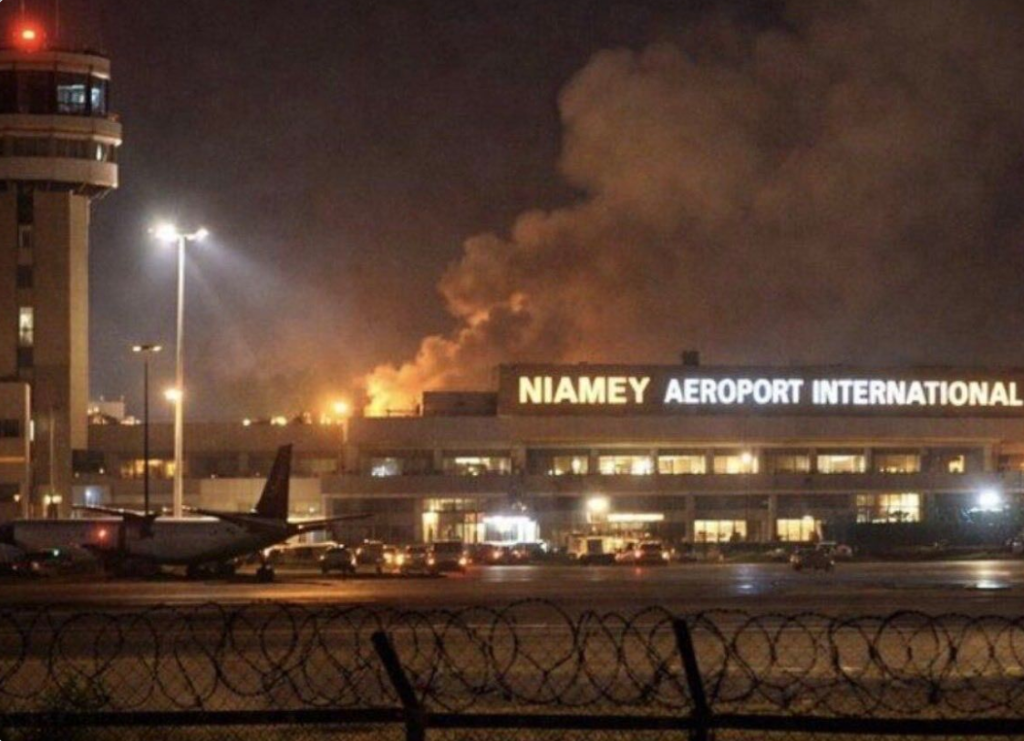
The night of August 28 to 29, 2026, may mark another pivotal moment in Niger’s ongoing political and security turmoil. In Niamey, heavy gunfire, explosions, and military vehicle movements echoed across key areas of the capital, particularly near Air Base 101 adjacent to Diori-Hamani International Airport, as well as the presidential palace and administrative center. By dawn, authorities had yet to clarify the origins of the clashes or identify the factions involved.
Unanswered questions fuel speculation
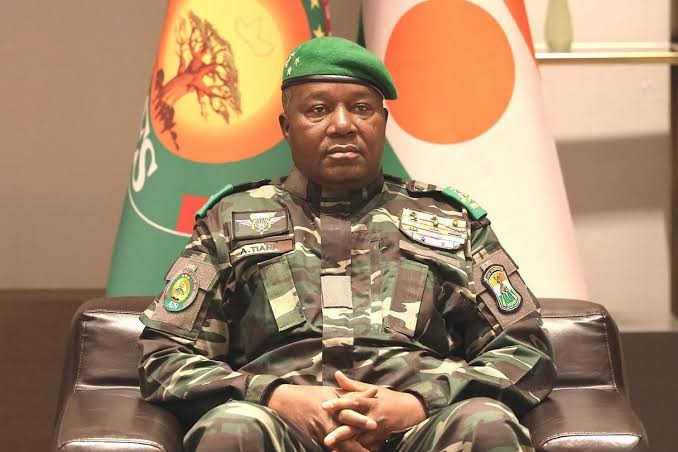
The lack of official statements has fueled multiple theories. Was this a fresh jihadist assault on a critical site? An infiltration attempt? Or, more alarmingly, an internal military confrontation—or even a coup within a coup? While no reliable source confirms an ongoing attempt to oust General Abdourahamane Tiani, the pattern of gunfire and military maneuvers across Niamey raises serious questions about possible infighting among armed forces. Witnesses reported armored movements and exchanges of fire in several districts, with barracks placed on highest alert.
A capital under siege
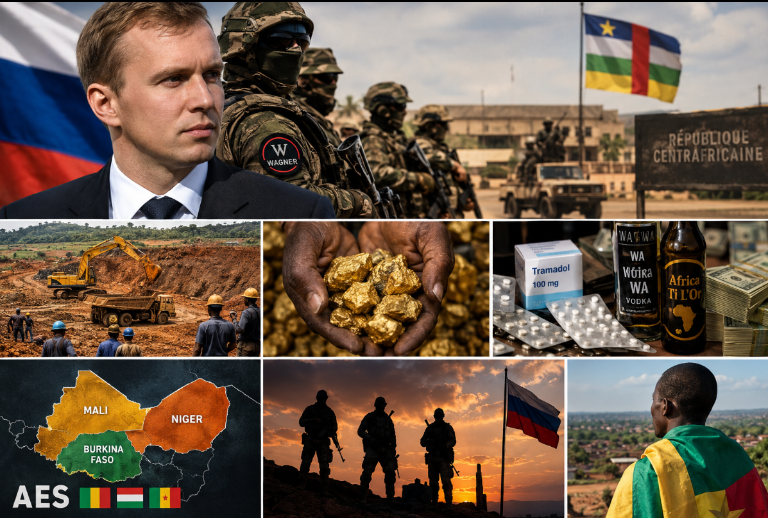
This latest bout of violence unfolds against a backdrop of deepening instability. Since the July 2023 ousting of President Mohamed Bazoum, Tiani’s regime has framed its legitimacy on restoring sovereignty and combating terrorism. Western partners were sidelined as Niamey pivoted toward Moscow and the Alliance of Sahel States (alongside Mali and Burkina Faso), with the withdrawal of French and U.S. troops heralded as a new era of self-reliance. Yet three years into military rule, the reality paints a far grimmer picture.
Jihadist violence persists, with armed groups repeatedly demonstrating their ability to strike core state security structures. The security landscape worsened after the coup, even as authorities tightened control over political and media spaces. The irony is stark: a regime that promised a ‘security reconquest’ now struggles to prevent spectacular attacks in its own capital.
Diori-Hamani: a symbol of persistent vulnerability
The repeated targeting of Diori-Hamani International Airport underscores the depth of the crisis. In less than six months, the airport and Air Base 101 were attacked twice—first on January 28–29, 2026, and again on June 18. The June assault was claimed by the Group for the Support of Islam and Muslims (JNIM), an Al-Qaeda affiliate, resulting in 11 military and two civilian deaths, with 22 attackers neutralized.
Two strikes in such a short span against one of the country’s most fortified sites raise a critical question: how can armed groups repeatedly plan and execute operations against a supposedly high-security target?
After January’s attack, authorities claimed to have bolstered defenses—extending fences, installing hundreds of cameras, and clearing nearby settlements. Yet the June incursion proved these measures insufficient, shifting scrutiny to intelligence failures. A large-scale assault requires detailed knowledge of routes, schedules, security layouts, and weak points. If militants can repeatedly breach such a strategic zone, the breakdown likely lies not in physical barriers but in early warning systems.
The Russian gambit under scrutiny
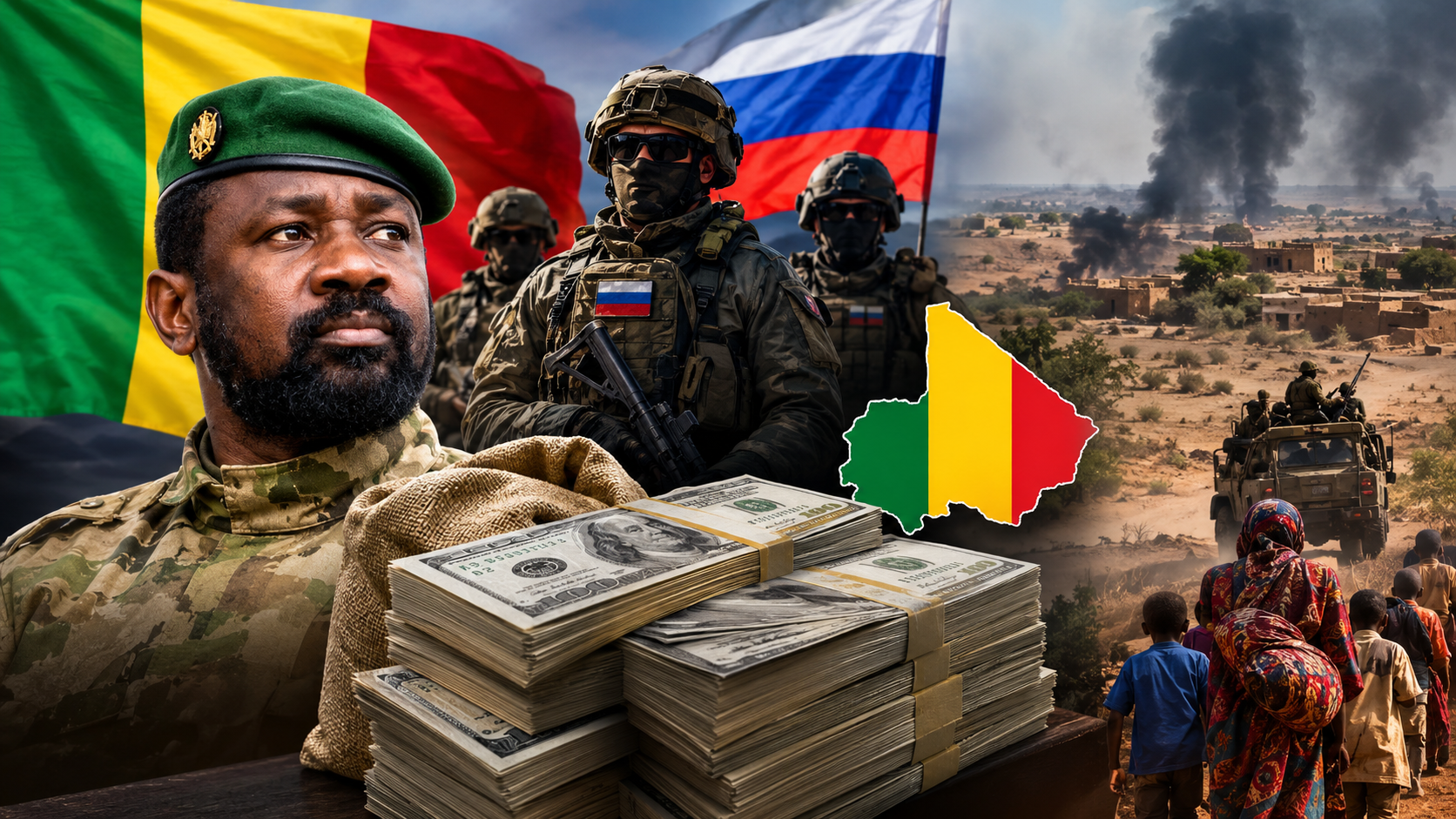
Niger’s pivot to Russia was meant to fill the void left by Western forces. Moscow, through entities like the Africa Corps, has taken over roles once played by Wagner. Yet the January attack prompted General Tiani to praise both Nigerien troops and their ‘Russian partners’—while blaming France, Benin, and Côte d’Ivoire without public evidence. Such rhetoric reflects a recurring pattern: when attacks occur, blame is often cast outward rather than inward.
The facts, however, demand scrutiny. If Russian-backed support was supposed to compensate for the loss of Western security partnerships, why has Niamey’s airport been struck twice in months? Why do jihadist groups maintain relentless pressure on the capital? Military cooperation alone cannot disguise systemic gaps in intelligence, coordination, or counterterrorism.
Populist security narratives versus harsh realities
Since 2023, Tiani’s regime has built legitimacy on nationalism, anti-foreign interference rhetoric, and new military alliances. These messages resonated with segments of the population weary of external influence. Yet political posturing cannot substitute for tangible results.
True security is measured not by slogans or flag-waving, but by a state’s ability to protect its people, infrastructure, and armed forces. On this score, recent events in Niamey could prove politically catastrophic for the junta. If the gunfire stems from a jihadist offensive, it will underscore militants’ ability to penetrate the capital’s defenses. If it reflects internal military strife, it will reveal a far more dangerous fracture: a regime that seized power in the name of stability now confronting fractures within its own coercive apparatus.
Could this be an internal reckoning?
While no evidence confirms a coup attempt, dismissing the possibility outright would be reckless. Coordinated clashes or military movements near the airport, military installations, and presidential zone are serious enough to warrant close monitoring.
In an army deeply politicized since 2023, factional clashes are not a minor concern. Tiani’s power rests on a delicate balance between military and security factions. A rupture in that balance could escalate a domestic crisis into a national one.
One certainty remains: Niamey endured another night of terror. This follows two major airport attacks in under six months. The regime may continue to point fingers at external enemies, foreign powers, or terrorist groups. But one question now looms larger than any slogan: after three years of military rule and shifting security alliances, if attackers can still strike the heart of the capital, where exactly does the failure lie?
The answer may shape Niger’s future more decisively than any speech on sovereignty ever could.