After weeks of deadlock, Mali’s transitional government breaks silence on lecturer strike
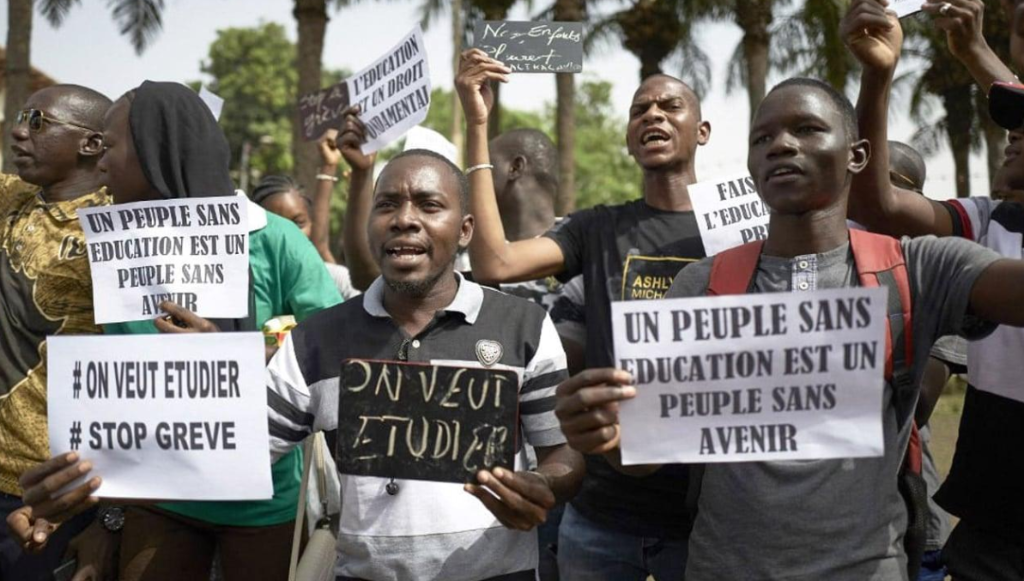
Mali’s ongoing crisis in higher education has reached a critical juncture as the country’s transitional authorities finally break their prolonged silence regarding the university lecturer strike. After 21 days of campus closures and academic disruptions, the Syndicat national de l’enseignement supérieur et de la recherche scientifique (SNESUP) reports high-level meetings with top government officials—a first in the prolonged dispute.
From broken promises to renewed dialogue: the fight for long-overdue research funding
The strike, which began on October 26, centers on the unfulfilled promise of a research bonus mandated by a 2017 presidential decree. Despite the decree’s establishment of financial compensation for academic research activities, lecturers argue the government has yet to implement this legal obligation. With nearly a decade elapsed since its adoption, the SNESUP demands not only the immediate activation of the bonus but also clarification on payment structures and compensation for delayed amounts.
What the 2017 decree promised, and what lecturers still await
The contested bonus was introduced under decree n° 2017-0850/P-RM to support higher education faculty in their scientific endeavors, including research, publications, and knowledge production. The SNESUP argues that the prolonged failure to enforce this regulation reflects a disregard for contractual obligations owed to academic staff, pushing lecturers to protest what they view as institutional neglect.
Students caught in the crossfire of delayed reforms
As the strike enters its fourth week, the disruption weighs heavily on students whose academic progress hinges on timely course completion and examination schedules. While the strike initially highlighted issues of research funding and faculty rights, its ripple effects now threaten the academic year for thousands of learners. Earlier mediation attempts involving community leaders failed to secure a strike suspension, leaving the deadlock unresolved and leaving students in limbo.
High-stakes meetings yield limited results as the strike persists
The SNESUP confirmed Sunday that its leadership met with top transitional government officials over the weekend—the first direct engagement since the strike’s onset. While the content of discussions remains undisclosed, the union emphasizes the necessity of consulting its members before deciding on next steps. Crucially, the current dialogue has not yet persuaded lecturers to suspend their mobilization. The organization stresses that its base must evaluate the sincerity and substance of the government’s responses before considering any adjustments to the strike action.
Can the government’s late intervention avert a deeper academic crisis?
With universities paralyzed and students facing mounting uncertainty, the transitional government’s decision to engage with the SNESUP marks a pivotal shift. Yet the true test lies in whether these discussions translate into concrete commitments capable of restoring normalcy. For lecturers, the path forward depends on tangible resolutions—something absent in nearly ten years of unaddressed promises. The strike’s continuation into its fourth week underscores a stark reality: without decisive action, the paralysis in Mali’s higher education sector threatens to deepen, leaving both faculty and students in prolonged uncertainty.