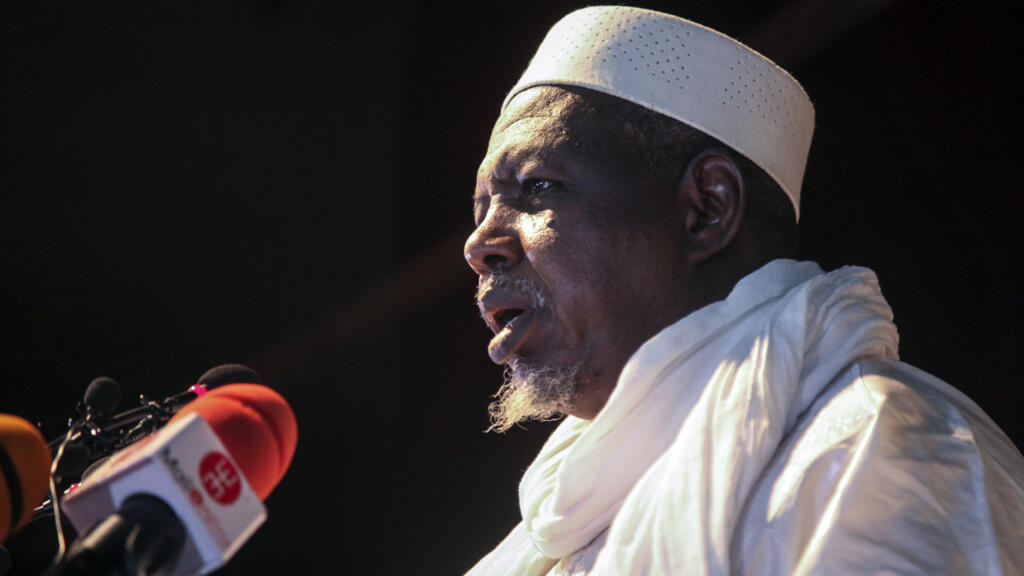
Hamma Ag Mahmoud, a former Malian minister and high-ranking civil administrator, has officially joined the Coalition des forces pour la République (CFR), a political alliance led by influential cleric Imam Dicko. His decision marks a significant development in Mali’s shifting political landscape.
Between 1986 and 1988, Mr. Mahmoud served as Minister of Labor and Public Service under the military regime of General Moussa Traoré. Later, he held the position of prefect in several key regions, including Sikasso, Koulikoro, Ségou, Gao, and Tombouctou. His political trajectory took a new turn in 2012 when he joined the Mouvement national de libération de l’Azawad (MNLA), advocating for the 2015 peace agreement with the Malian government.
From exile to political engagement
Since 2011, Mahmoud has been living in Mauritania, where he closely observed Mali’s deepening crises. His decision to back the CFR stems from a conviction that Mali’s political class has failed its citizens. In a recent statement, he emphasized the urgency of national mobilization around a unified societal project. « The country is crumbling, and it is time for all Malians to come together under a common vision that reflects everyone’s aspirations,» he declared. « The CFR has taken the lead, and I believe all Malian citizens should rally behind it to organize a national conference that corrects past mistakes.»
Rebellions and jihadism: roots of failure
Mahmoud directly linked Mali’s security challenges to governance failures. « If you see rebellions and jihadist groups emerging in Mali, it is because the political class has failed to deliver,» he asserted. « The people need a political project where everyone feels represented.» His remarks underscore the perceived disconnect between leaders and citizens in addressing the nation’s most pressing issues.
Dialogue with armed groups: a path to peace?
While many Malians remain skeptical about engaging with armed factions—particularly the Group for the Support of Islam and Muslims (JNIM), affiliated with al-Qaeda—Mahmoud advocates for inclusive dialogue. « If we integrate them into a shared project, we can put an end to these conflicts,» he argued. « Restoring good governance will eliminate the conditions that fuel jihadism and separatist rebellions.»
Recent shifts in JNIM’s rhetoric, including its adoption of the term «sovereignty» and claims of defending populations, have fueled debates over the feasibility of negotiations within a republican framework. Mahmoud, however, remains optimistic. « Yes, it is possible,» he stated. « All democratic principles—equality, justice—must be applied by involving every Malian in the process.»
Challenges ahead
The former minister’s stance highlights the delicate balance between addressing security threats and preserving Mali’s republican values. As the CFR asserts its role in reshaping the nation’s political trajectory, questions linger about the practicality of engaging with groups whose ultimate goals—such as the imposition of sharia law—conflict with democratic ideals.